
You grab a 750 ml bottle of wine or spirits and the recipe calls for ounces. Now what?
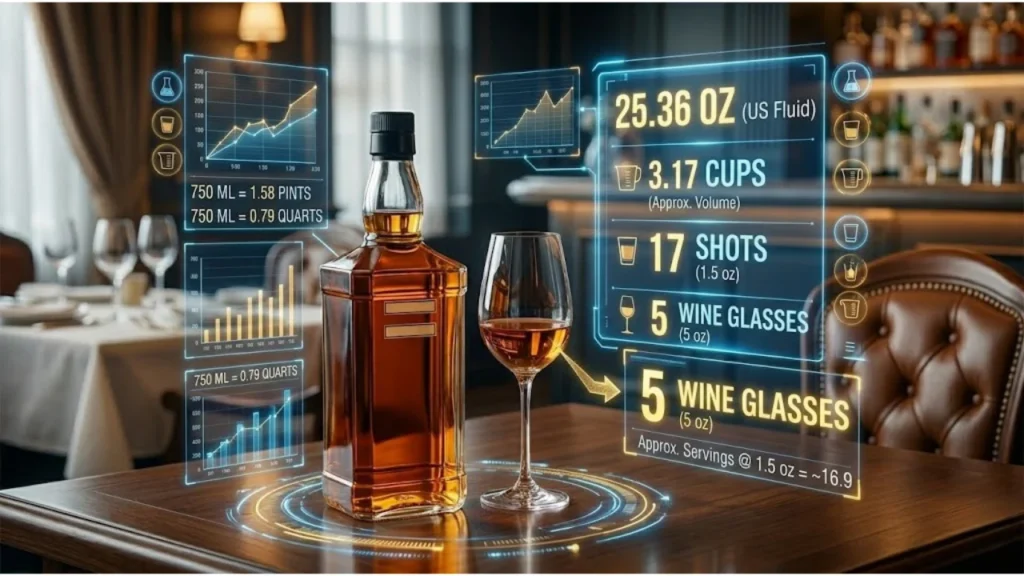
750 ml equals 25.36 US fluid ounces. That is the number you need. Whether you are cooking, bartending, or planning a party, this guide gives you every conversion, every bottle size, and every practical answer — fast.
How Many Ounces in 750 ml? Exact Conversion & Bottle Guide is available in this blog.
How Many Ounces Is 750 ml? Quick Answer
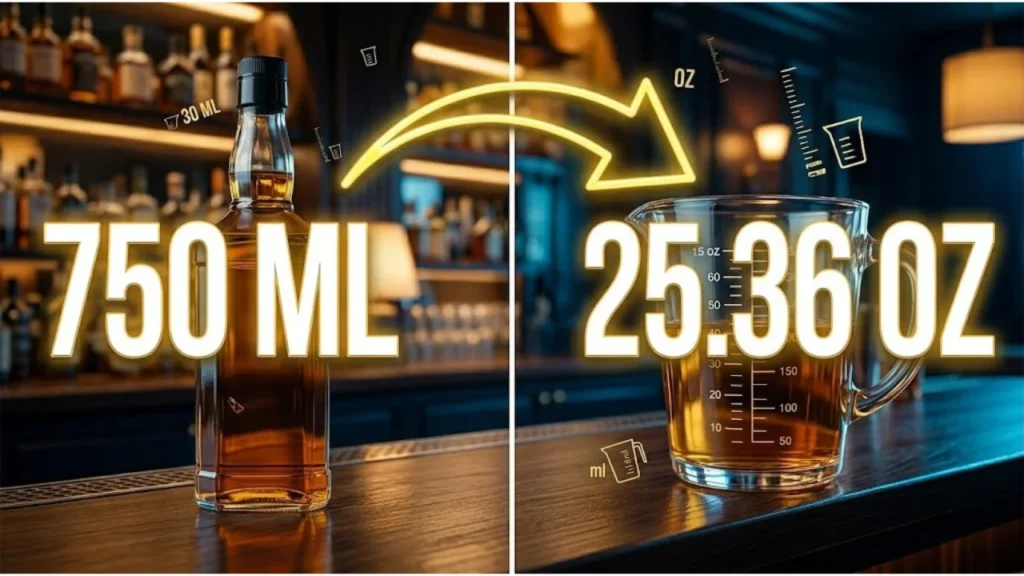
The short answer is simple. 750 milliliters equals 25.36 US fluid ounces.
But here is what most people miss. There are actually two different types of fluid ounces — US fluid ounces and UK Imperial fluid ounces. They are not the same number.
750 ml to US Fluid Ounces — The Exact Number
In the United States, one fluid ounce equals 29.5735 milliliters.
So the math looks like this:
750 ÷ 29.5735 = 25.36 US fluid ounces
This is the number used in American kitchens, bars, and restaurants every single day.
750 ml to UK Imperial Ounces — Why the Numbers Differ
In the United Kingdom, one Imperial fluid ounce equals 28.4131 milliliters. That is slightly smaller.
So for UK measurements:
750 ÷ 28.4131 = 26.40 Imperial fluid ounces
If you are following a British recipe, always use the Imperial conversion. Using the wrong one can throw off your measurements by over an ounce.
Simple Step-by-Step Conversion Formula
No calculator? No problem. Here is the formula:
ml × 0.033814 = US fluid ounces
So: 750 × 0.033814 = 25.36 fl oz
Want to go the other way? Multiply ounces by 29.5735 to get milliliters.
How Many Shots, Glasses, and Servings Are in a 750 ml Bottle?
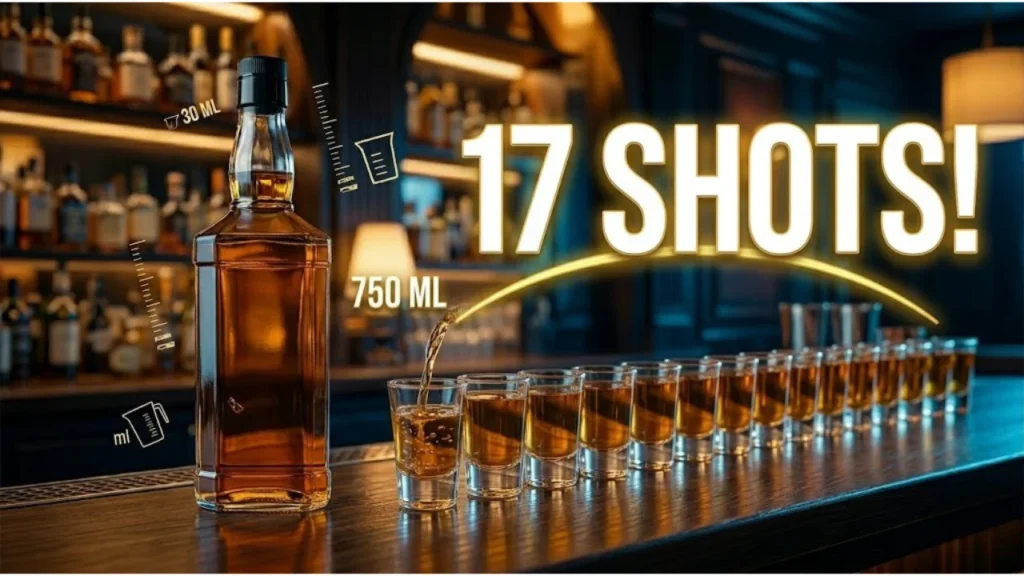
This is the most practical question most people actually need answered.
A standard 750 ml bottle holds 25.36 fluid ounces. How many drinks you get depends entirely on your pour size.
How Many 1.5 oz Standard Shots in a 750 ml Bottle?
In the US, the standard shot size is 1.5 oz (about 44.36 ml).
25.36 ÷ 1.5 = approximately 17 shots
Most professional bartenders round down to 16 full shots to account for spillage and overpouring. That is standard practice in bar inventory management.
How Many 5 oz Wine Glasses in a 750 ml Bottle?
The USDA Dietary Guidelines define a standard wine serving as 5 fluid ounces.
25.36 ÷ 5 = about 5 glasses of wine per bottle
This is why wine bottles are almost universally sold in the 750 ml format — it pours exactly five standard servings.
How Many 8 oz Glasses in a 750 ml Bottle?
750 ml gives you approximately 3.17 glasses when poured into 8 oz servings.
Since 8 oz equals 236.6 ml, divide 750 by 236.6 and you get just over three full glasses. Good to know for large-format beverages like juice or iced tea recipes.
Pour Size Chart — From Tasting Pours to Double Shots
| Pour Size | Description | Servings per 750 ml |
|---|---|---|
| 1.0 oz | Tasting pour | ~25 |
| 1.5 oz | US standard shot | ~17 |
| 2.0 oz | Double / generous pour | ~12–13 |
| 2.5 oz | Very generous | ~10 |
| 5.0 oz | Standard wine glass | ~5 |
| 8.0 oz | Large glass | ~3 |
750 ml Converted to Every Unit You Need
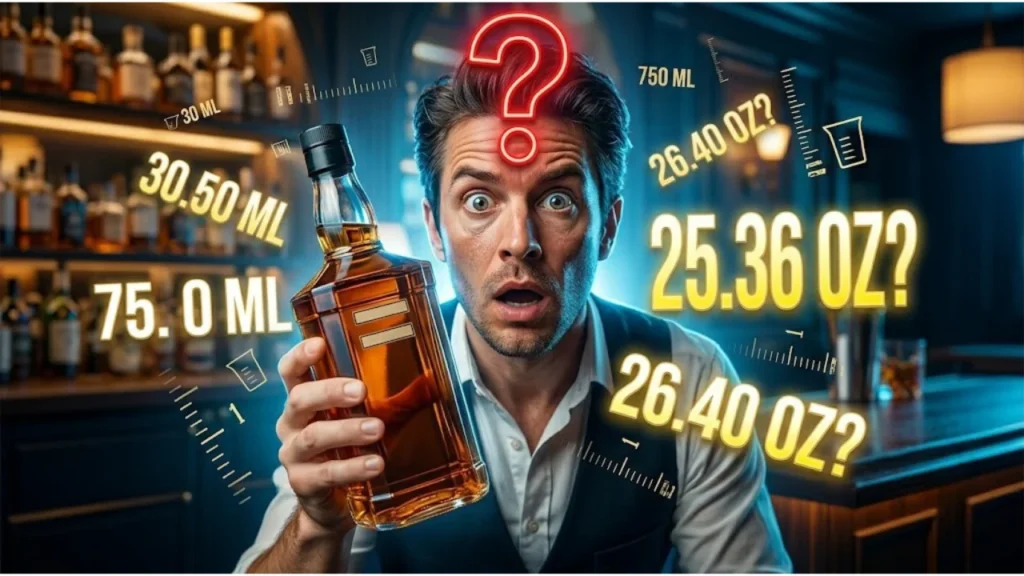
Sometimes you need more than just ounces. Here is the full volume conversion breakdown for 750 ml across every common unit used in American kitchens and bars.
750 ml to Cups, Pints, Quarts, and Gallons
750 ml equals approximately 3.17 US cups. That is just over three cups — helpful when a recipe calls for cups instead of milliliters.
Here is how it breaks down further:
750 ml = 1.59 US pints. Just under one and a half pints.
750 ml = 0.79 US quarts. Slightly under one full quart.
750 ml = 0.198 US gallons. This is actually where the name “a fifth” comes from — 750 ml is roughly one-fifth of a US gallon.
750 ml to Tablespoons and Teaspoons
For cooking precision, these smaller units matter.
750 ml = 50.7 US tablespoons
750 ml = 152.2 US teaspoons
These numbers are especially useful when scaling down large batch recipes into smaller portions.
Must Visit: How Many ML in a Shot? Exact Measurements & Conversions
Full Kitchen Conversion Reference Table
| Unit | 750 ml Equals |
|---|---|
| US Fluid Ounces | 25.36 fl oz |
| UK Imperial Ounces | 26.40 fl oz |
| US Cups | 3.17 cups |
| US Pints | 1.59 pints |
| US Quarts | 0.79 quarts |
| Tablespoons | 50.7 tbsp |
| Teaspoons | 152.2 tsp |
| Liters | 0.75 L |
| US Gallons | 0.198 gal |
Ounces in 750 ml Bottle Sizes Explained — From Nips to Handles
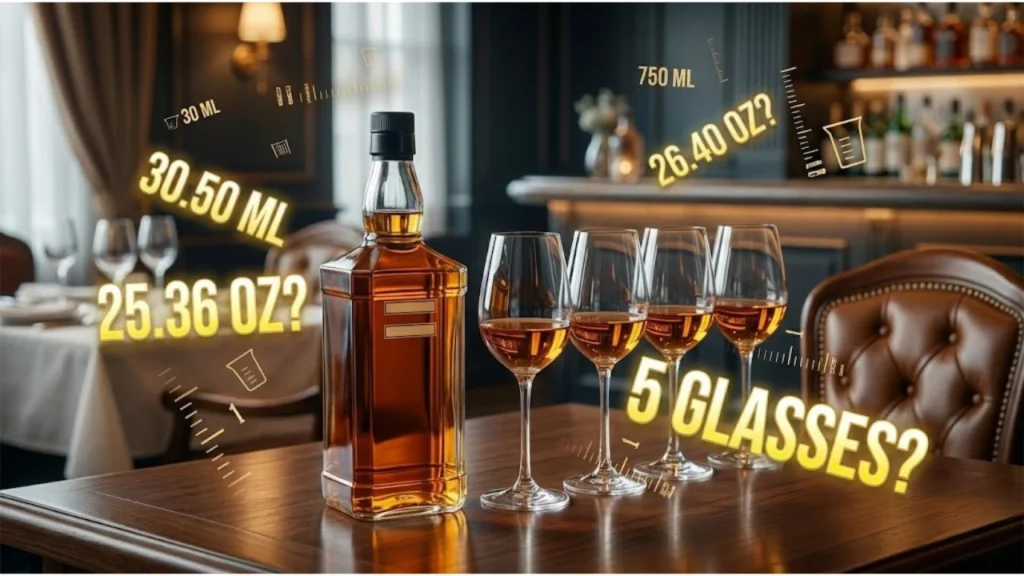
Understanding liquor bottle sizes helps you shop smarter, plan better, and pour more accurately.
Why a 750 ml Bottle Is Called a “Fifth”
This goes back to 1872, when the US Treasury Department standardized liquor bottle sizes for tax purposes. One of those sizes was one-fifth of a US gallon, which equals approximately 757 ml.
When the US adopted the metric system in 1980, 750 ml became the closest practical size. The old nickname stuck. So when someone asks for “a fifth of whiskey”, they mean a 750 ml bottle containing 25.36 oz.
All Liquor Bottle Sizes Compared (50 ml to 1.75 L)
| Bottle Name | Volume | Ounces | Standard Shots (1.5 oz) |
|---|---|---|---|
| Miniature / Nip | 50 ml | 1.7 oz | 1 |
| Quarter Pint | 100 ml | 3.4 oz | 2 |
| Half Pint | 200 ml | 6.8 oz | 4 |
| Pint | 375 ml | 12.7 oz | 8 |
| Fifth (Standard) | 750 ml | 25.36 oz | 17 |
| Liter | 1,000 ml | 33.8 oz | 22 |
| Magnum | 1,500 ml | 50.7 oz | 34 |
| Handle | 1,750 ml | 59.2 oz | 39 |
Miniature bottles (also called nips, shooters, or airplane bottles) are perfect for sampling. Handle bottles are the go-to for large gatherings and high-volume bars.
750 ml vs 700 ml — Why the US and EU Use Different Sizes
This is something most competitor articles skip over. Here is the truth.
The US uses 750 ml as its standard spirit bottle. The European Union, United Kingdom, and Australia use 700 ml for distilled spirits under EU Directive 2007/45/EC.
That 50 ml difference equals about 1.7 fewer fluid ounces per bottle. When you buy a bottle of Scotch whisky imported from the UK, it holds 700 ml — not 750 ml. Always check the label.
For wine, ounces in 750 ml is the global standard everywhere.
Is 750 ml Enough for 2 People?
Yes, for most casual occasions. A 750 ml bottle of wine gives 5 standard glasses. Two people sharing that is roughly 2.5 glasses each — a comfortable amount for a dinner.
For spirits, ounces in 750 ml gives about 17 shots. Two people mixing cocktails with 1.5 oz pours would get roughly 8 cocktails each. That is more than enough for a relaxed evening at home.
Practical Uses of the 750 ml to oz Conversion
Knowing how many ounces are in 750 ml is not just trivia. It has real daily value.
For Cooking and Baking — When Recipes Use Ounces
Many American recipes list liquid ingredients in fluid ounces or cups — not milliliters. If you have a 750 ml bottle of broth, cream, or cooking wine, you have 25.36 oz or about 3.17 cups on hand.
The metric system and the US customary system do not match up perfectly, which is why knowing these conversions matters when precision is required in baking.
For Bartenders and Bar Owners — Tracking Pours and Inventory
Bar inventory management depends on accurate pour tracking. Knowing that a ounces in 750 ml bottle holds 25.36 fluid ounces lets bartenders calculate exactly how many drinks remain.
The formula is simple:
Ounces in full bottle × remaining percentage = drinks left
A 750 ml bottle that is 50% full still holds about 12.68 oz — or roughly 8 standard 1.5 oz shots. That is the kind of number that directly impacts your pour cost and profit margin.
According to WISK, overpouring is one of the leading causes of revenue loss in bars. Accurate fluid ounce tracking per bottle prevents that.
For Party Planning — How Many Bottles Do You Need?
Here is a practical formula most people never think about until they run out.
For a 4-hour party with 50 guests estimating one drink per person per hour, you need roughly 200 drinks. Ounces in 750 ml bottle, that equals approximately 12 bottles of spirits using standard 1.5 oz pours. Always buy one or two extra.
For wine, plan for one 750 ml bottle per two guests for a 2-hour dinner.
Calories in a 750 ml Bottle by Drink Type
This is a content gap most competitors leave empty. If you are tracking intake, here is what a full 750 ml bottle actually contains:
| Drink Type | ABV | Calories per 750 ml |
|---|---|---|
| Light Beer | ~4% | ~315 |
| White Wine | ~12% | ~540–600 |
| Red Wine | ~13.5% | ~606–684 |
| Sparkling Wine | ~12% | ~495–570 |
| Vodka | ~40% | ~1,640 |
| Whiskey | ~40% | ~1,640 |
| Tequila | ~40% | ~1,530 |
Alcohol calories come almost entirely from ethanol content — not sugar. Higher ABV means more calories per ounce, regardless of the spirit type.
FAQs
Is 32 oz the Same as 750 ml?
No. 32 oz equals approximately 946 ml — significantly more than 750 ml. A 750 ml bottle holds 25.36 oz, which is well under 32 oz. You would need nearly a full liter bottle to reach 32 oz.
How Many 8 oz Glasses Are in a 750 ml Bottle?
A 750 ml bottle fills approximately 3.17 glasses at 8 oz each. Since 8 oz equals 236.6 ml, you get just over three full 8 oz glasses from one standard bottle.
Is 750 ml the Same as 16 oz?
No. 16 oz equals about 473 ml — that is close to a half-pint or 375 ml pint bottle, not a 750 ml bottle. A 750 ml bottle is roughly 1.58 times larger than 16 oz.
How Many 1 oz Servings Are in 750 ml?
750 ml gives you approximately 25 one-ounce servings. To be exact: 750 ÷ 29.5735 = 25.36 one-ounce pours. This is the most common base measurement used in professional bartending and liqueur service.
What Is 750 ml in oz?
750 ml equals 25.36 US fluid ounces. In UK Imperial ounces, 750 ml equals 26.40 oz. Always confirm which system applies to your recipe or label.
Is 750 ml Enough for 2 People?
It depends on the drink. For wine, a 750 ml bottle gives two people about 2.5 glasses each — comfortable for dinner. For cocktails, 750 ml of spirits yields roughly 8 drinks per person at standard 1.5 oz pours — more than enough for a casual night.
Conclusion
750 ml equals 25.36 US fluid ounces — that is the number to remember. It fills about 17 standard shots, 5 wine glasses, or just over 3 cups.
Whether you are in the kitchen, behind the bar, or planning a gathering, this single conversion unlocks everything else. Now you have the full picture — from bottle sizes to pour charts to calorie counts.

Rehmaan Khan is a Measurement Content Researcher Specializing in MLmeasurement, Size Guides, Charts, and Simple Educational Measurement Content.