
Have you ever tried to picture 2 inches without a ruler nearby? Most people struggle with it. Yet this tiny length measurement hides inside objects you touch every single day.
2 inches equals 5.08 centimeters, 50.8 millimeters, 0.167 feet, or 0.051 meters. Once you connect that number to real objects, you’ll never need to guess again.
| Unit | Value |
|---|---|
| Centimeters | 5.08 cm |
| Millimeters | 50.8 mm |
| Feet | 0.167 ft |
| Meters | 0.051 m |
What Does 2 Inches Long Look Like? Simple Ways to Visualize It
Before looking at specific objects, it helps to build a quick mental picture using your own body and pocket items.
Body-Based Measurement References
Your body is the most available tool-free measuring guide you have.
Two average adult fingers placed side by side measure very close to 2 inches wide. This is the fastest visual measurement reference most people use on the go.
The average adult thumb length from base to tip also lands right around 2 inches. Builders, tailors, and nurses quietly use this trick every single day.
Half the width of an average adult palm sits near the same mark. These body measurement references aren’t perfectly precise, but they’re accurate enough for most everyday estimates.
Quick Everyday Tricks for Eyeballing 2 Inches
No ruler? No problem. These common items give you a solid 2 inch size comparison in seconds.
Place two U.S. quarters edge to edge. The combined width hits about 1.91 inches — less than 3mm short of exact. It’s one of the most reliable quick measurement hacks around.
The short side of a standard credit card measures 2.125 inches. That’s the ISO/IEC 7810 ID-1 standard used by every bank card, hotel key, and driver’s license worldwide. Slightly over 2 inches, but a consistent and always-available reference.
The old folded dollar bill width trick also works for rough eyeballing measurements when nothing else is handy.
Household Items That Are About 2 Inches Long
Your home is packed with everyday objects that measure 2 inches. Most people walk past them without a second thought.
AA battery
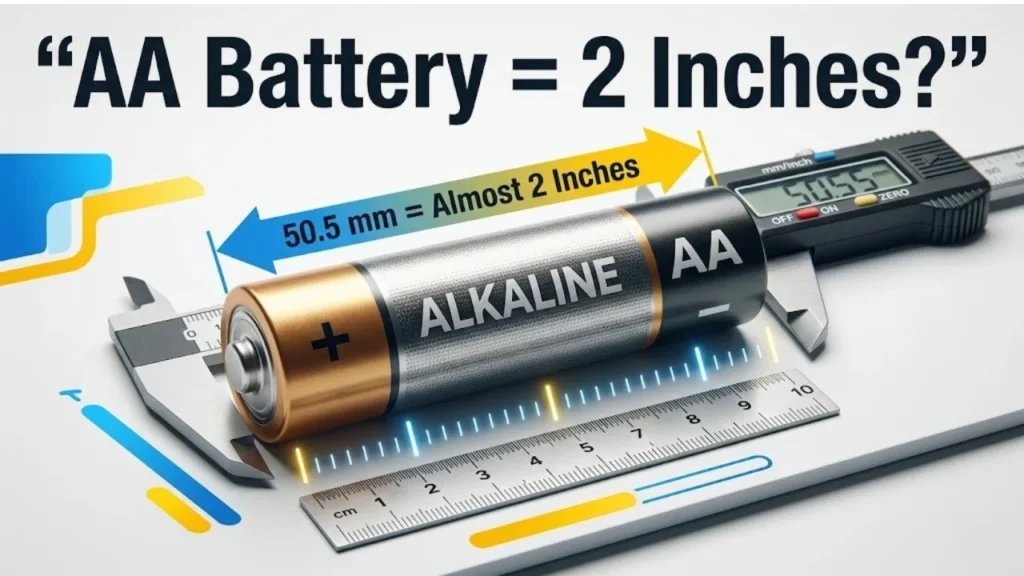
A standard alkaline AA battery measures exactly 50.5mm from positive tip to negative base. That’s just 0.3mm shorter than a perfect 2 inches. According to IEC 60086 international battery standards, this size is consistent across every major brand — Duracell, Energizer, Panasonic, and store brands worldwide. Carpenters, photographers, and nurses use AA batteries as instant measuring references constantly. This is a competitor gap most articles completely miss.
ChapStick
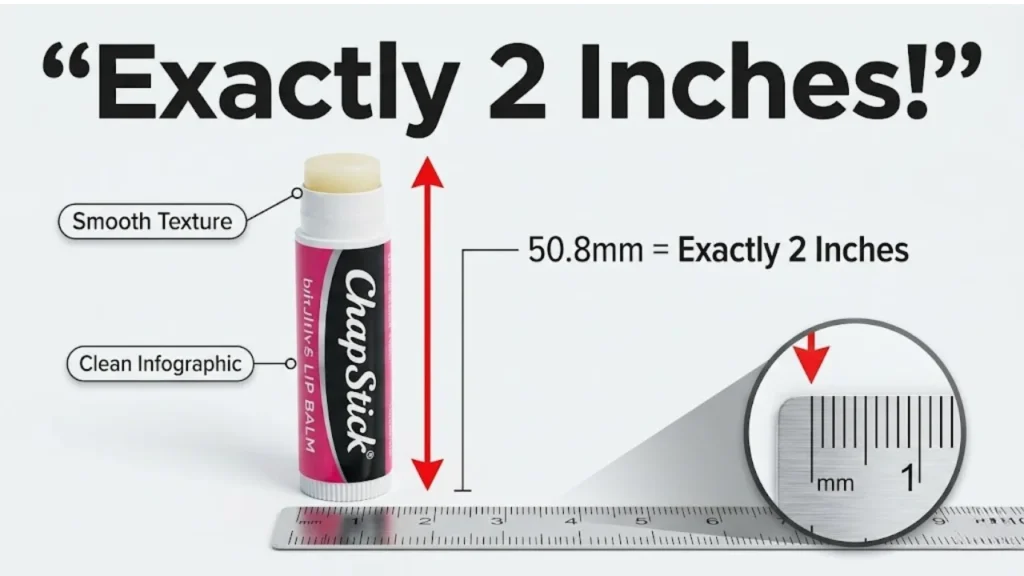
ChapStick and standard lip balm tubes measure exactly 50.8 millimeters — perfectly 2 inches. The original ChapStick design, along with Burt’s Bees, Carmex, and most drugstore lip balms, has held this size unchanged since the 1970s. Hundreds of millions of people carry one in a pocket or purse right now.
Classic matchbox
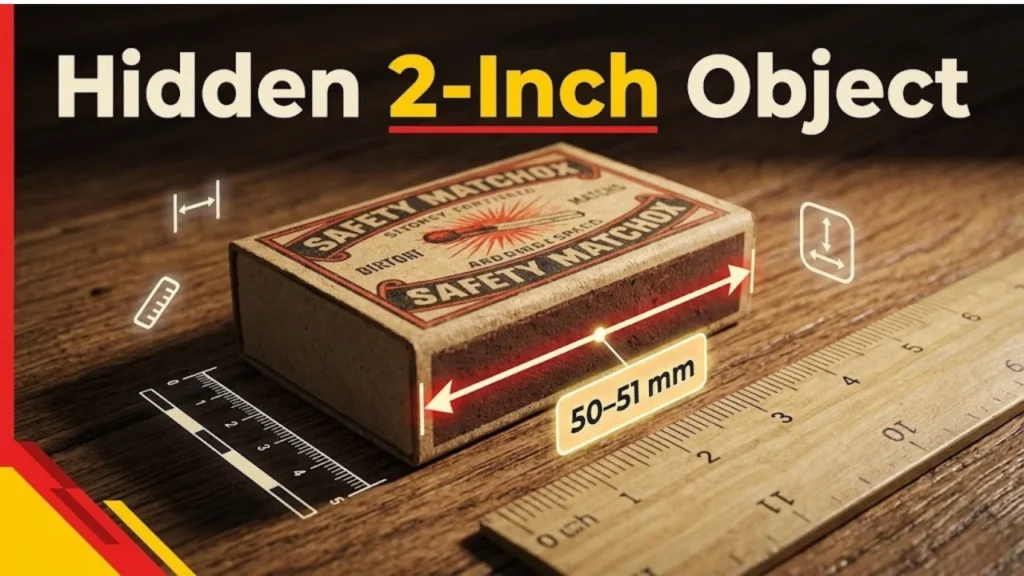
Traditional safety matchboxes from brands like Diamond and Ohio Blue Tip measure 50–51mm along the long edge. That’s a near-perfect 2 inch measurement example that’s been sitting in kitchen drawers for over a century.
Large safety matchstick
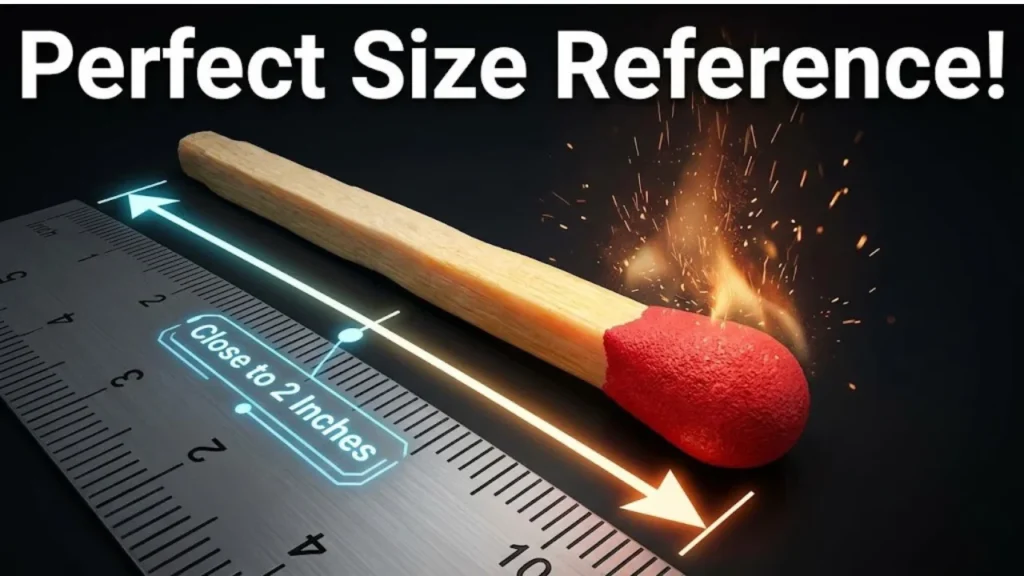
Fireplace matches and long kitchen matches often stretch very close to 2 inches in length. Their straight, uniform shape makes them one of the clearest visual measurement references for this size.
Standard bottle cap diameter
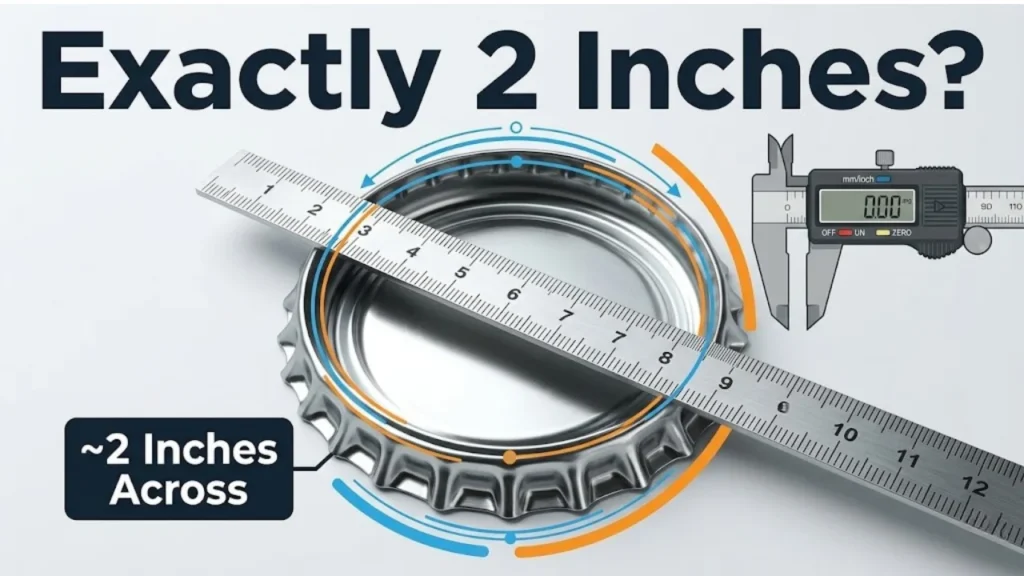
The classic crown cork bottle cap, invented by William Painter in 1892, measures right around 2 inches across. This standardized diameter works across every bottling machine and opener on the market — by design, not by accident.
Office and School Supplies That Are 2 Inches Long
Classrooms and office desks are quietly filled with school supply sizes that sit right at the 2 inch mark.
Standard paperclip
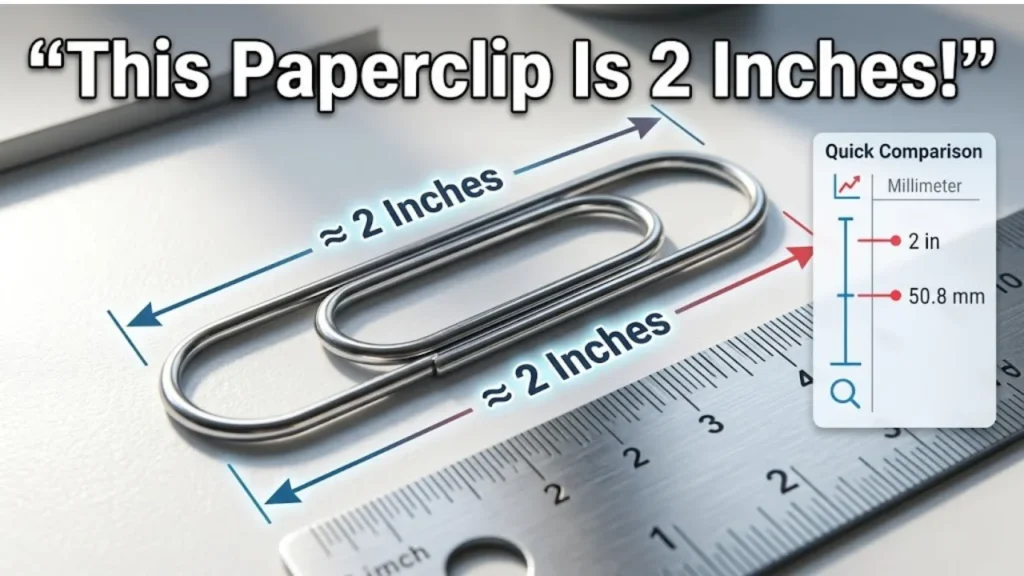
Most traditional paperclips measure between 1.9 and 2 inches in length. They’re consistent, rigid, and found in virtually every drawer on earth — making them one of the best real-world measurement examples for students and teachers alike.
Classic Bic Cristal pen cap
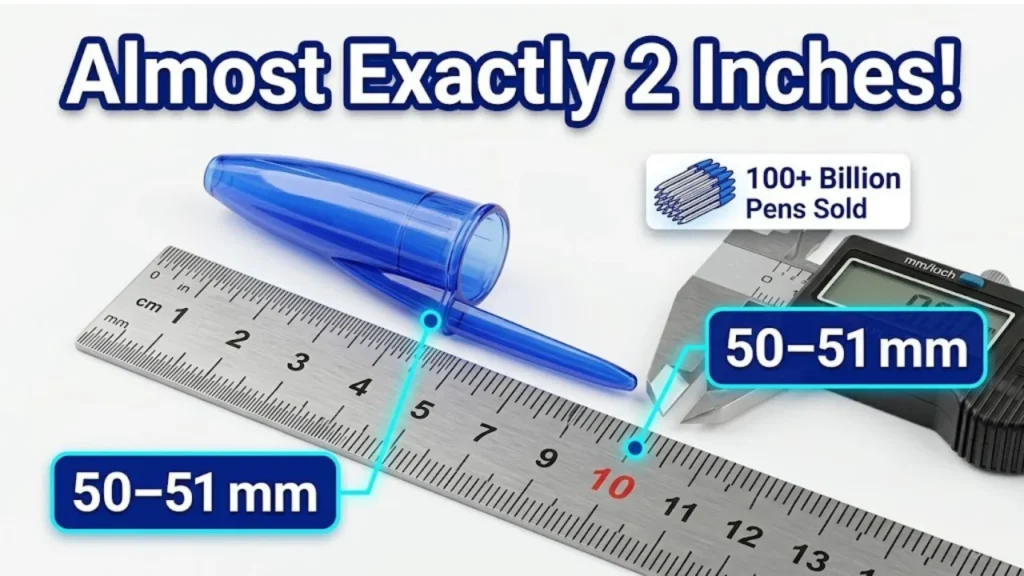
The removable cap on the world’s best-selling pen measures 50–51mm depending on production year. Over 100 billion Bic pens have been sold since 1950. That cap in your desk right now? Almost exactly 2 inches long.
School eraser
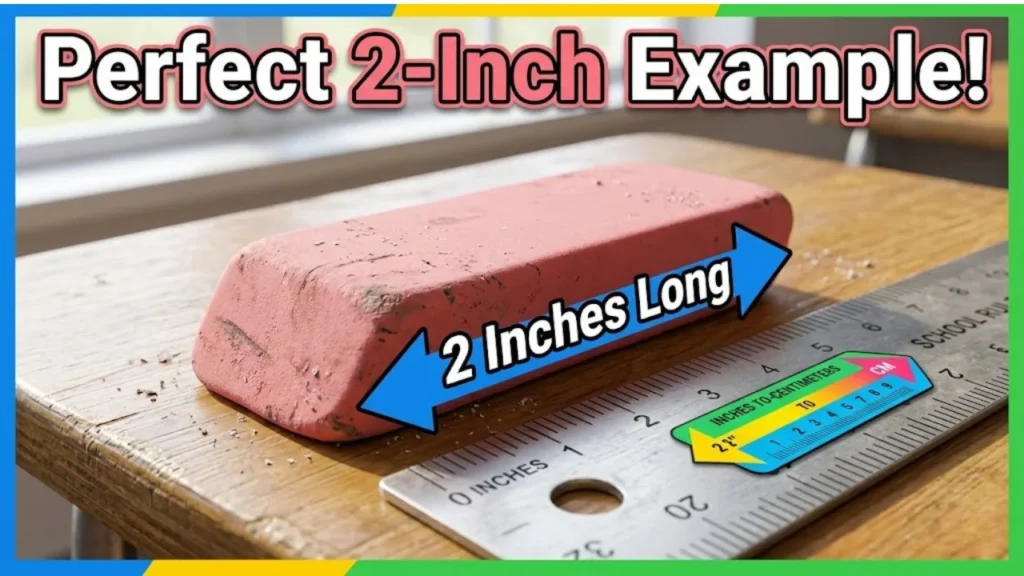
The classic rectangular pink eraser found in most classrooms measures roughly 2 inches long. Teachers have used these for generations as quick visual measurement tools during lessons on inches to centimeters conversion.
Small binder clip
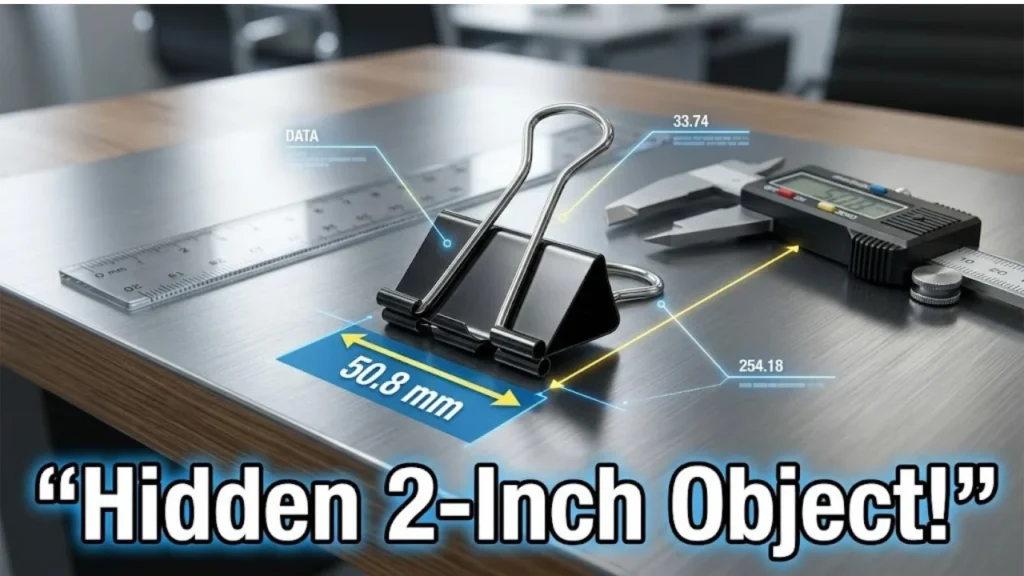
A small binder clip measures close to 50.8mm in width when opened flat. It’s compact, rigid, and gives a clean straight-line 2 inch reference for office use.
USB flash drive
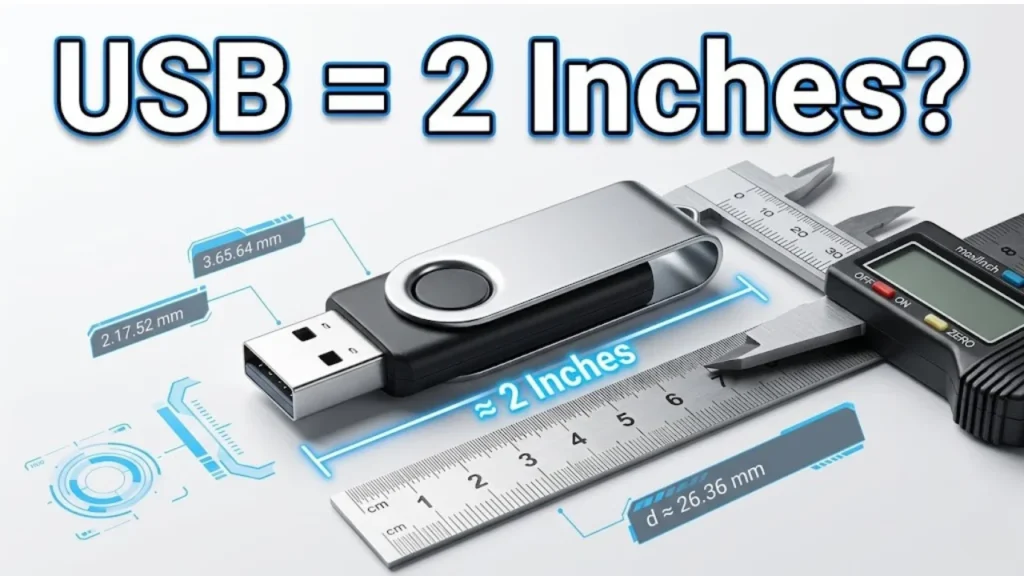
Many standard USB flash drives measure around 2 inches in length — especially older and minimalist designs. Their rectangular shape provides a clean, clear portable electronics size reference for understanding this measurement.
Sports, Fashion, and Hardware Things That Are 2 Inches
The 2 inch measurement quietly dominates across sporting goods manufacturing, fashion design, and hardware engineering more than most people realize.
Golf tee
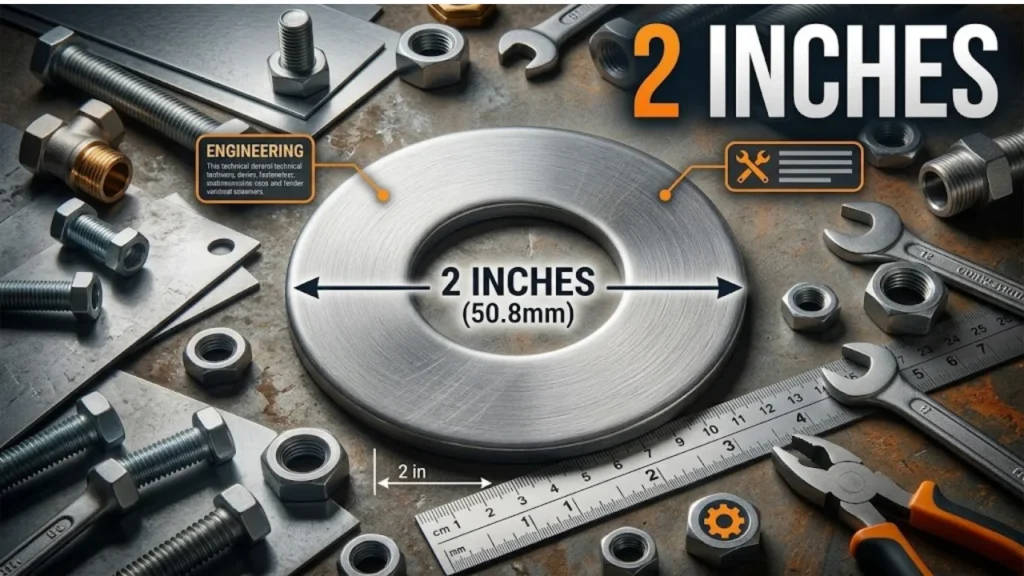
The overwhelming majority of golf tees sold in pro shops and sporting goods stores measure 2⅛ inches (54mm) long. This has been the unofficial standard for decades because it sets the ball at the correct height for drivers. Both wooden and plastic versions follow this size precisely. Golfers often carry several in their pockets — making the golf tee one of the most widely carried 2 inch objects in America.
Fishing bobber
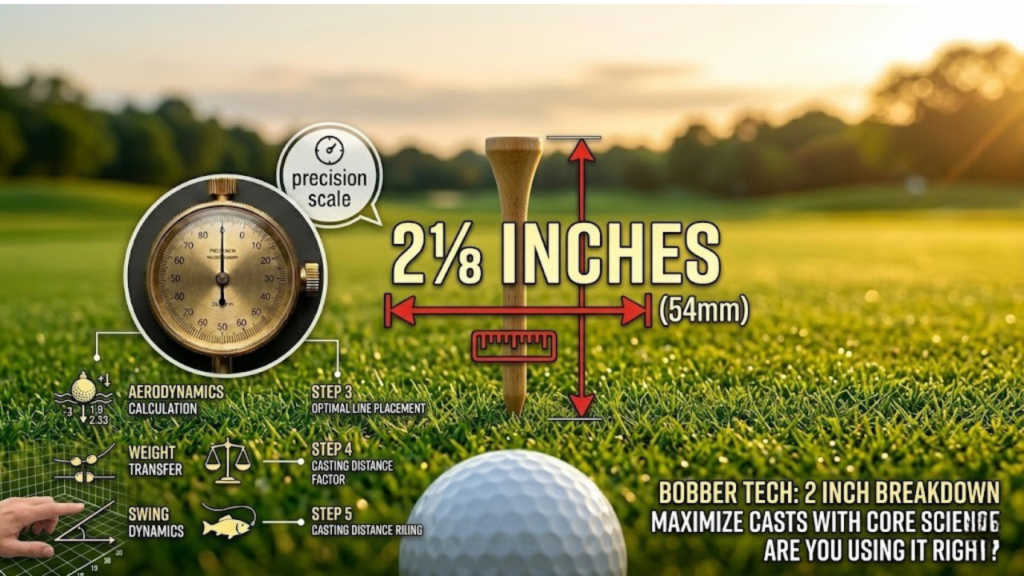
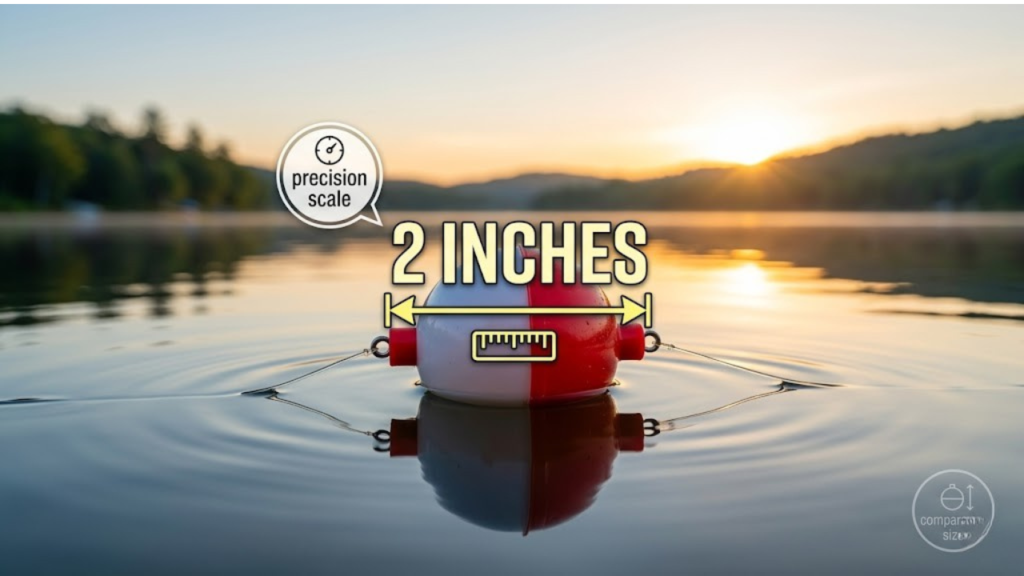
Small round fishing bobbers often measure right around 2 inches in diameter or length. Their compact size is intentional — large enough to spot on the water, small enough not to spook fish below.
Collar stay
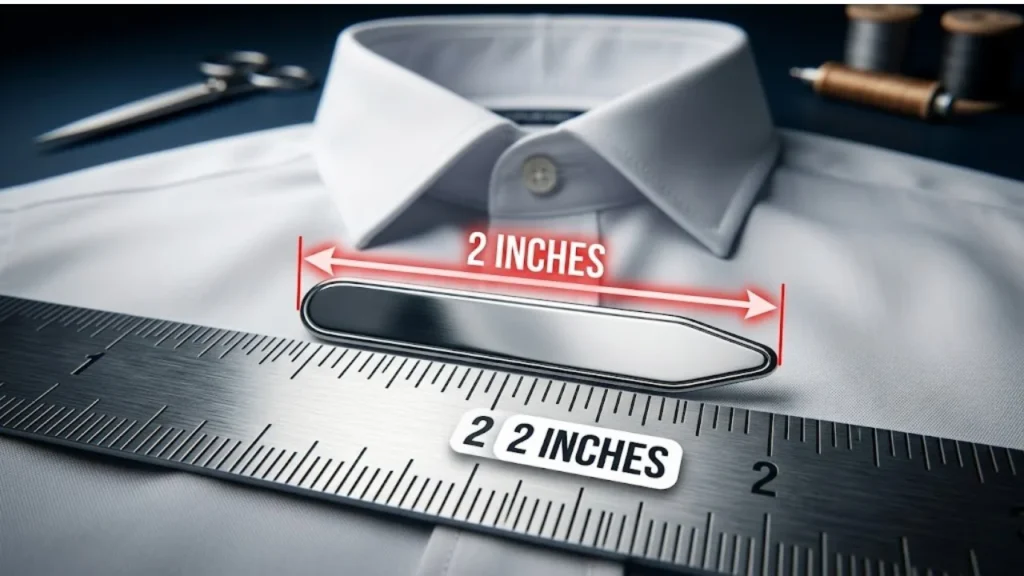
Those thin rigid strips sewn into dress shirt collars are commonly 2 inches long. They keep collar points flat and sharp. Shirt manufacturers in the fashion design industry have standardized this size for decades across formal menswear.
House key
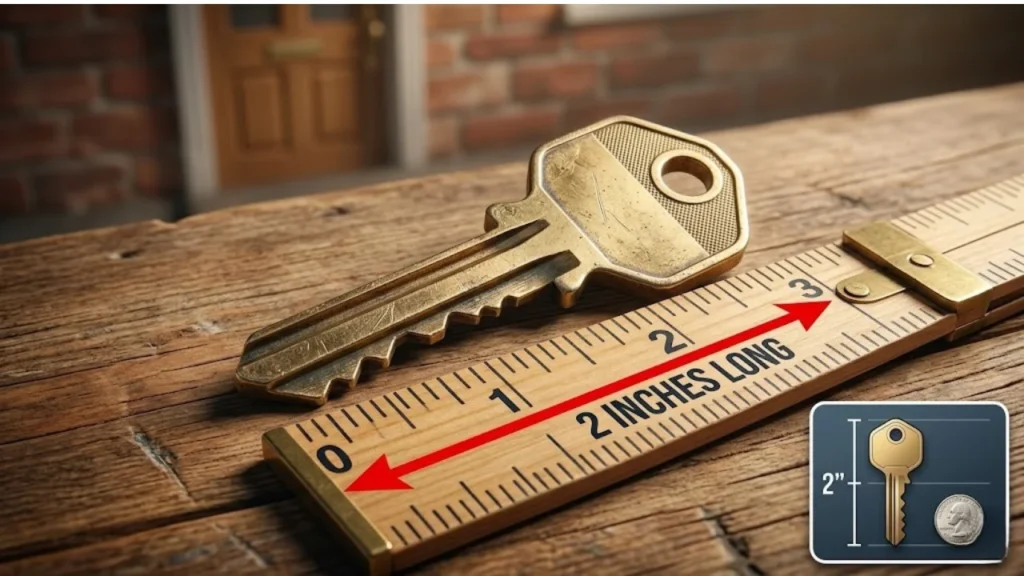
Most residential door keys in North America — including popular KW1, SC1, and Schlage blanks — measure 2.0 to 2.2 inches from bow to blade tip. According to Kwikset and Schlage key blank specifications, these dimensions are engineered for comfort and standard lock cylinder compatibility. Millions of Americans carry a perfect 2 inch reference in their pocket every single day without realizing it.
Heavy-duty dowel rod
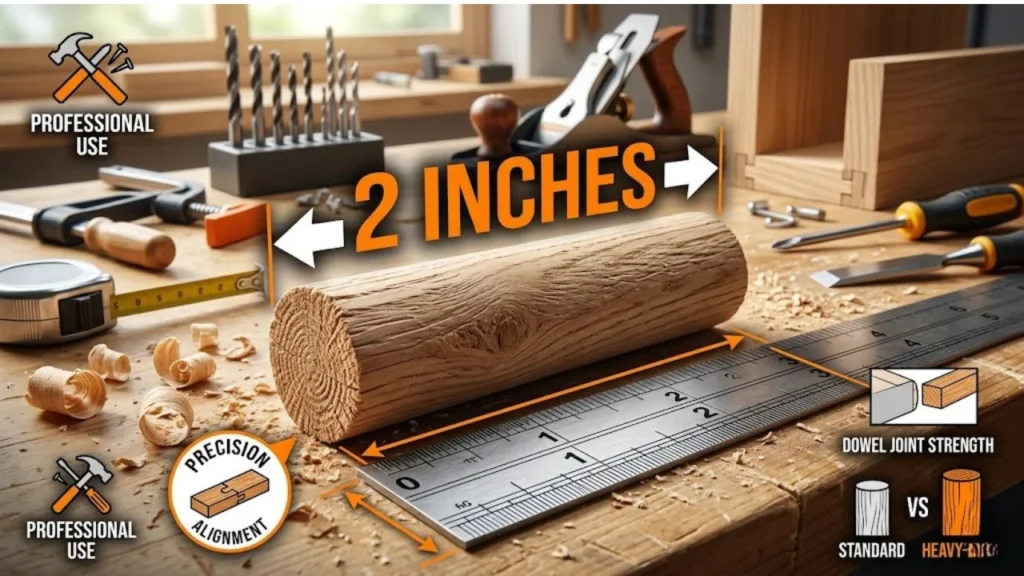
Short alignment dowel rods used in construction and woodworking are frequently cut to 2 inches. Carpenters rely on this size for cabinet alignment, furniture assembly, and framing connections.
Fender washer
Larger fender washers used in structural hardware engineering often have outer diameters near 50.8mm. These are staples of the construction industry and appear constantly in plumbing, drywall, and sheet metal work.
Why 2 Inches Is Such a Common Measurement
This isn’t coincidence. There’s a real reason 2 inches appears across so many industries and products.
Design experts sometimes call it the Goldilocks measurement — not too small to grip, not too large to pocket. The human hand, averaging 3–4 inches wide, can comfortably manipulate objects around 2 inches without strain. That’s basic ergonomic size science applied to product design.
In the imperial measurement system, 2 inches also sits in a practical zone. It’s one-sixth of a foot, slightly above 5 centimeters, and easy to divide or multiply mentally. Manufacturers across the construction industry, electronics design, fashion design, and sporting goods manufacturing have organically converged on this size.
The inch itself has deep historical roots. The word comes from the Latin uncia, meaning one-twelfth. King Edward II of England standardized the inch in the 14th century, defining it as three dry barley grains placed end to end. That tiny grain-based unit eventually became a cornerstone of manufacturing standards across the United States.
2 inches vs 5 cm — they’re close but not the same. 2 inches equals 5.08 cm, just slightly above the 5cm mark. That 0.08cm difference matters in precision work like electronics design or sewing measurements, even if it feels invisible in everyday life.
The bottom line is simple. This compact size balances portability, grippability, and functionality in a way that slightly smaller or larger sizes just don’t. That’s why it keeps showing up everywhere from your medicine cabinet to your toolbox.
FAQs
What does 2 inches long look like?
2 inches long looks like a standard AA battery, a golf tee, or the short side of a credit card. It’s roughly the width of two adult fingers placed side by side — about 5.08 centimeters in total length.
How big is 2 inches long?
2 inches is a small but clearly noticeable length. It equals 50.8 millimeters or 5.08 centimeters. It fits comfortably in your palm and is large enough to see and grip without difficulty.
How many fingers is 2 inches?
2 inches equals approximately two average adult fingers placed side by side. This is the most widely used body-based measurement reference for quickly estimating this length without tools.
What does two inches look like?
Two inches looks like a ChapStick tube, a standard paperclip, or a golf tee. All three sit right at or extremely close to 5.08 cm in length and give a clear, instant picture of this imperial measurement.
Is 2 inches tiny?
2 inches is small but not insignificant. It’s large enough to grip easily, spot visually, and build real function around. Thousands of products — from batteries to keys to hardware fasteners — are deliberately designed at this compact size.
What is 2 inches in finger size?
2 inches is roughly equal to the length of one adult thumb from base to tip, or the combined width of two index fingers pressed together. These body measurement references vary slightly person to person but are consistently close enough for everyday use.
Conclusion
2 inches — or 5.08 centimeters, 50.8 millimeters, 0.167 feet — is one of the most useful small measurements to have locked in your memory. It’s hiding inside your pocket, your desk, your kitchen drawer, and your toolbox right now.
Pick one anchor object from this list — an AA battery, a ChapStick, or your house key — and use it as your personal visual measurement reference. You’ll be surprised how often that tiny mental shortcut saves the day

Rehmaan Khan is a Measurement Content Researcher Specializing in MLmeasurement, Size Guides, Charts, and Simple Educational Measurement Content.