
Ever stared at a product listing that says “16 inches long” and had zero idea what that actually looks like? You’re not alone. Most people can’t picture an exact measurement without a ruler in hand.
This guide fixes that. Below, you’ll find 16 real-life size comparisons, plus human-body references, quick conversions, and a few tricks to estimate 16 inches anywhere — no tape measure required.
Table of Contents
How Long Is 16 Inches? (Quick Conversion Chart)
16 inches equals 40.64 centimeters, or 1 foot and 4 inches. That’s the short answer.
Here’s the full breakdown so you never have to do the math yourself:
| Unit | Value |
|---|---|
| Centimeters | 40.64 cm |
| Feet | 1.33 ft |
| Millimeters | 406.4 mm |
| Meters | 0.41 m |
| Yards | 0.44 yd |
To put that in perspective: 16 inches is 4 inches longer than a standard 12-inch ruler. Picture a ruler, then add roughly the width of your palm — that’s your 16 inches.
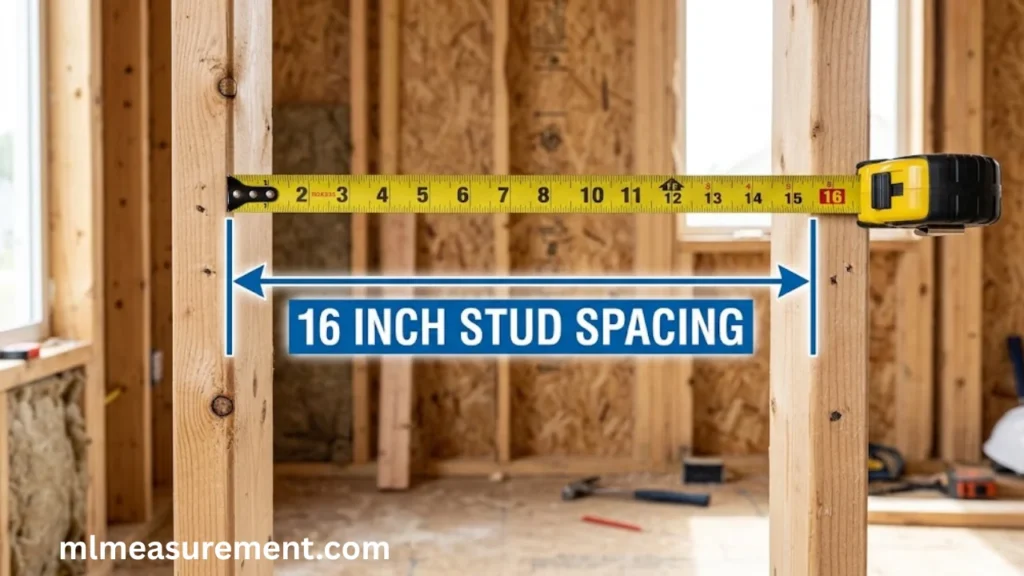
This exact length shows up constantly in American manufacturing. Wall studs in U.S. homes, for example, are spaced 16 inches apart center-to-center. That’s not random — a standard sheet of drywall measures 48 by 96 inches, and 16 divides evenly into both numbers. It’s one of the most useful measurements in home construction, which is exactly why so many everyday objects share this same length.
16 Common Things That Are 16 Inches Long
Some objects are exactly 16 inches by design. Others land close enough to be a reliable visual reference. Here’s a mix of both, sorted by where you’d actually encounter them.
Home and Kitchen
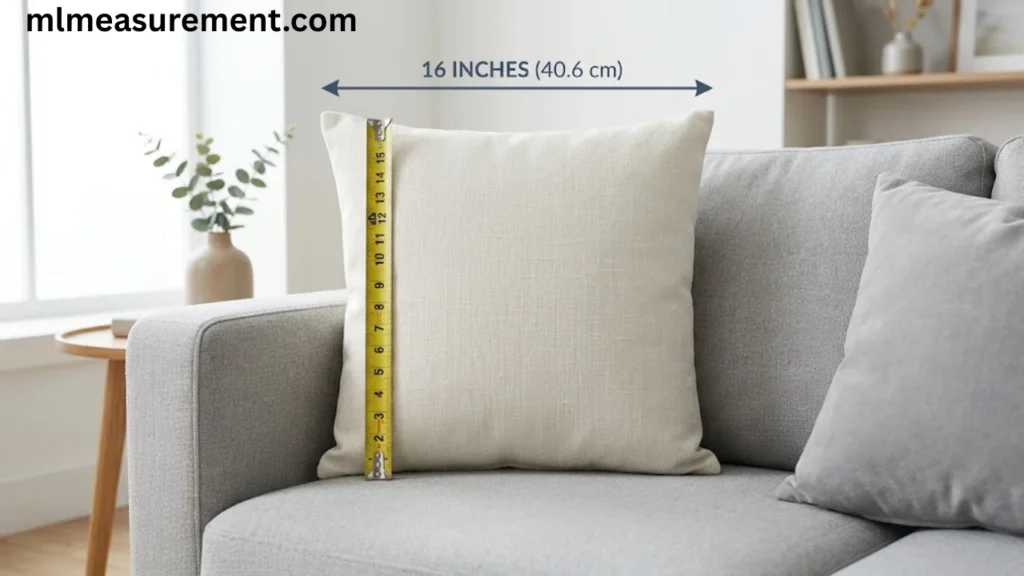
A standard throw pillow is one of the most common 16-inch objects in any American living room. Most square pillow inserts measure 16 by 16 inches — big enough for lumbar support, small enough not to swallow your couch.
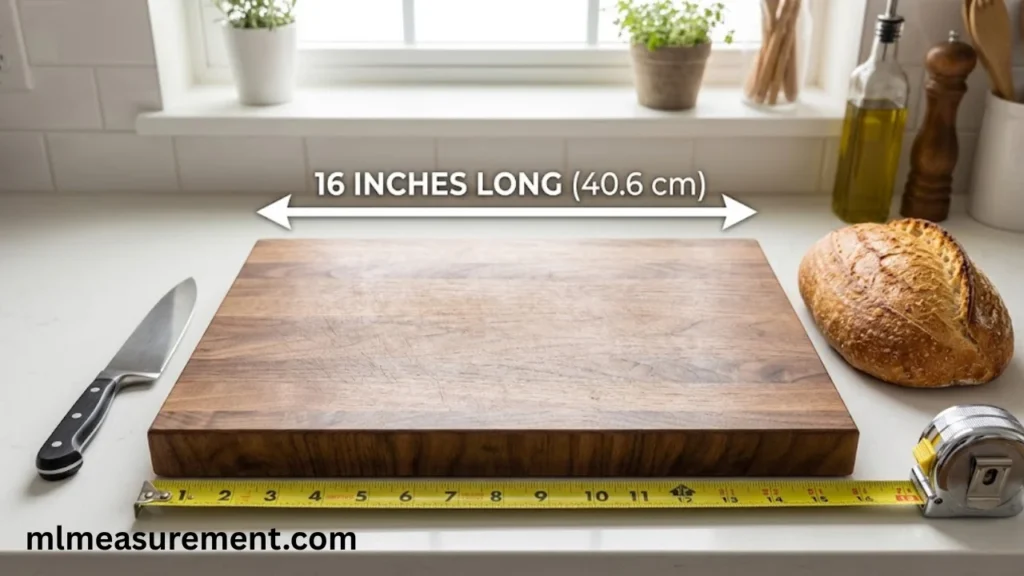
A large cutting board typically runs close to 16 inches in length, giving you enough surface to break down a chicken or slice a full loaf of bread without crowding your knife hand.
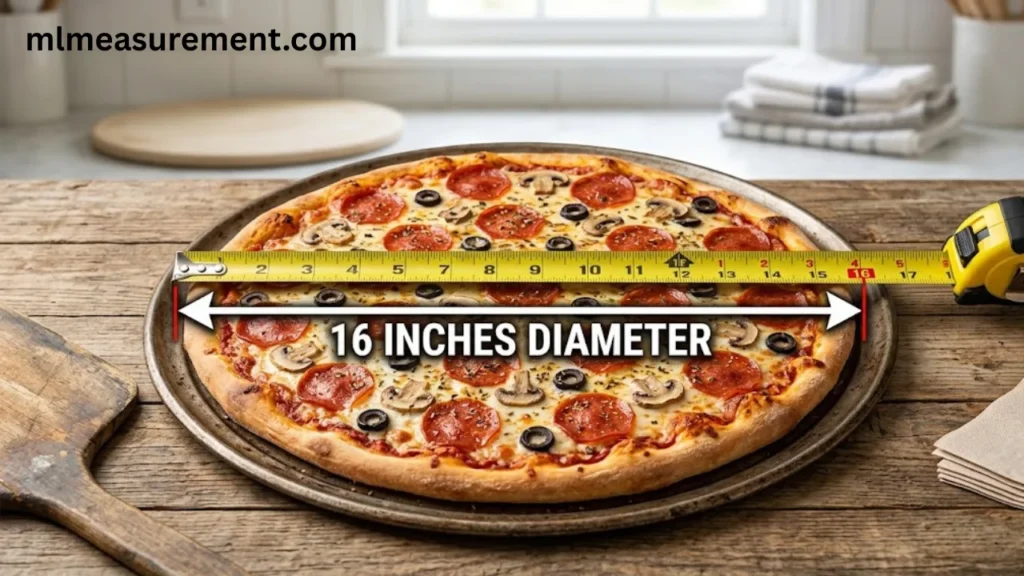
An extra-large pizza often measures 16 inches across. That extra few inches compared to a standard 14-inch pizza matters more than it sounds — a 16-inch pie has roughly 201 square inches of surface area versus about 154 square inches on a 14-inch pie, according to basic circle-area math (πr²). That’s nearly 30% more pizza for a diameter that looks only slightly bigger.
Tech and Everyday Carry
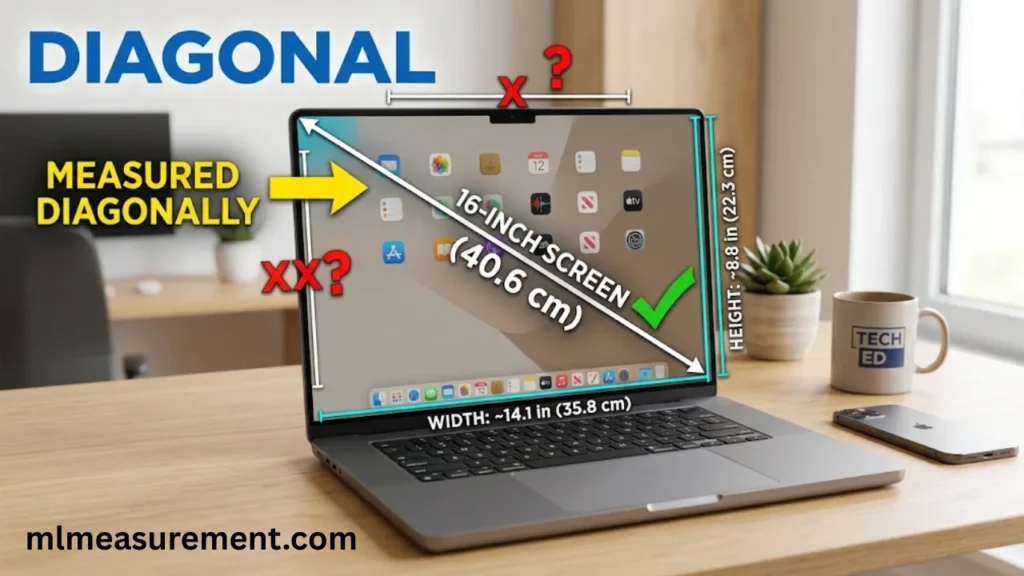
16-inch laptops have become the go-to choice for creative professionals, developers, and students who need extra screen real estate. Brands like Apple, ASUS, and LG all ship 16-inch models, and the screen size is always measured diagonally — corner to corner, not side to side.
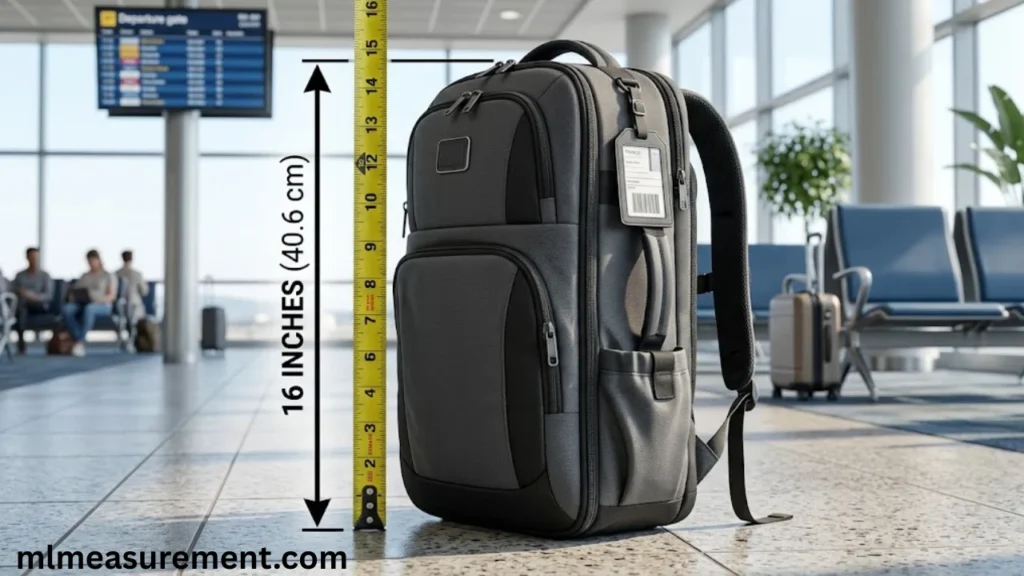
A carry-on backpack height often lands around 16 inches, which happens to line up well with most airline personal-item size limits.
Must visit: 40 Inches Long: 15 Real-Life Size Comparisons You Can Easily Visualize
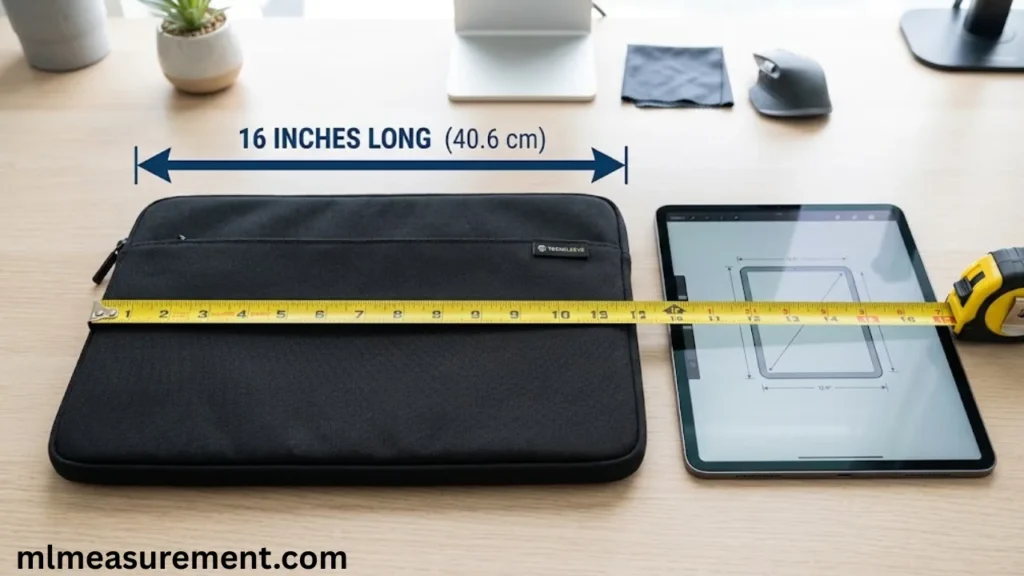
A tablet sleeve built for larger tablets typically measures close to 16 inches long, protecting the device with a bit of buffer room on each end.
Music, Sports, and Hobbies
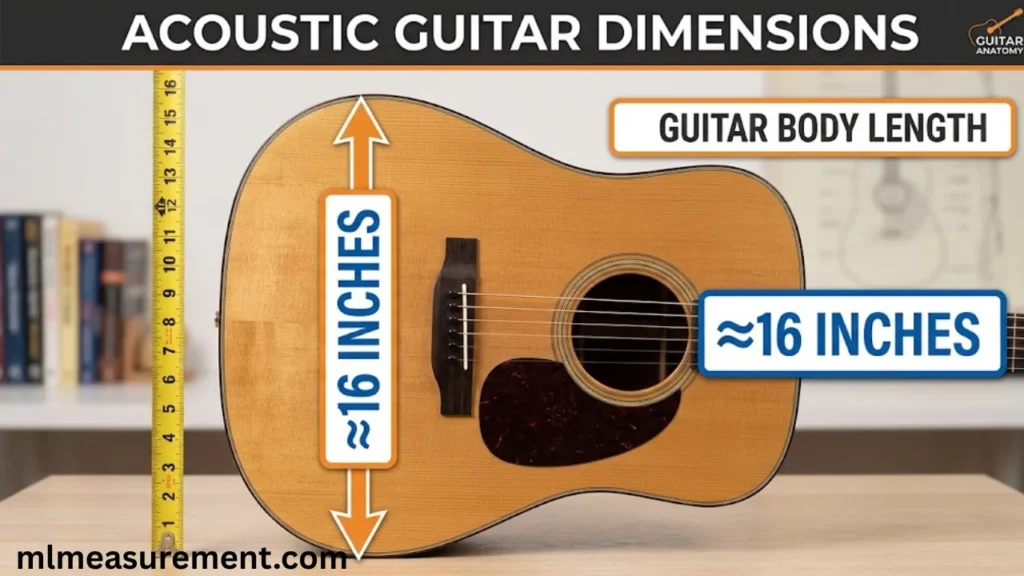
The body of a standard acoustic guitar (not counting the neck) measures close to 16 inches. Instrument dimensions barely vary between manufacturers, which makes guitars a surprisingly dependable size reference.
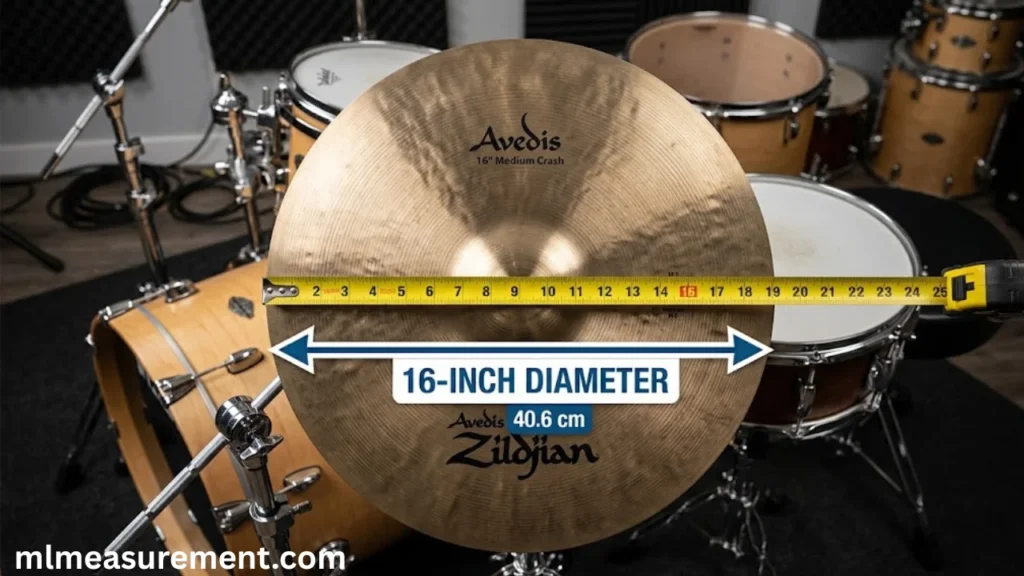
A drum crash cymbal, the one drummers hit for a loud accent, is commonly 16 inches in diameter — a sweet spot between a bright, fast decay and enough volume to cut through a mix.
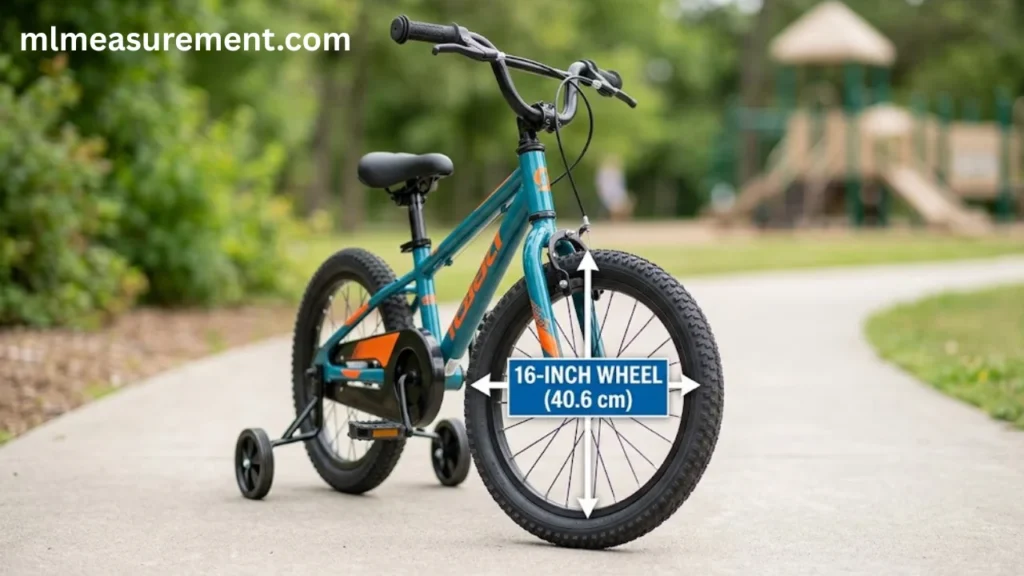
A children’s bicycle wheel is often 16 inches across, sized for kids roughly 4 to 6 years old who are learning to pedal without training wheels.
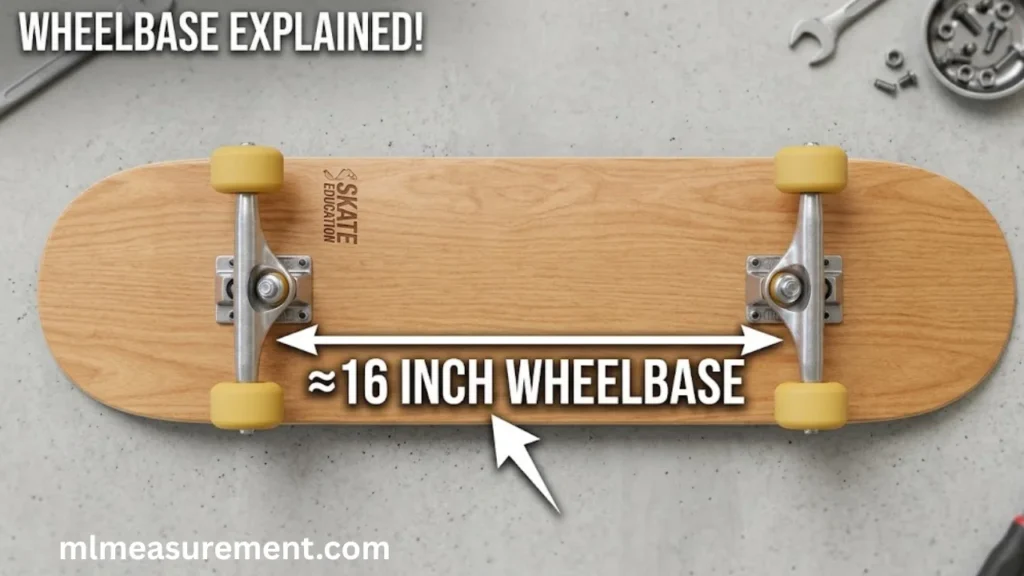
A skateboard wheelbase — the distance between the front and back trucks — frequently sits near 16 inches on classic and transition-style decks, giving riders a wider, more stable stance.
Construction, Tools, and Everyday Objects
As mentioned above, wall stud spacing is fixed at 16 inches in most U.S. homes. Next time you need to hang a heavy mirror or a floating shelf, measure 16 inches from a stud you’ve already found — there’s a strong chance another one is waiting there.
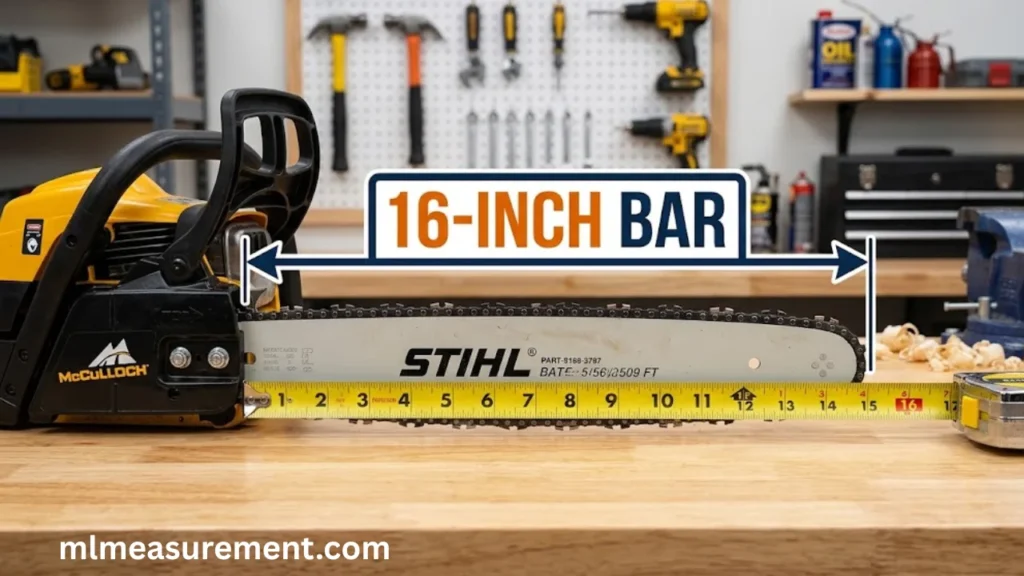
A medium-duty chainsaw bar commonly measures 16 inches, long enough to slice through a 14-inch log in a single pass but light enough to control without fatigue.
A magnetic tool bar is frequently sold in 16-inch lengths, since that size lines up neatly with — you guessed it — wall stud spacing.
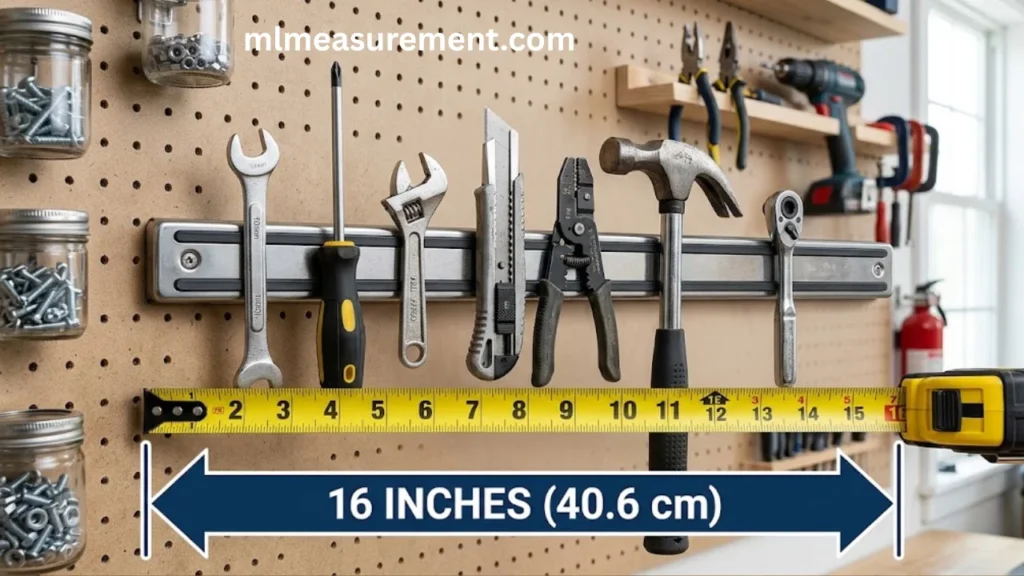
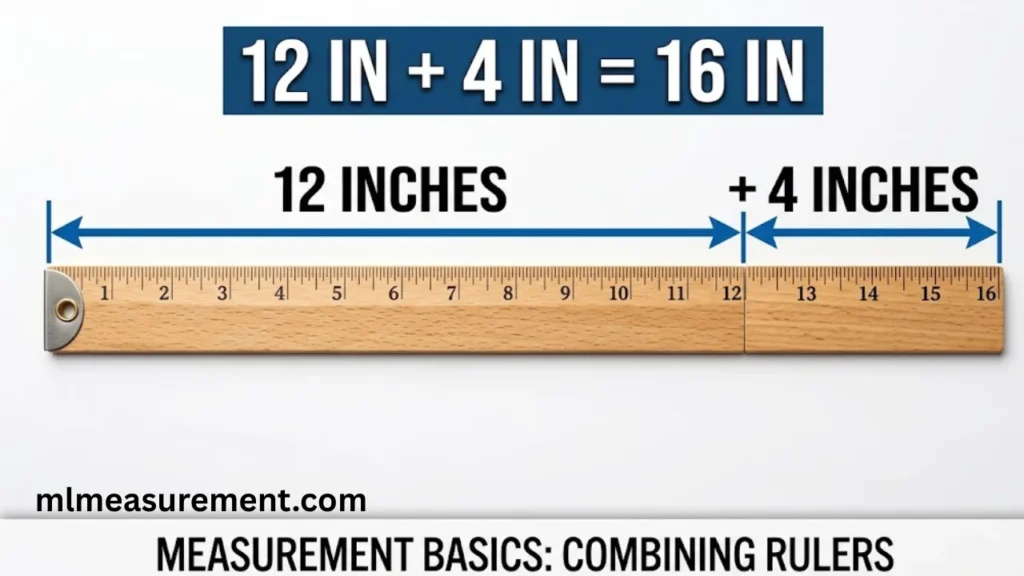
Two standard rulers placed end to end, minus about 8 inches, land you at 16. Or more simply: one 12-inch ruler plus 4 extra inches gets you there in seconds.
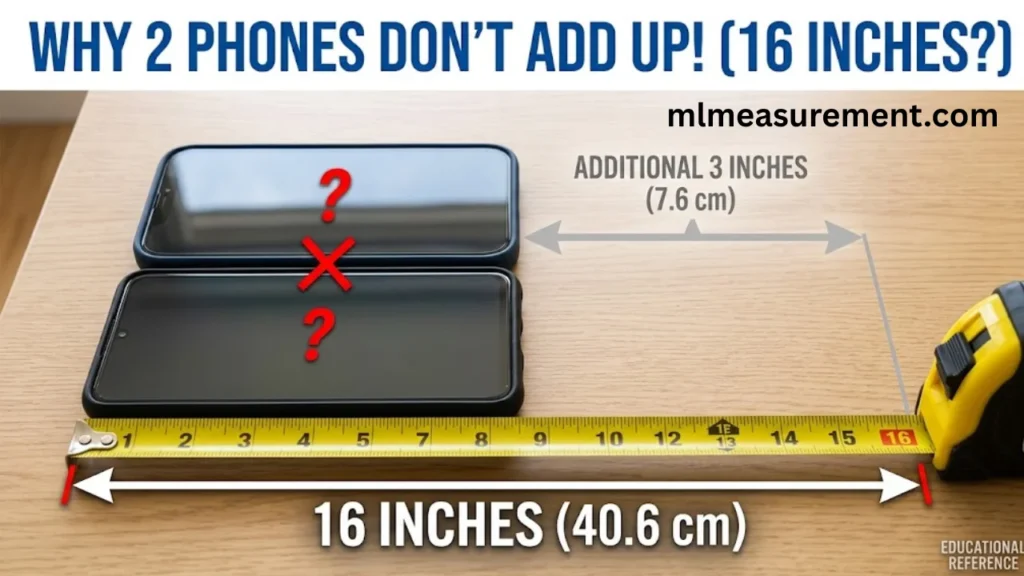
Two smartphones placed end to end come close, too. Most phones measure roughly 6 to 6.5 inches long, so two side by side land around 13 inches — add a few fingers’ width and you’re at 16.
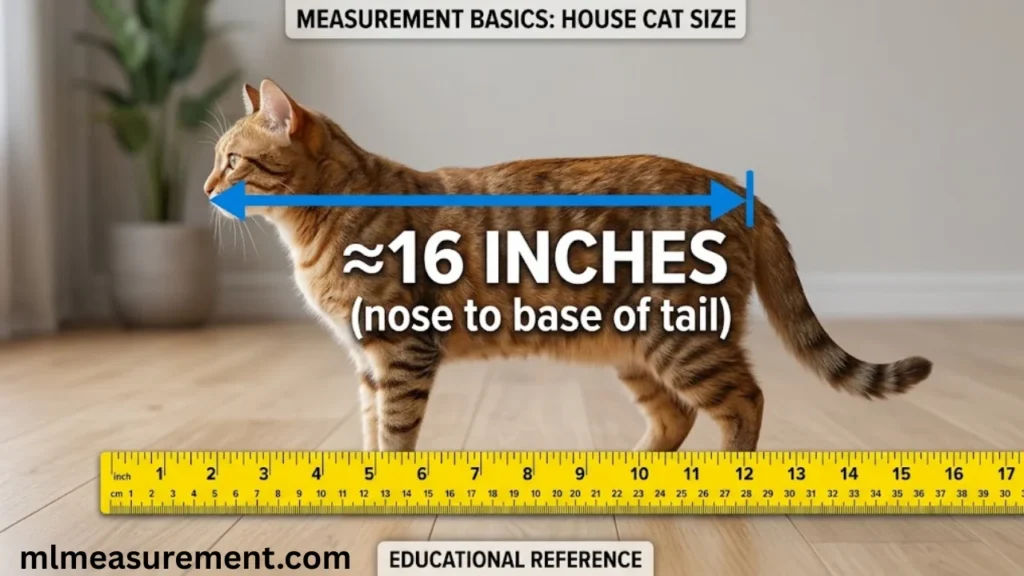
An adult house cat, measured from nose to the base of the tail, often comes in close to 16 inches. It’s a strange but genuinely useful mental reference if you’ve ever owned one.
How Long Is 16 Inches Compared to a Human Body?
This is where most size guides fall short — they compare objects to other objects, not to you. Here’s how 16 inches maps onto the human body.
Forearm length. For the average adult, the distance from the elbow to the tip of the middle finger is close to 16 to 18 inches. Rest your elbow on a table and extend your arm straight up — that’s roughly your 16-inch mark.
Two adult feet, end to end. The average adult shoe measures around 10 to 11 inches. Two feet placed heel-to-toe land you just short of 16 inches, making this an easy floor-based estimate.
Hair length. 16-inch hair on an average-height adult typically falls around the upper back, just below the shoulder blades. Hairstylists often call this the “Goldilocks length” — long enough for a sleek low ponytail, short enough to stay manageable day to day. On petite frames, the same 16 inches can reach mid-back instead.
Necklace placement. A 16-inch necklace measures the full chain length, clasp included, and typically sits right at the base of the neck — just above the collarbone. This is commonly known as a choker or collar length, and it’s one of the most popular necklace sizes sold in the U.S. because it flatters nearly every neckline. Compare that to an 18-inch “princess length,” which drapes lower, or a 14-inch true choker, which sits tighter against the throat.
How to Visualize 16 Inches Without a Ruler
You don’t need a tape measure to get a reasonably accurate estimate. Try one of these:
- Use your forearm. Elbow to fingertip gets you close to 16 inches for most adults.
- Stack four coffee mugs. A standard 11-ounce mug is about 4 inches tall, so four stacked reach close to 16 inches — handy for checking shelf clearance.
- Anchor to one object. Pick a single reliable reference — a throw pillow, a laptop, or a ruler-plus-a-palm — and memorize it. One strong mental anchor beats a dozen vague guesses.
Why Knowing 16 Inches Matters
Size confusion costs time and money, especially when shopping online. A backpack, monitor, or necklace that’s off by even a few inches can mean a return, a reshipping fee, or a gift that doesn’t fit right.
For shoppers: Knowing that 16 inches is roughly a forearm’s length or a stacked set of mugs helps you judge product photos before you buy — no measuring tape required.
For DIY and home projects: Since wall studs sit 16 inches apart, this single number is one of the most practical measurements a homeowner can memorize. It applies to hanging shelves, mounting TVs, and planning furniture layouts.
For gift-giving: If you’re buying a necklace, knowing that 16 inches sits at the collarbone (versus 18 inches, which sits lower) helps you pick a length that actually matches someone’s style.
FAQs
How big is 16 inches long?
16 inches is equal to 40.64 centimeters, or 1 foot and 4 inches. It’s 4 inches longer than a standard 12-inch ruler and roughly the height of a carry-on backpack or the width of a large laptop screen.
How long does 16 inches look?
Sixteen inches looks like a standard 16×16-inch throw pillow, a large cutting board, or two smartphones placed end to end with a little extra room. If you want a body-based reference, it’s close to the length of an adult forearm, from elbow to fingertip.
What item is 16 inches long?
Common items that are 16 inches long include a 16-inch laptop screen, a standard throw pillow, a large pizza, a children’s bicycle wheel, a crash cymbal, and a 16-inch necklace, which sits right at the base of the neck.
How long is 16 inches compared to a human?
Sixteen inches is close to the length of an adult forearm (elbow to fingertip) and roughly matches two adult feet placed heel to toe. On the body, 16-inch hair typically falls to the upper back, and a 16-inch necklace sits right at the collarbone.
Conclusion
Sixteen inches shows up more often than most people realize — in your kitchen, your closet, your laptop bag, and even your jewelry box. Once you lock in one solid reference, like a forearm’s length or a standard throw pillow, picturing this measurement becomes second nature. No ruler required.

Rehmaan Khan is a Measurement Content Researcher Specializing in MLmeasurement, Size Guides, Charts, and Simple Educational Measurement Content.