
Ever tried to picture 10 grams heavy in your head? It’s tricky. Ten grams is so light that most kitchen scales barely register it as “something.” But it’s also a weight you bump into constantly — in your wallet, your junk drawer, even your coffee cup.
This guide breaks down 15 real objects that weigh 10 grams, using items you probably already own. No lab equipment needed. Just your pocket, your desk, and a little curiosity.
Table of Contents
How Heavy Is 10 Grams?
Ten grams equals 0.35 ounces, 0.022 pounds, or 0.01 kilograms. It’s also exactly 10,000 milligrams and 50 carats — a term jewelers use daily.
To put it in perspective: a standard paperclip weighs about 1 gram. So 10 grams is roughly the heft of ten of those clips sitting in your palm at once.
Here’s the quick math, broken down for US audiences who mostly think in ounces and pounds:
| Unit | Value |
|---|---|
| Grams | 10 g |
| Ounces | 0.35 oz |
| Pounds | 0.022 lb |
| Kilograms | 0.01 kg |
| Milligrams | 10,000 mg |
| Carats | 50 ct |
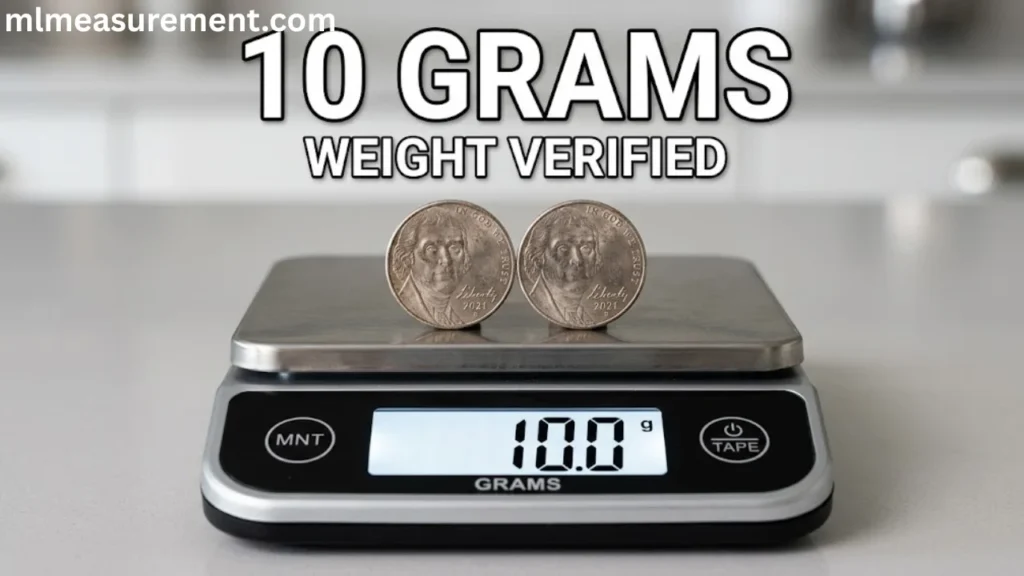
How much do 10 grams feel like? Picture two nickels resting flat in your hand. Barely noticeable. That’s the sensation you’re after.
15 Things That Weigh 10 Grams
Some of these are classic reference points you may have seen before. Others are things almost nobody talks about — but they’re just as accurate, and arguably more useful.
Everyday Coins and Currency
Two US nickels are the gold standard for this measurement. Each nickel is struck by the US Mint to weigh exactly 5 grams, made from a 75% copper, 25% nickel alloy. Two of them, side by side, land you dead-on at 10 grams — no guesswork involved.
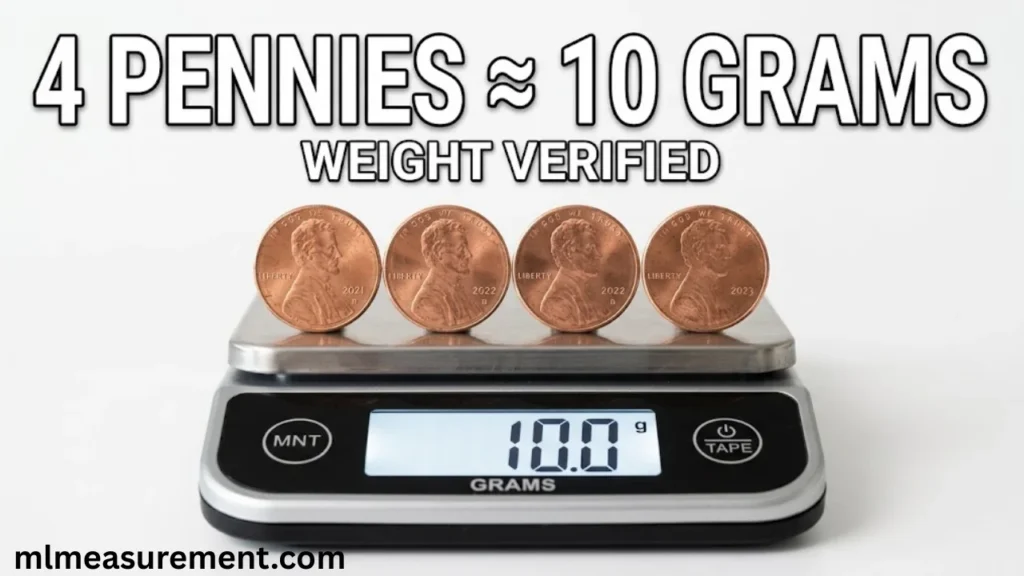
Four US pennies also get you there. Since 1982, every penny weighs 2.5 grams, thanks to a copper-plated zinc core that replaced the older, heavier solid-copper design. Four in a row equals 10 grams almost perfectly.
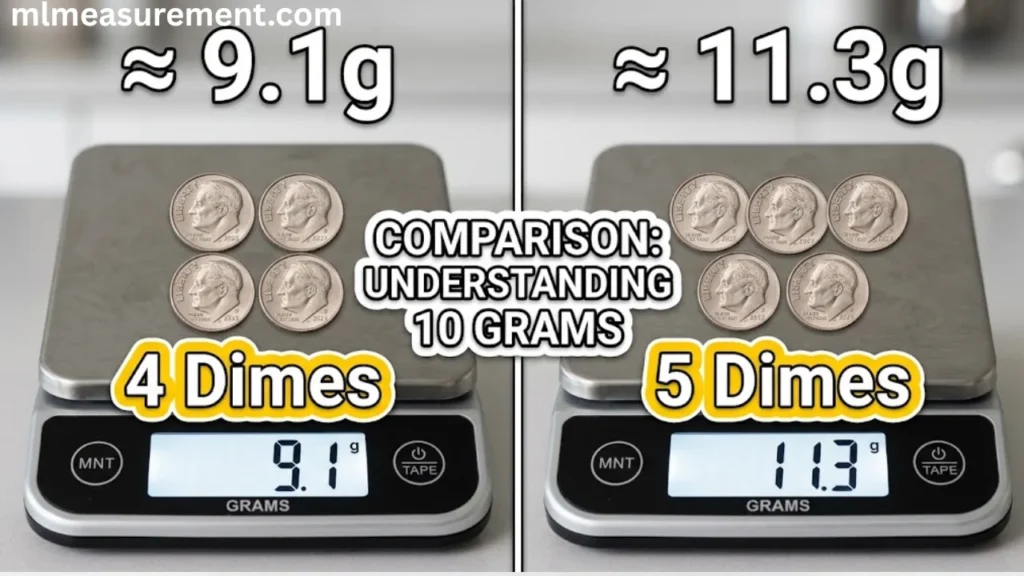
Four to five US dimes are a reference most guides skip entirely. A dime weighs just 2.268 grams, so four dimes land near 9.07 grams and five push you slightly past 10. It’s a lesser-known trick, but dimes work in a pinch when nickels aren’t handy.
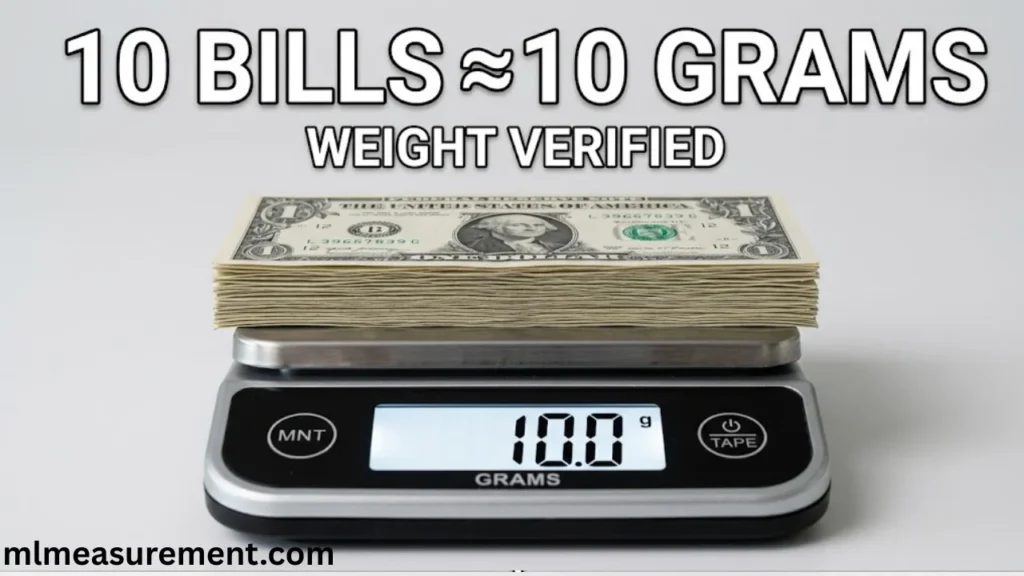
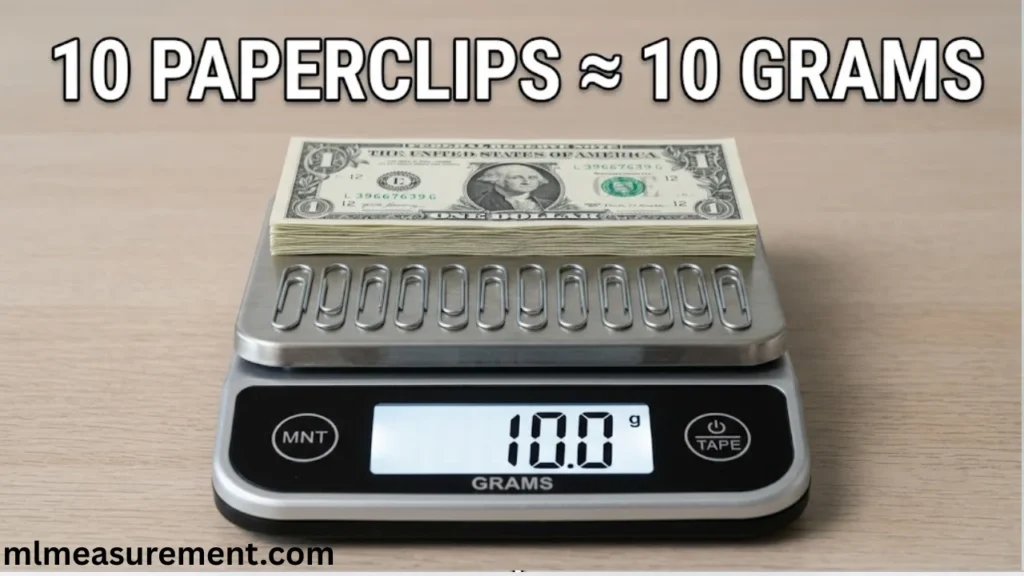
Ten US dollar bills are surprisingly consistent. Because American currency is printed on a cotton-linen blend rather than standard paper, each bill weighs almost exactly 1 gram, regardless of denomination.
Office and Desk Items
Ten standard paperclips are the classic office reference. Each galvanized steel clip weighs close to 1 gram, so a small stack of ten gives you a near-perfect 10-gram sample without leaving your desk.
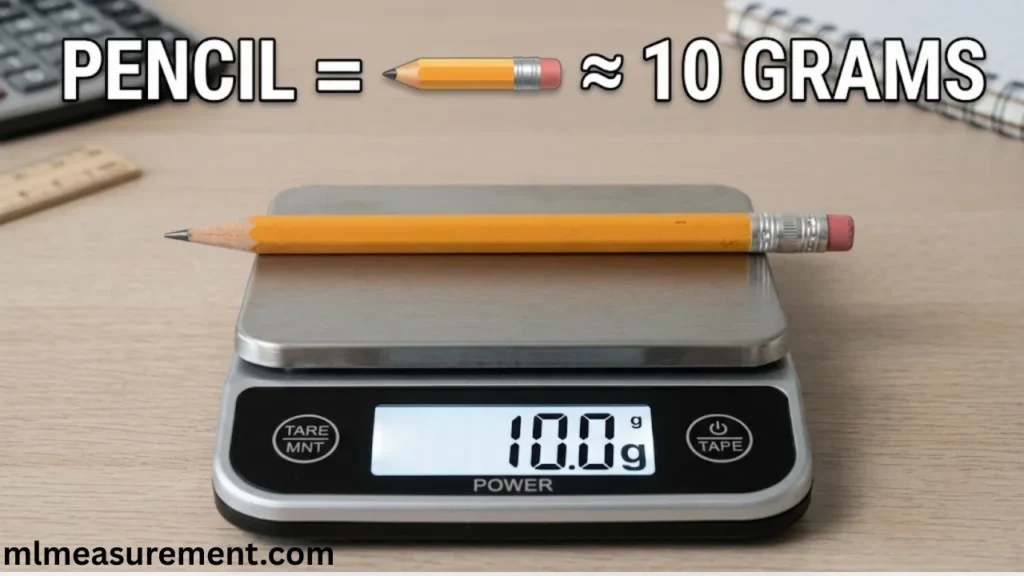
One unsharpened graphite pencil typically weighs 8 to 10 grams. The cedar barrel, graphite core, metal ferrule, and eraser combine into a weight that’s held steady across manufacturers for decades.
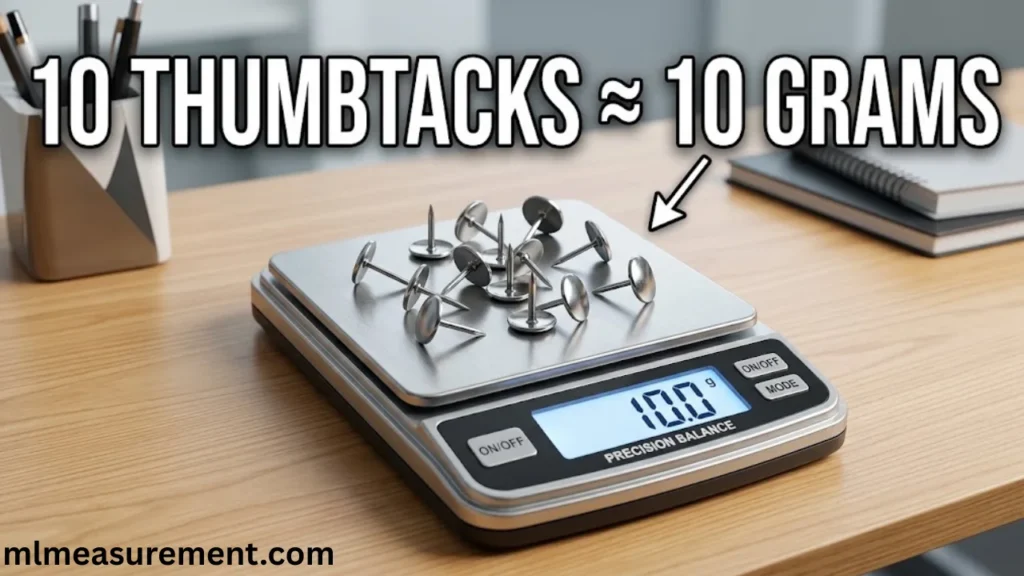
Ten metal thumbtacks work almost identically to paperclips — each one hovers around 1 gram, making a small handful an easy stand-in for a scale.
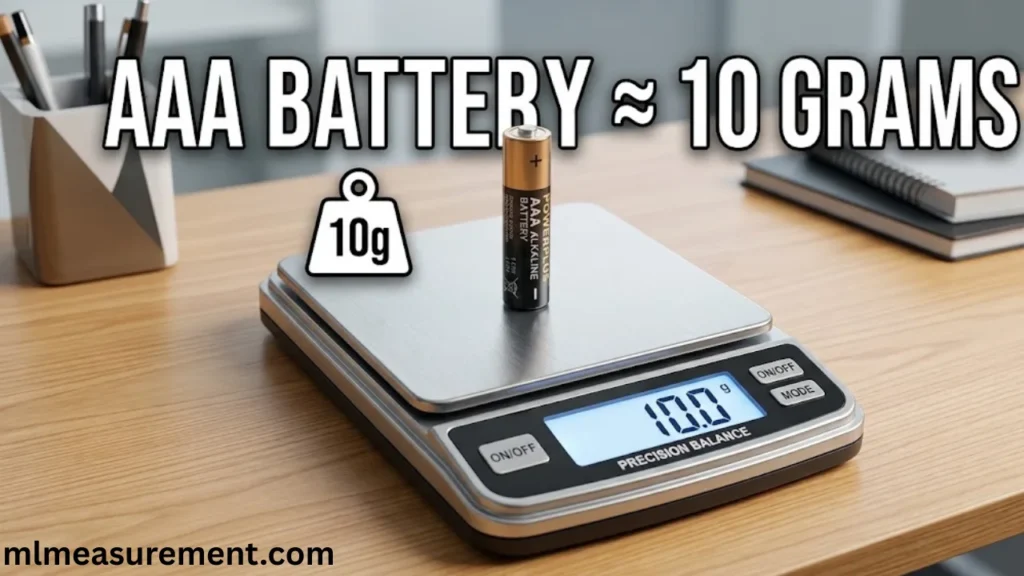
One AAA battery is a reference almost no comparison guide mentions, yet it’s one of the most accurate. A standard alkaline AAA cell weighs between 8 and 11.5 grams, depending on the brand. Next time you swap batteries in a remote, you’re literally holding a 10-gram benchmark.
Must visit: 100 Grams Heavy: 18 Real-Life Things That Weigh
Kitchen and Cooking References
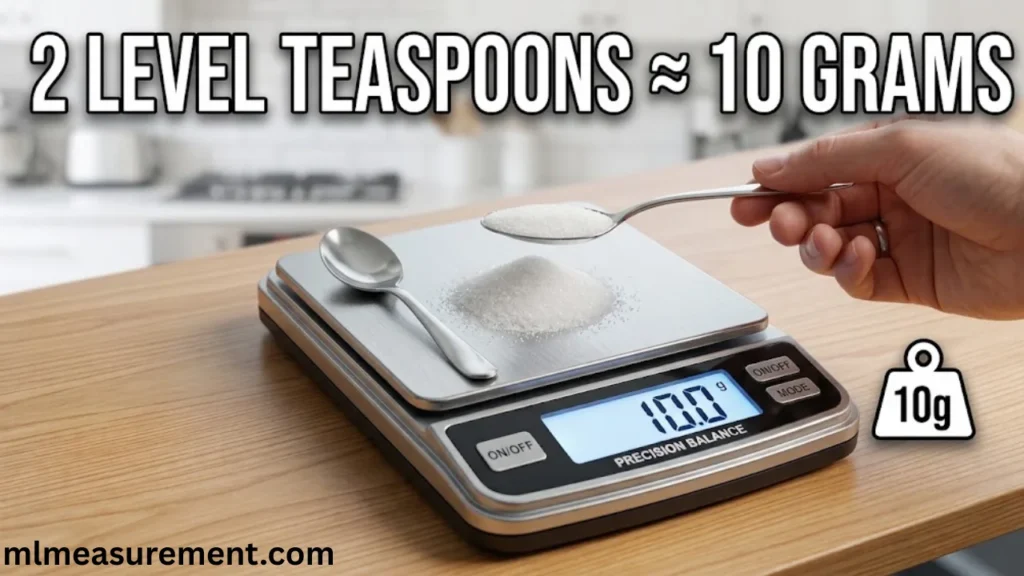
Two level teaspoons of granulated sugar weigh close to 10 grams combined, since a single teaspoon holds about 4 to 5 grams. This is one of the most practical entries on the list — bakers use it constantly when a recipe calls for small, precise amounts.
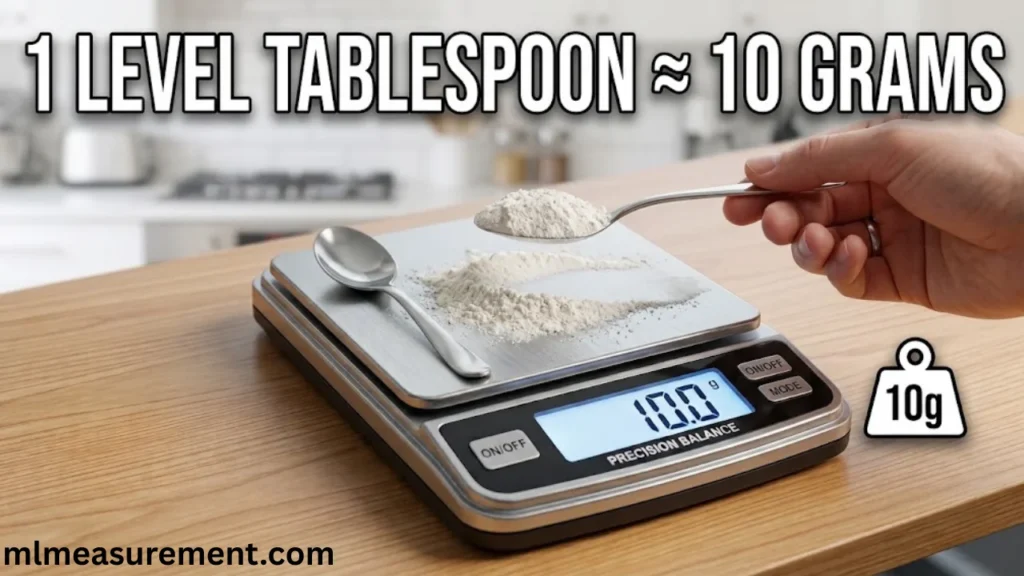
One tablespoon of all-purpose flour comes in around 8 to 10 grams, but only if you spoon it into the measuring tool and level it off with a flat edge. Scooping directly from the bag packs the flour down and inflates the weight, which throws off baking accuracy.
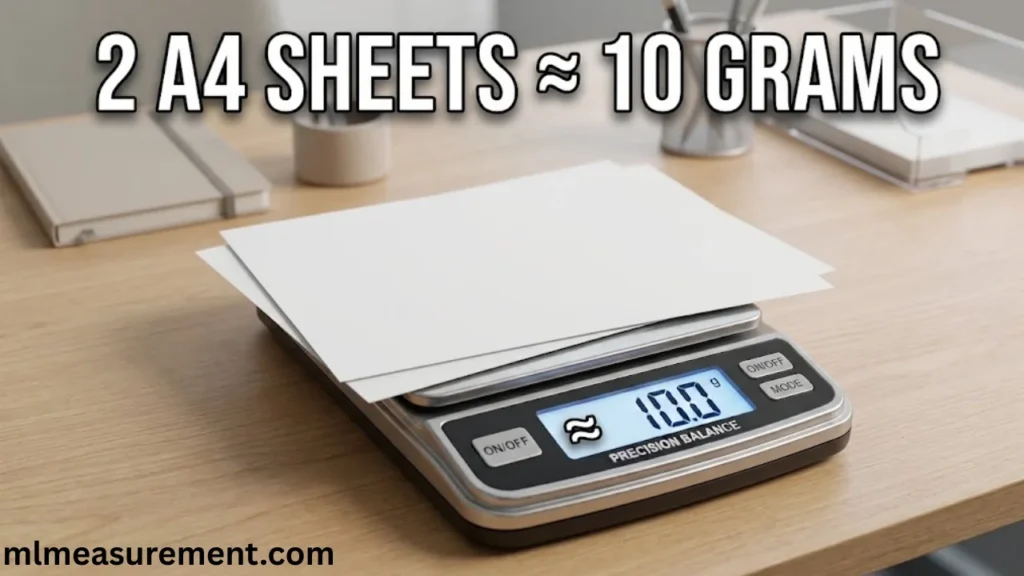
Two sheets of standard A4 paper weigh about 10 grams together. Office paper is measured in gsm (grams per square meter), and the common 80-gsm sheet weighs roughly 5 grams each — so two sheets stacked hits the mark.
Everyday Carry and Personal Items
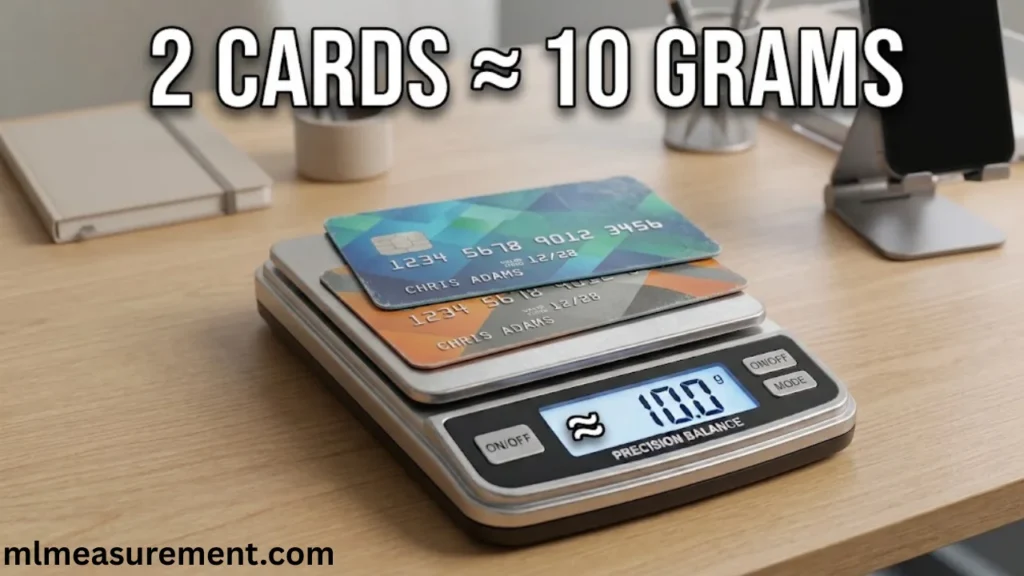
Two standard credit or debit cards weigh close to 10 grams combined. Every card issued under the ISO/IEC 7810 international standard — Visa, Mastercard, or otherwise — is built from PVC composite material and weighs almost exactly 5 grams each.
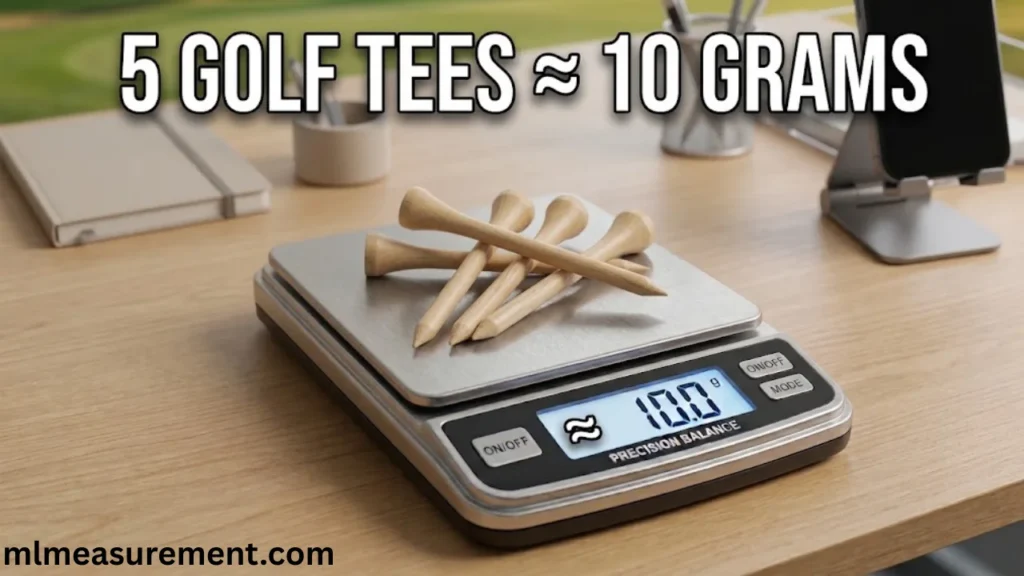
Five golf tees are an entry most weight guides never touch. A standard wooden golf tee weighs around 2 grams, so five of them bundled together approximate 10 grams. It’s a fun, unexpected reference for anyone who spends weekends on the course.
Precious Metal and Nutrition References
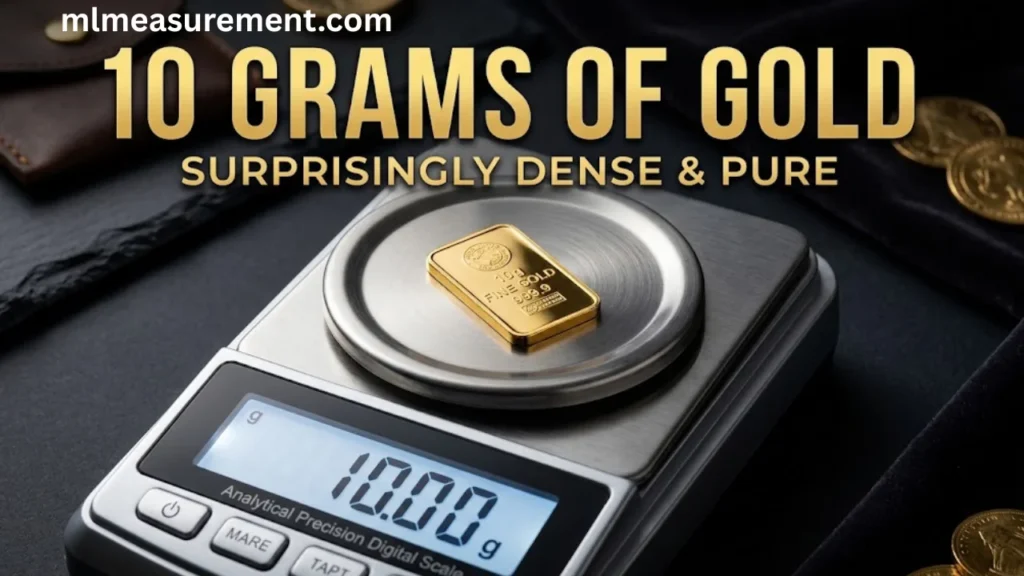
10 grams of gold is a real-world benchmark used in the bullion and jewelry trade. A 10-gram gold bar is a commonly sold investment size, small enough to fit in your palm, but dense enough that it feels noticeably heavier than a paperclip or a battery — a reminder that weight and size aren’t the same thing.
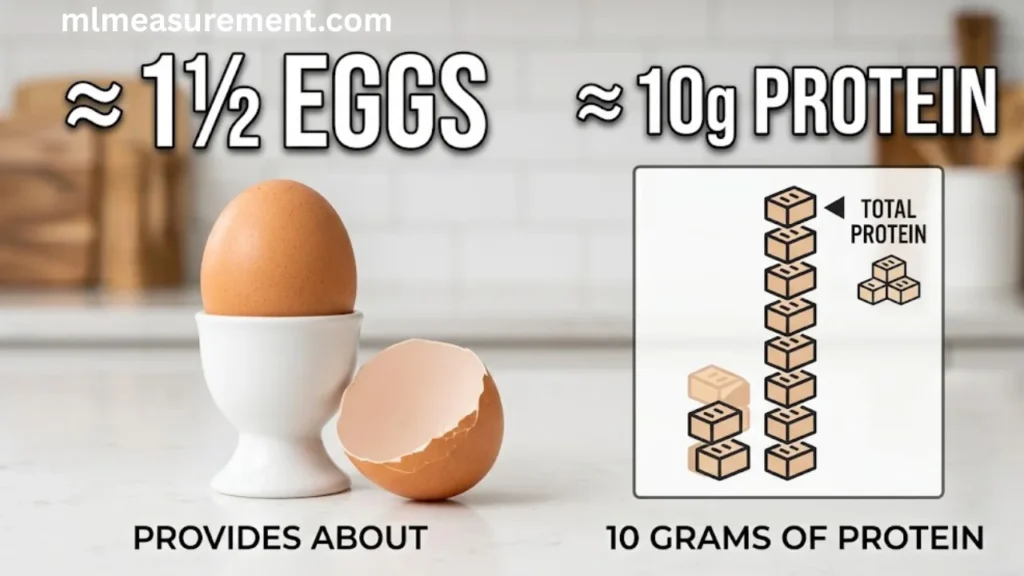
10 grams of protein is a nutrition-label reference worth knowing if you track macros. One large egg has roughly 6 grams of protein, so about one and a half eggs gets you to 10 grams — useful shorthand when reading food labels or planning meals.
How to Measure 10 Grams Without a Scale
You don’t always need a digital scale to get close. Here are three reliable, no-tech methods:
Use coins as a reference. Two nickels equal exactly 10 grams. Set them on one side of a simple household balance — a ruler resting on a pencil works fine — and add your item to the other side until it balances.
Use kitchen spoons. Two level teaspoons of sugar, or one leveled tablespoon of flour, will land you close to 10 grams. Always level the top with a flat edge like a butter knife for accuracy.
Use a digital kitchen scale for precision. Place an empty container on the scale, hit the tare button to zero it out, then slowly add your item until the display reads 10.0 grams. This remains the most accurate method, especially for cooking or shipping.
10 Grams Compared to Other Everyday Weights
Context makes any measurement easier to grasp. Here’s how 10 grams stacks up against nearby weights:
- 1 gram — a single paperclip or dollar bill
- 10 grams — two nickels, a pencil, or a AAA battery
- 20 grams — roughly two AAA batteries or four nickels
- 28.35 grams — exactly 1 ounce
- 100 grams — about 3.5 ounces, or ten times this article’s topic
Ten grams sits at a strange middle point — too light to notice in a bag, but heavy enough to matter in recipes, postage, and jewelry.
FAQs
How heavy is 10 grams?
Ten grams is very light — about 0.35 ounces or 0.022 pounds. It’s roughly the weight of two nickels or a single unsharpened pencil.
How much do 10 grams feel like?
It feels almost weightless in your hand — similar to holding two coins or a AAA battery. Most people can barely detect the weight without paying close attention.
How much does 10 grams look like?
Visually, 10 grams looks like two stacked nickels, a small pile of ten paperclips, or two credit cards laid on top of each other. The size stays small even when the material is dense, like gold.
How much is 10 grams?
In everyday terms, 10 grams equals 0.35 ounces, 0.022 pounds, or 0.01 kilograms. It’s also exactly 50 carats and 10,000 milligrams.
Conclusion
Ten grams may be small, but it shows up everywhere — in your wallet, your pantry, and your desk drawer. Whether you reach for two nickels, a pencil, or a AAA battery, you now have fifteen reliable ways to picture this 10-gram weight without ever touching a scale.

Rehmaan Khan is a Measurement Content Researcher Specializing in MLmeasurement, Size Guides, Charts, and Simple Educational Measurement Content.