
Ever stared at a recipe or nutrition label and wondered, “how much is 3 ounces, really?” You’re not alone.
This guide breaks down 3 ounces in plain terms — grams, milliliters, and everyday objects you already know — so you never have to guess again.
Table of Contents
What Is 3 Ounces? (Quick Definition & Conversion)
3 ounces equals 85.05 grams (85.0486 g, to be exact). That’s the short answer.
An ounce (oz) is a unit of weight from the US customary system, the measurement system used across America for cooking, groceries, and body weight. A gram (g), by contrast, belongs to the metric system, used almost everywhere else in the world.
There’s a small wrinkle worth knowing: the ounce used for food and everyday weight is the avoirdupois ounce. A different unit, the troy ounce, is reserved for precious metals like gold and silver, and it’s slightly heavier (31.1 grams). So when a recipe says “3 ounces,” it always means the avoirdupois kind.
3 Ounces in Grams, ML, and Other Units
Here’s the math: 3 oz × 28.3495 g = 85.05 g. That conversion factor (28.3495) never changes — it’s the fixed weight of one avoirdupois ounce.
| Unit | Value |
|---|---|
| Grams | 85.05 g |
| Kilograms | 0.085 kg |
| Milligrams | 85,048 mg |
| Pounds | 0.1875 lb |
Now, here’s where most conversion sites get sloppy — and where a lot of confusion starts. Weight ounces and fluid ounces are not the same thing. A weight ounce measures mass. A fluid ounce measures volume, based on water’s density.
So 3 fluid ounces equals about 88.7 milliliters, not 85. They’re close, but not identical, because they’re measuring completely different properties. This distinction matters most when you’re pouring liquids versus weighing solids like meat or flour.
One place this shows up constantly: airport security. The TSA’s well-known “3-1-1 rule” limits carry-on liquids to containers of 3.4 fluid ounces (100 ml) or less. That’s why so many people ask if 3 oz equals 100 ml — it’s close, but the real conversion is 3.4 fl oz, not 3.
11 Real-Life Things That Weigh 3 Ounces
Numbers on a page don’t always stick. Objects do. Here are 11 things that weigh almost exactly 3 ounces, so you can picture it instantly:
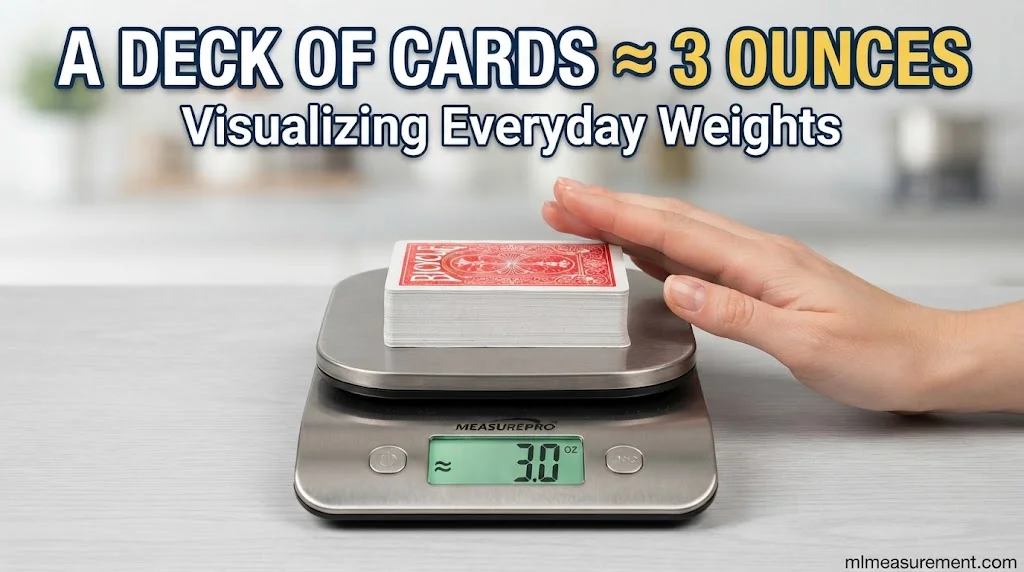
- A deck of playing cards — the classic reference point nutritionists use
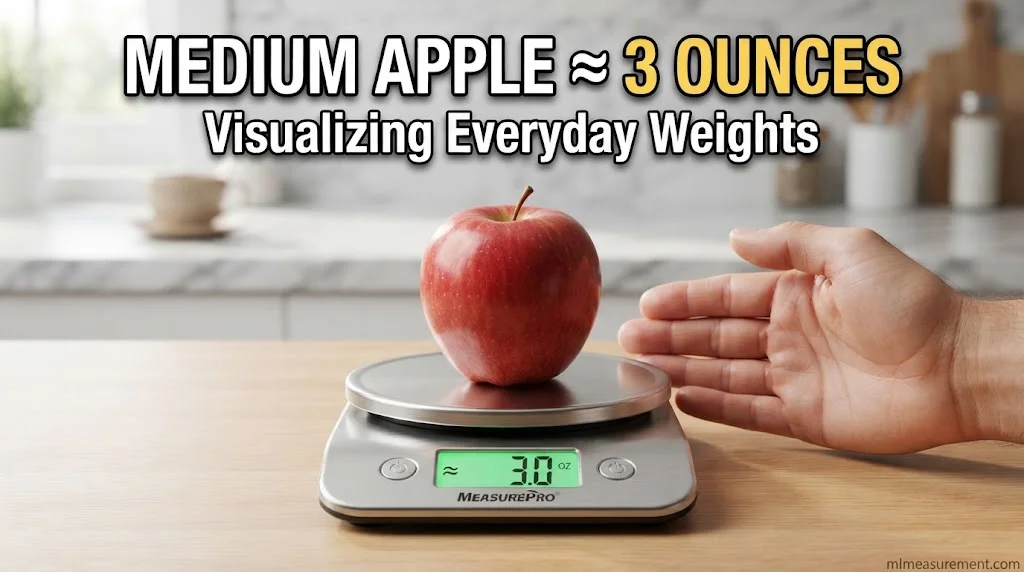
- A medium-sized apple — smaller than you’d guess
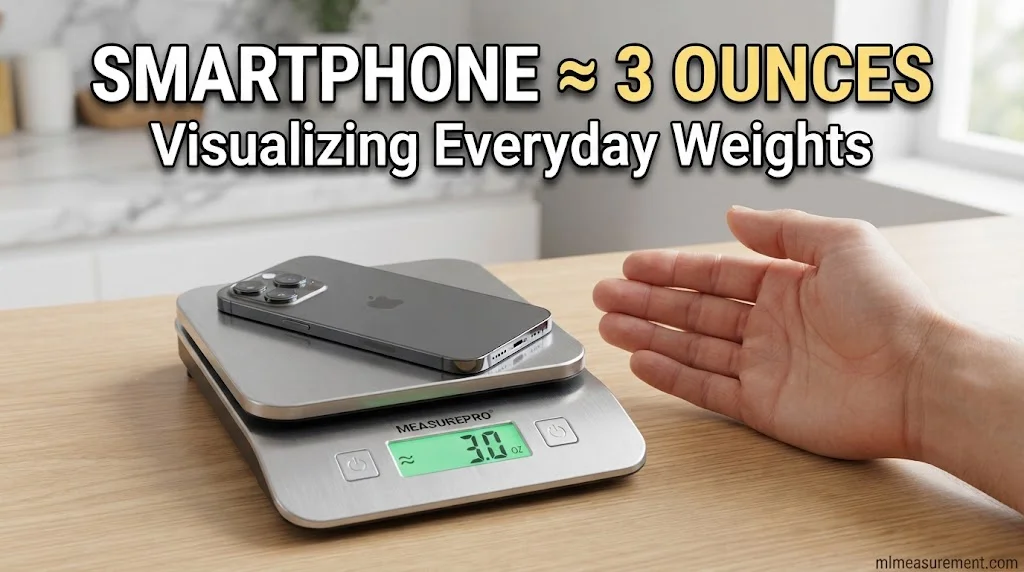
- An average smartphone — most phones land right around this weight
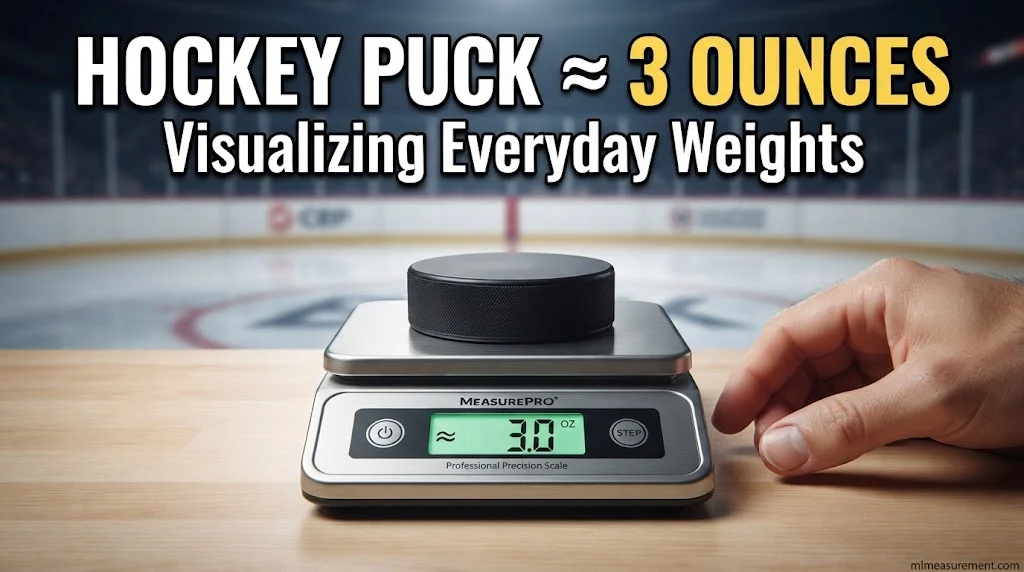
- A hockey puck — dense, compact, and surprisingly close
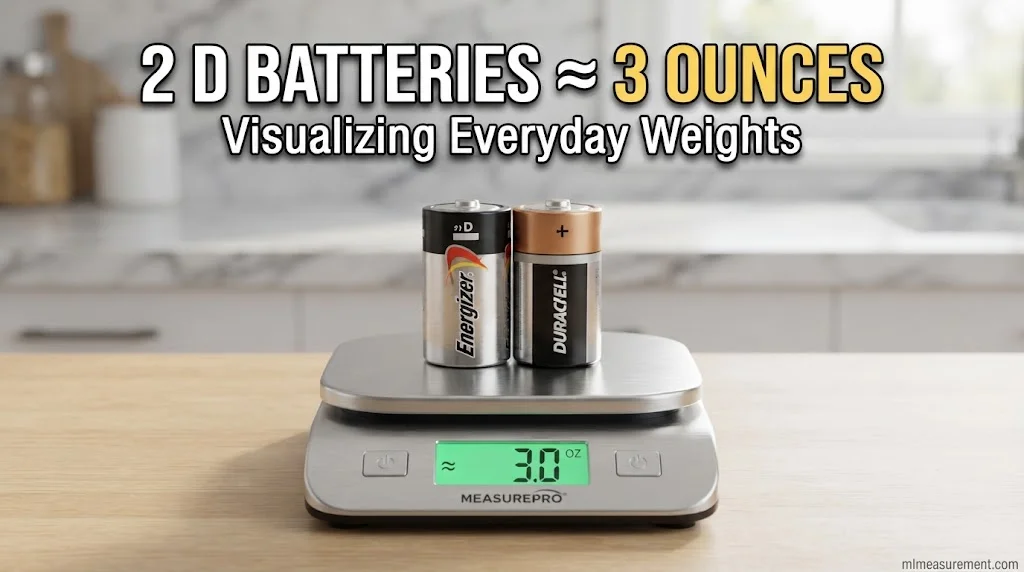
- Two D-cell batteries — combined weight
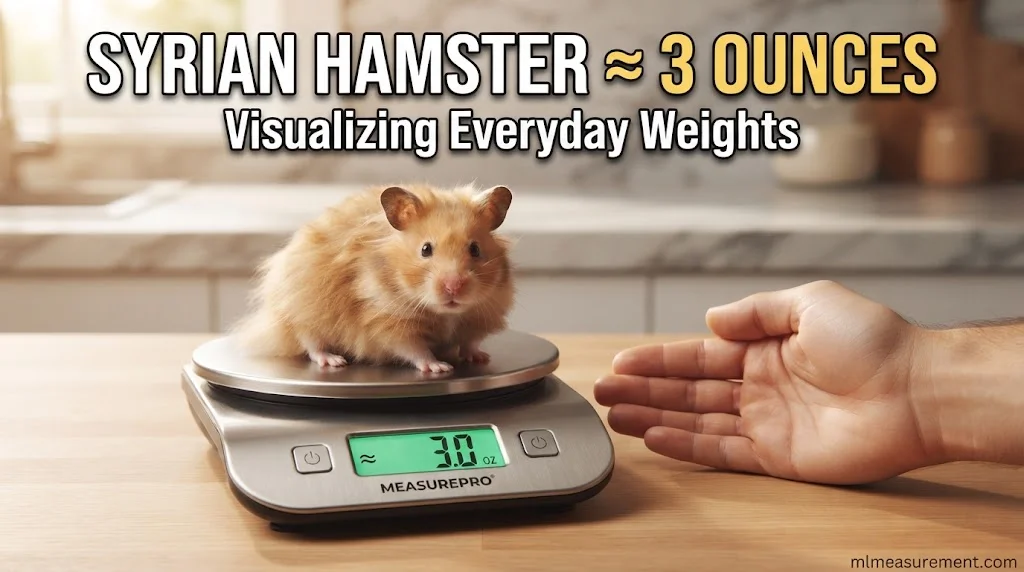
- A hamster — a full-grown Syrian hamster, on average
Must visit: 500 Feet Long: 16 Real-Life Things That Measure About 500 Feet
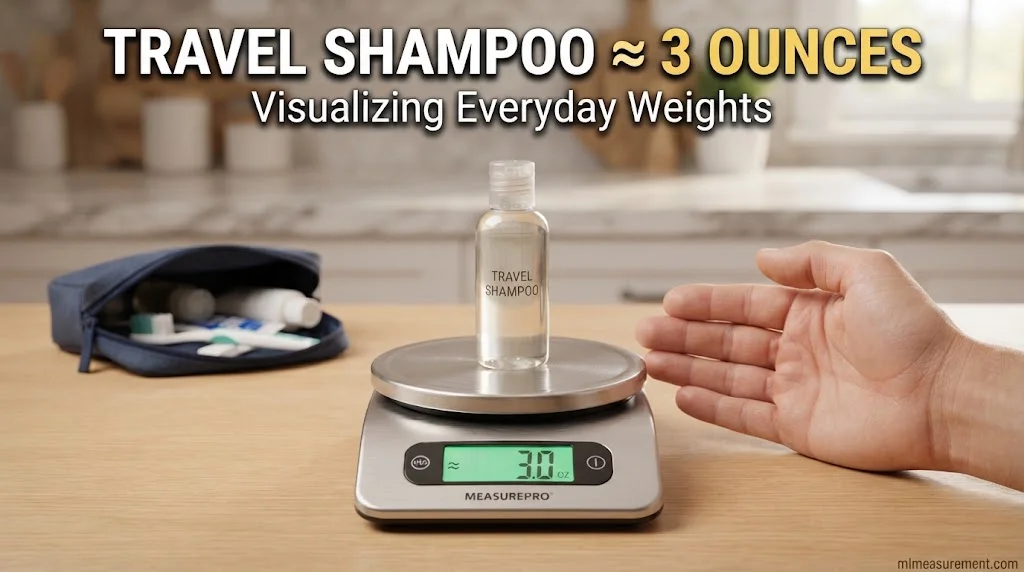
- A travel-size shampoo bottle — the TSA-approved kind
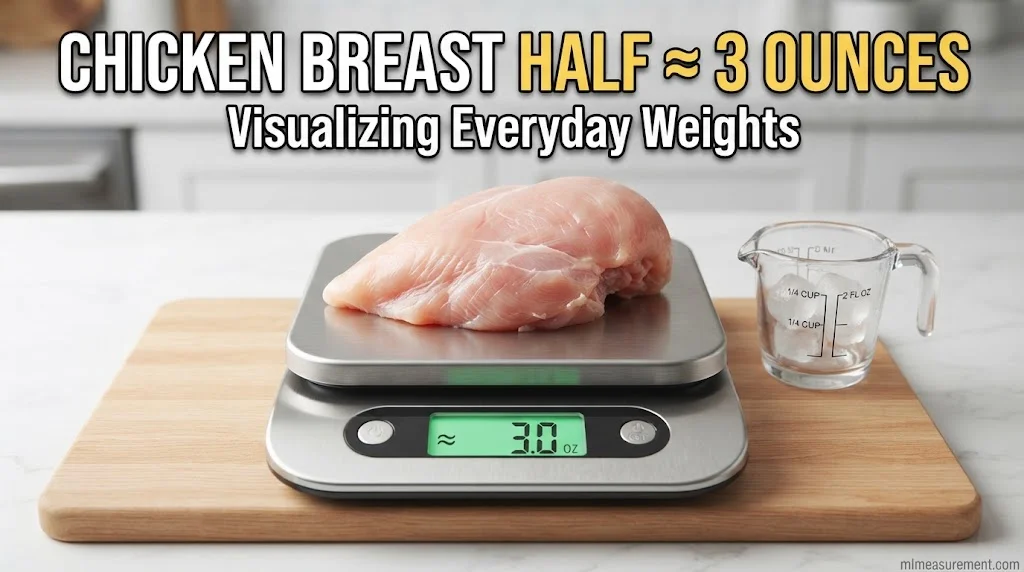
- A raw chicken breast half — before cooking shrinks it down
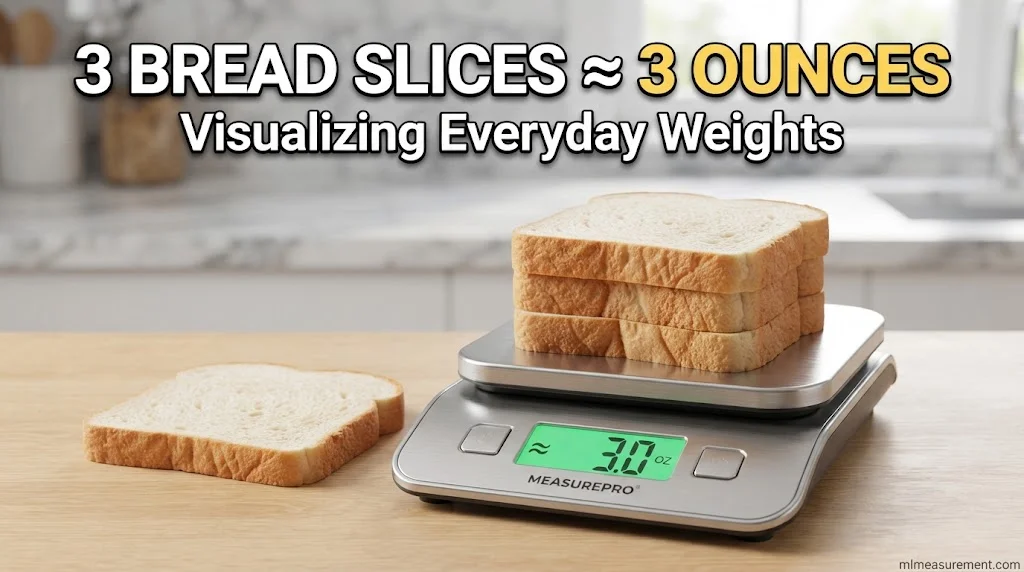
- Three slices of sandwich bread
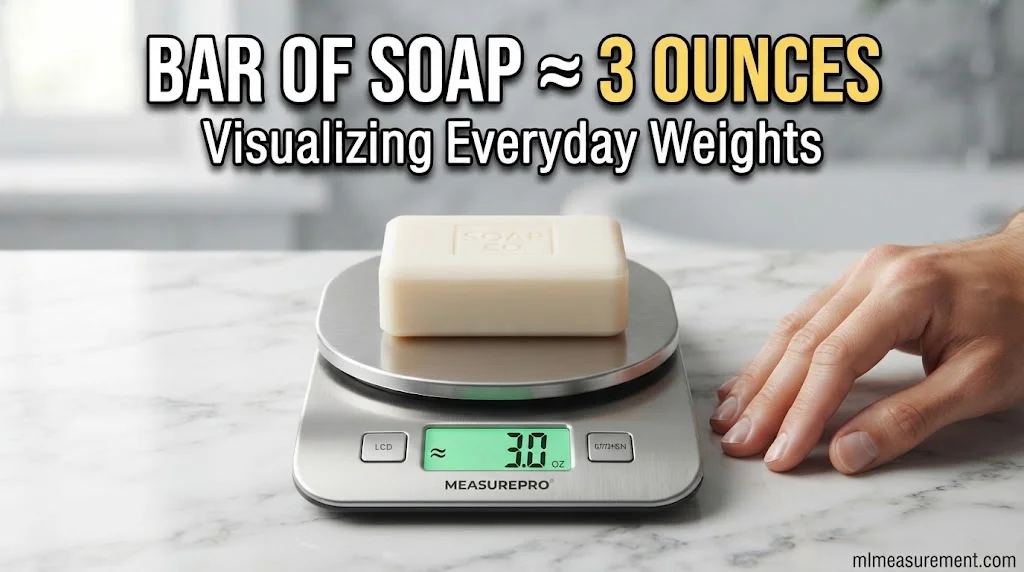
- A bar of soap — a standard bath-size bar
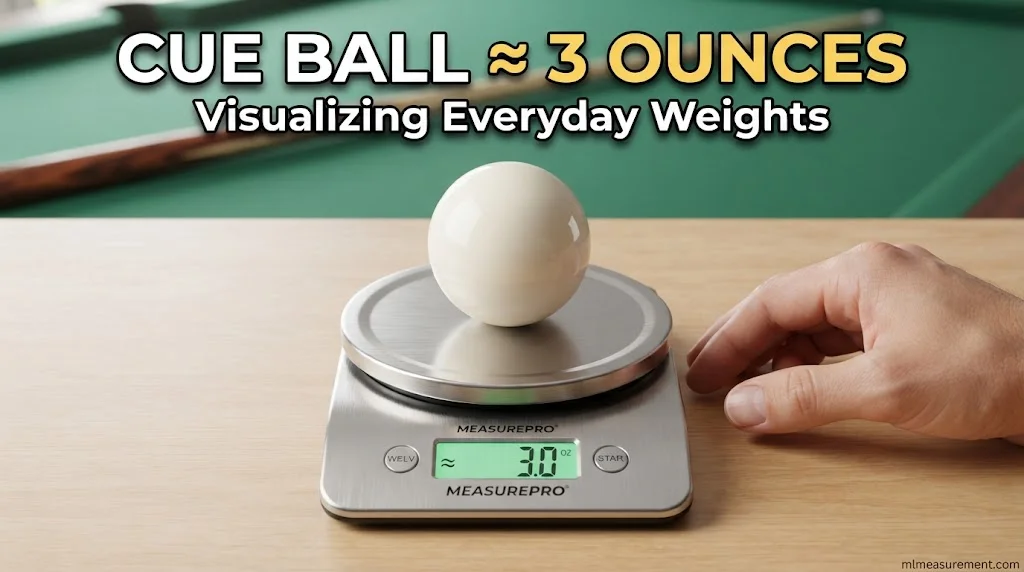
- A billiard cue ball
Notice a pattern? Many of these are hand-sized. That’s not a coincidence — 3 ounces sits comfortably in the palm of an adult hand, which is exactly why it became a standard reference weight in nutrition science.
Why Knowing 3 Ounces Matters (Cooking, Nutrition & Portion Control)
Here’s where 3 ounces stops being trivia and becomes genuinely useful.
The USDA’s MyPlate guidelines treat 3 ounces of cooked meat, poultry, or fish as one standard serving — roughly the size of a deck of cards or the palm of your hand. That single visual cue removes the need for a kitchen scale at every meal.
Protein content backs this up with real numbers. A 3-ounce cooked serving typically delivers 20 to 27 grams of protein, depending on the cut. Braised beef top round runs closer to 29 grams; a fried chicken portion sits nearer 24. Either way, one serving covers roughly half of an average adult’s daily protein target of 46 to 56 grams.
Raw meat weighs more than cooked meat, since cooking causes shrinkage through moisture loss. That’s why raw nutrition labels often list a 4-ounce serving — it’s designed to cook down to about 3 ounces on your plate.
Beyond the kitchen, 3 ounces shows up in baking (a common flour or sugar measurement), in skincare and travel products, and in jewelry and metalwork, where the troy ounce version applies instead. Context always decides which “ounce” you’re dealing with.
FAQs About 3 Ounces
Is 3 oz 100 ml?
Not quite. 3 fluid ounces equals approximately 88.7 ml, not 100 ml. The 100 ml figure people often associate with “3 oz” actually matches 3.4 fluid ounces — the exact TSA carry-on liquid limit.
What does a 3 ounce look like?
Picture a deck of playing cards, a medium apple, or an average smartphone. For meat and poultry, it’s about the size of your palm, not counting your fingers.
Is 3 ounces 100g?
No. 3 ounces equals 85.05 grams, not 100 grams. To reach 100 grams, you’d need about 3.53 ounces.
What is 3 oz in ml?
If you mean 3 fluid ounces, that’s about 88.7 ml. If you mean 3 ounces by weight (like meat or flour), milliliters don’t directly apply, since weight and volume measure different things.
Conclusion
3 ounces works out to 85.05 grams — or, if you’re thinking in liquid terms, about 88.7 ml. Whether you’re portioning dinner, packing a carry-on, or just satisfying curiosity, that palm-sized, deck-of-cards weight is easier to remember once you’ve seen it in real-world terms.

Rehmaan Khan is a Measurement Content Researcher Specializing in MLmeasurement, Size Guides, Charts, and Simple Educational Measurement Content.