
Ever picked something up and wondered, “How much does this actually weigh?” 10 ounces is one of those in-between weights — not tiny, not heavy — that shows up more often than you’d think.
This guide breaks down exactly what 10 ounces means, shows you 10 real-life things that weigh about 10 ounces, and answers the most common conversion questions people search for. No fluff, just clear facts.
Table of Contents
What Is 10 Ounces? Quick Conversion Guide
An ounce (oz) is a unit of weight used mostly in the United States. It belongs to the US customary system, while most of the world uses the metric system instead.
Here’s the core fact: 10 ounces equals 283.5 grams (283.495 g, to be exact). The math behind it is simple — one ounce equals 28.34952 grams, so multiplying by 10 gives you the total.
There’s a twist worth knowing. Not all ounces are the same. A regular avoirdupois ounce (the one used for food, body weight, and shipping) is different from a troy ounce, which is used for precious metals like gold and silver. A troy ounce is slightly heavier, at about 31.1 grams. So when someone mentions a “10 oz silver bar,” they’re usually talking about troy ounces, not the everyday kind.
One more distinction matters: weight ounces measure mass, while fluid ounces measure volume. They’re not interchangeable unless you’re measuring water, where the two happen to line up closely. Keep this in mind — it clears up a lot of confusion later in the FAQs.
10 Real-Life Things That Weigh About 10 Ounces
Numbers on a page don’t always click. Comparing 10 ounces to everyday objects makes the weight easier to picture and remember.
Everyday Household Items
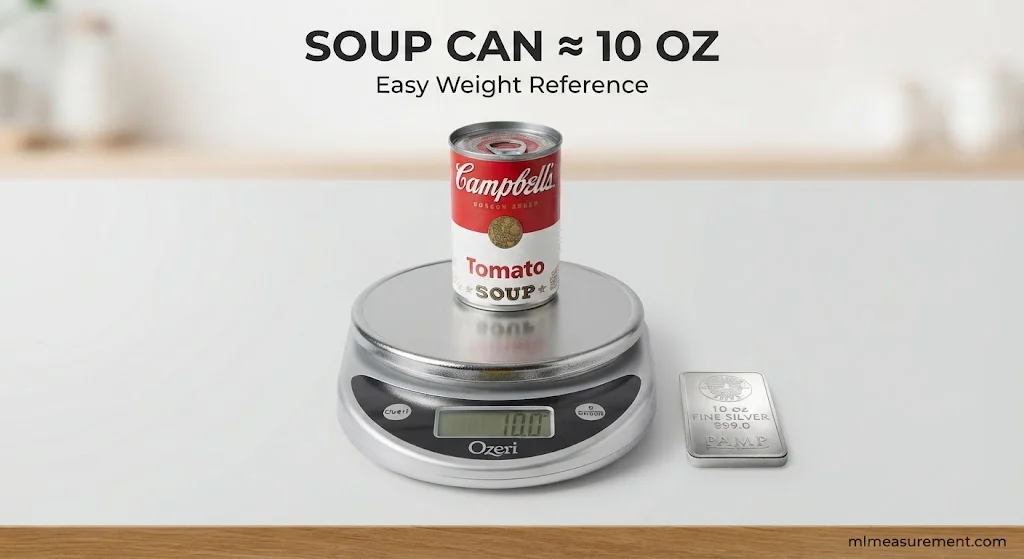
A standard can of soup typically weighs close to 10 ounces. So does
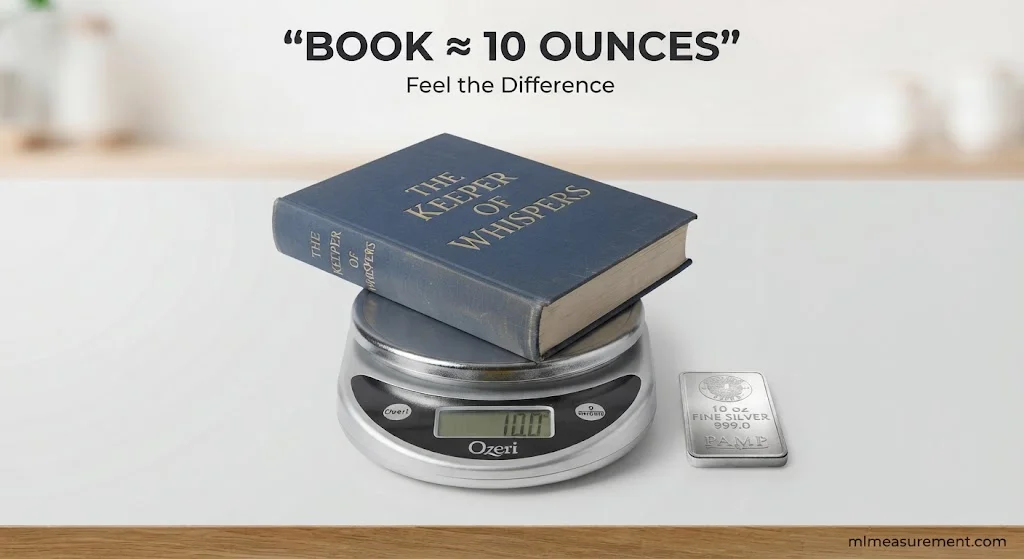
hardcover novel of average length.
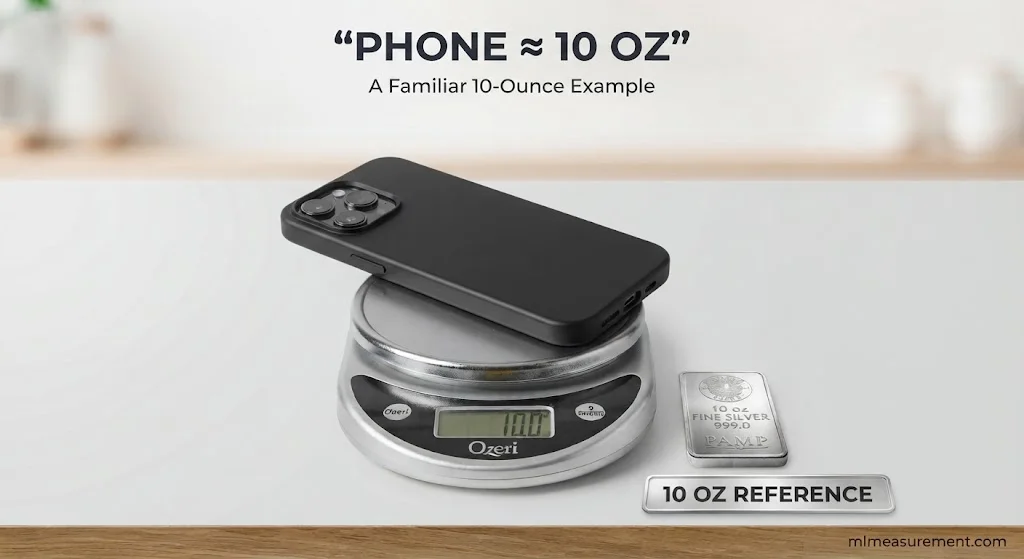
smartphone with a protective case often lands right around this mark too — a handy reference next time you’re curious about your phone’s heft.
Must visit: 3 Ounces: 11 Real-Life Weight Comparisons You Can Visualize
Food and Kitchen Items
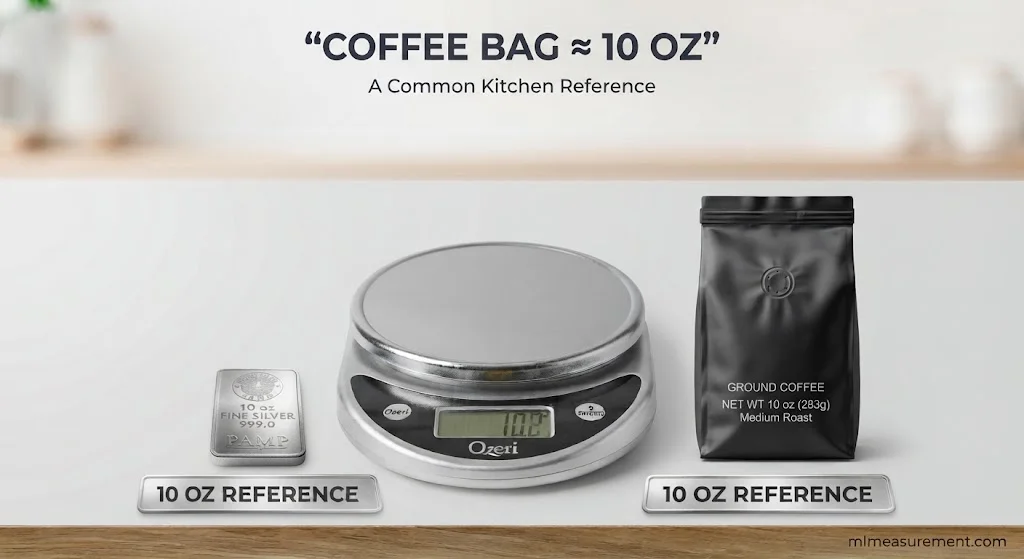
A small bag of ground coffee (the kind sold for home brewing) frequently weighs 10 to 12 ounces.
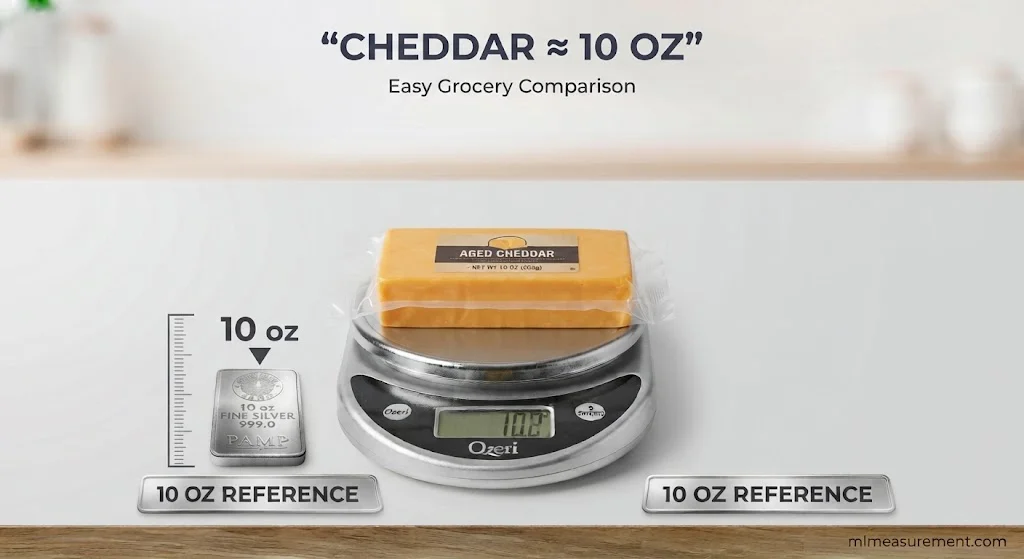
block of cheddar cheese from the grocery store is another close match.
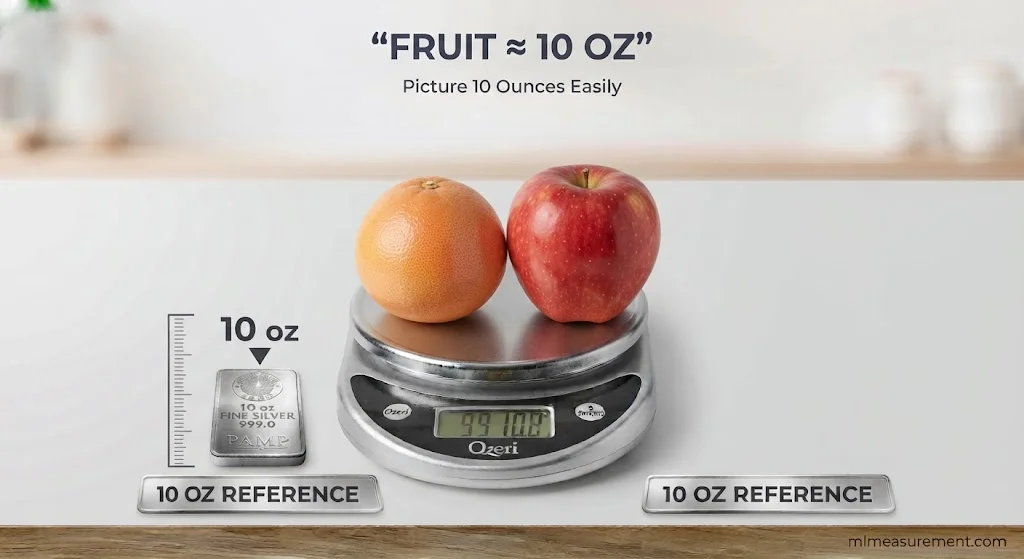
medium grapefruit or a large apple can tip the scale near 10 ounces.
Money, Metals, and Collectibles
In the world of precious metals.
10 oz silver bar is a well-known product among investors. Refiners like PAMP and Scottsdale produce these bars using.
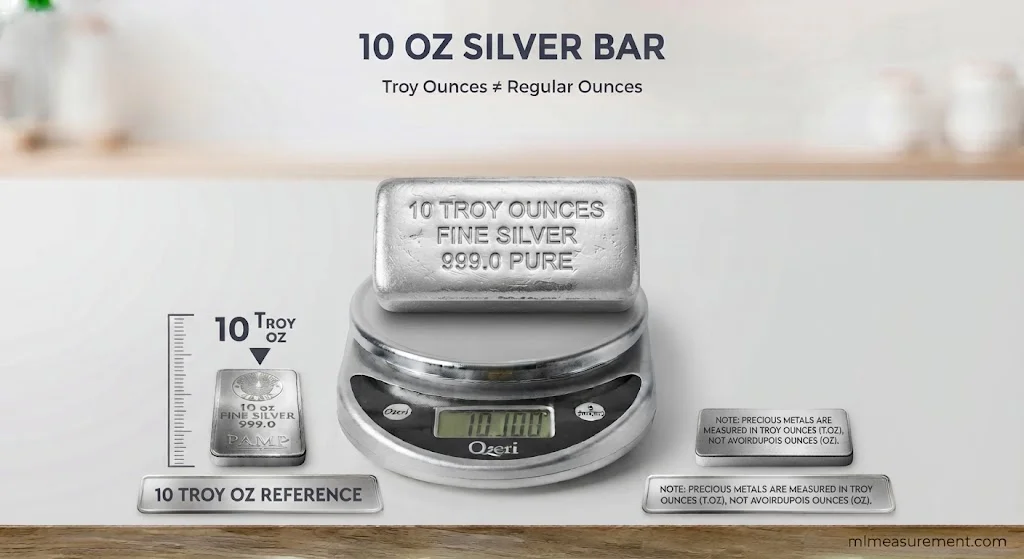
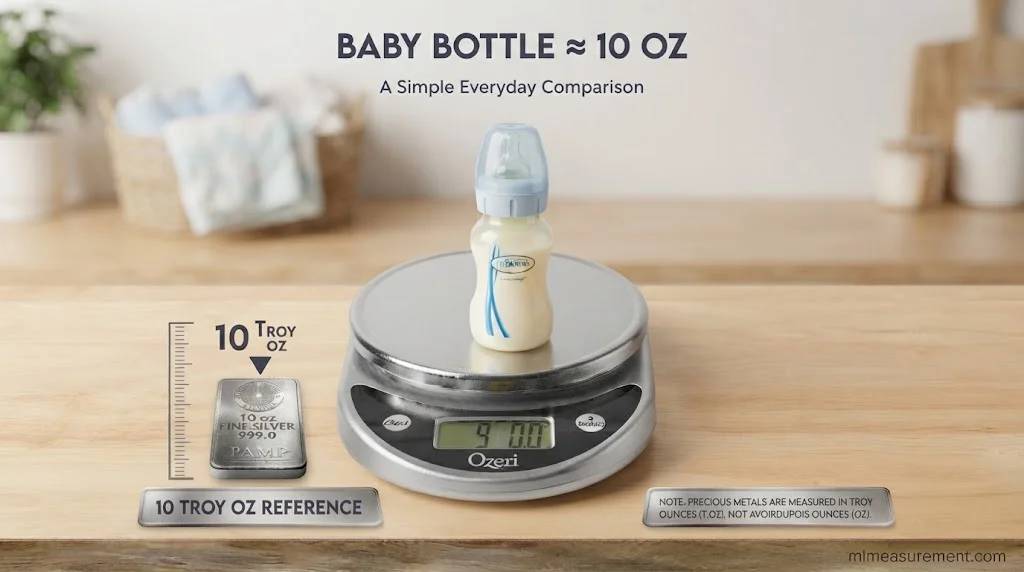
troy ounces, not the standard avoirdupois ounce. A 10 oz silver bar is a popular size — bigger than a 5 oz bar, but smaller than the common 1 kilogram bar, making it a favorite among people building a metal stack gradually.
Fitness and Baby-Related Comparisons
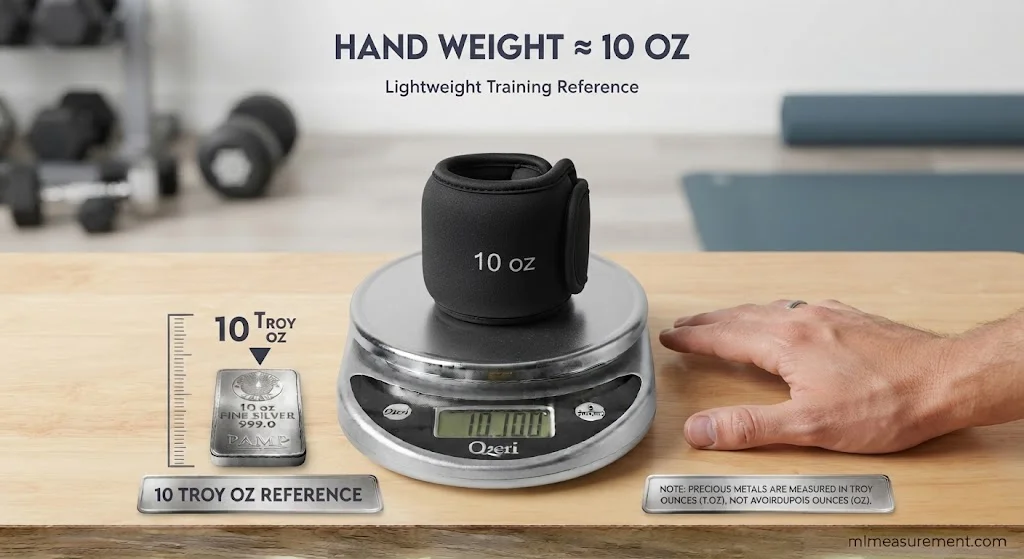
A small hand weight or wrist weight often comes in around 10 ounces, useful for light strength training or rehab exercises. For new parents.
filled baby bottle with formula or breast milk frequently weighs close to this amount too — a small but meaningful detail during those early feeding routines.
10 Ounces Conversion Chart
Sometimes a table says more than a paragraph ever could.
| Ounces (oz) | Grams (g) | Kilograms (kg) | Water Volume (mL) | Cups (approx.) |
|---|---|---|---|---|
| 1 oz | 28.35 g | 0.028 kg | ~29.5 mL | 0.125 cup |
| 5 oz | 141.75 g | 0.142 kg | ~148 mL | 0.625 cup |
| 10 oz | 283.5 g | 0.283 kg | ~296 mL | 1.25 cups |
| 16 oz | 453.6 g | 0.454 kg | ~473 mL | 2 cups |
Formula to remember: grams = ounces × 28.35
Why Knowing What Weighs 10 Ounces Is Useful
This isn’t just trivia. Understanding 10 ounces has real, practical value.
Shipping and postage often hinge on small weight differences — knowing that a padded envelope with contents lands near 10 ounces helps you estimate costs before you even reach the post office.
Recipe portioning relies on accurate weight, especially in baking, where 10 ounces of flour behaves very differently than 10 ounces of sugar by volume.
Fitness tracking benefits too — comparing a small dumbbell or resistance band to a familiar 10 oz object gives you an intuitive sense of load without needing a scale nearby.
And honestly, being able to estimate weight by comparison is just a useful life skill — one that saves time when a scale isn’t handy.
FAQs
How much is 10 ounces in mL?
For water, 10 ounces equals about 296 mL. This works because water has a density of roughly 1 gram per milliliter, so weight and volume nearly match for this specific liquid.
Does 10 ounces equal 1 cup?
Not quite. 1 cup equals 8 fluid ounces, so 10 ounces is slightly more than a cup — about 1.25 cups.
What is 10 ounces of water?
By weight, 10 ounces of water is about 283.5 grams, and by volume, it’s close to 296 mL, or roughly 1.25 cups. Water is the one substance where these numbers line up cleanly, since 1 fluid ounce of water weighs almost exactly 1 ounce.
Is 10 oz 1 kg?
No. 10 ounces is only about 0.283 kilograms — far less than a full kilogram. You’d need close to 35.3 ounces to reach 1 kilogram.
Conclusion
10 ounces might seem like a small, forgettable number — until you start noticing it everywhere, from a can of soup to a silver bar to a filled baby bottle. Knowing the exact conversions, the difference between troy and avoirdupois ounces, and a few real-world comparisons makes this everyday unit far easier to picture and use with confidence.

Rehmaan Khan is a Measurement Content Researcher Specializing in MLmeasurement, Size Guides, Charts, and Simple Educational Measurement Content.