
The standard bathtub dimensions in the US are 60 inches long, 30 inches wide, and 14 to 20 inches high (152 x 76 x 36 to 51 cm). That is the common alcove tub.
But no single rule sets standard bathtub size. Tub type, depth, and room shape all change the fit. This guide gives you the size chart, the picking rules, and a checklist to use before you buy.
Table of Contents
Standard Bathtub Dimensions by Tub Type (Size Chart)
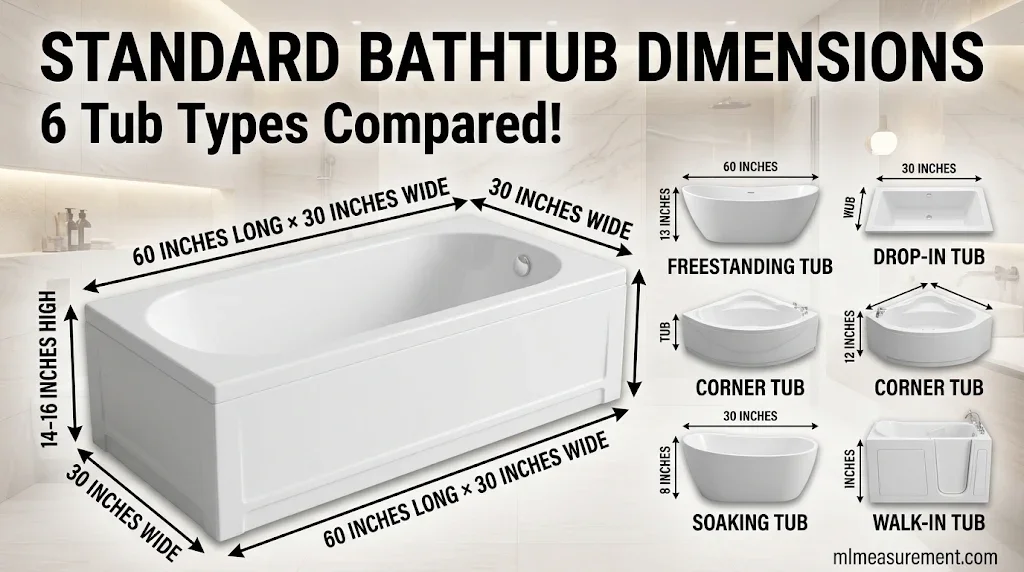
What is the standard bathtub size? It is a 60 x 30 inch alcove tub. Marbleseven puts the height at 14 to 20 inches, while Home Depot lists 14 to 16 inches. Rim height changes by brand, so always check the spec sheet.
Here is a bathtub size chart for the main tub types:
| Tub type | Length | Width | Height | Best for |
|---|---|---|---|---|
| Alcove tub | 54–60 in (137–152 cm) | 30–32 in (76–81 cm) | 14–16 in (36–41 cm) | Tub-shower combos |
| Drop-in tub | 45–72 in (114–183 cm) | 30–32 in (76–81 cm) | 14–20 in (36–51 cm) | Deck or platform installs |
| Freestanding tub | 55–72 in (140–183 cm) | 27–32 in (69–81 cm) | 15–20 in (38–51 cm), taller on some models | Spacious baths |
| Soaking tub | 60–72 in (152–183 cm) | 30–40 in (76–102 cm) | 20–24 in (51–61 cm) | Deep, full-body soaks |
| Corner tub | 60 x 60 in (152 x 152 cm) | Equal sides | 20–22 in (51–56 cm) | Square rooms |
| Walk-in tub | 48–60 in (122–152 cm) | 28–36 in (71–91 cm) | 30–40 in (76–102 cm) | Mobility needs |
Sources: HomeGuide and Hunker. Brands vary, so treat these as planning ranges.
Most charts skip three details. They matter just as much:
- Overall size vs. interior basin. The outer size does not show your real bathing room. A thick rim or a steep backrest can shrink the inside. Skyland Building explains this well.
- Soaking depth. It is measured from the tub floor to the overflow, not to the rim.
- Drain hand. Left, right, or center drain must match your plumbing, or you pay to reroute pipes.
How to Choose the Right Standard Bathtub Size for Your Bathroom
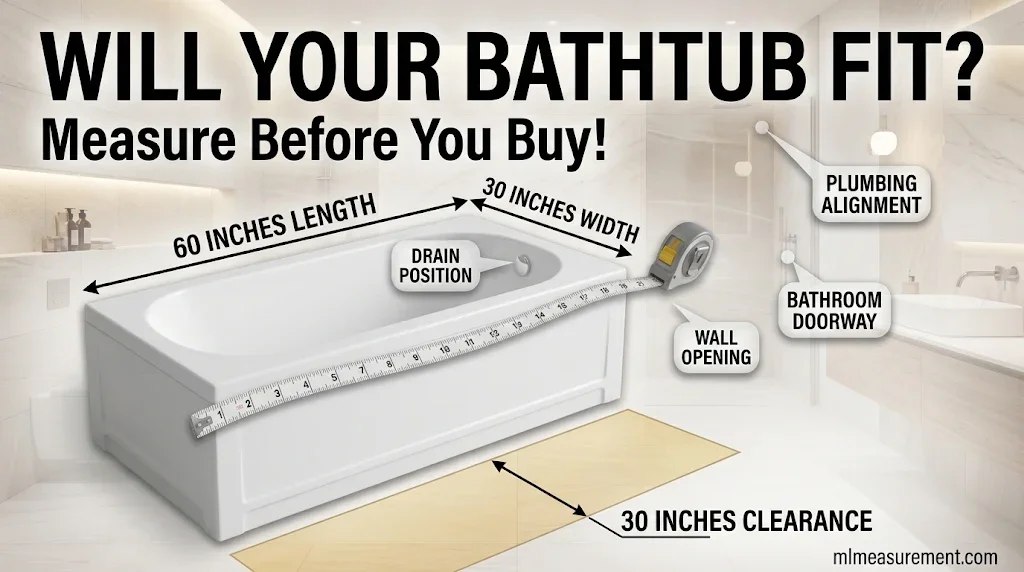
How much space do you need around a bathtub? The National Kitchen & Bath Association (NKBA) suggests 30 inches of clear space in front of a fixture. Code often allows as little as 21 inches. For accessible bathrooms, the ADA standard needs a clear floor space at least 30 inches wide along the full tub length.
Choosing the right bathtub comes down to understanding precise measurements, available space, and proper fit. Accurate dimensions matter in sports facilities too, so explore this soccer field size and measurement guide to understand standard pitch dimensions, penalty box sizes, and field markings across different playing levels.
How do you measure for a bathtub? Keep it simple:
- Measure the opening at the floor, the rim, and the top. Walls are often out of square.
- Measure the finished opening. Tile and waterproofing eat space.
- Note the drain side and the pipe position.
- Measure doors, hallways, and stair turns. A big tub must reach the room first.
Will any 60 inch tub fit a 60 inch opening? Not always. Flange, apron, and wall build-up change the fit, as Skyland points out. Compare the new tub’s drawing with your real opening.
How much does a full bathtub weigh? More than most people guess. Tub capacity runs from 30 to 110 gallons. With the tub and a bather, a filled tub can weigh 500 to 1,500 pounds. Water alone adds about 8.34 pounds per gallon. Check floor support for deep soaking tubs, especially upstairs.
Will your water heater keep up? A larger tub needs more hot water. Jaquar advises checking your heater before you pick a deep or freestanding model.
Bathtub Dimensions by Bathroom Size and Budget
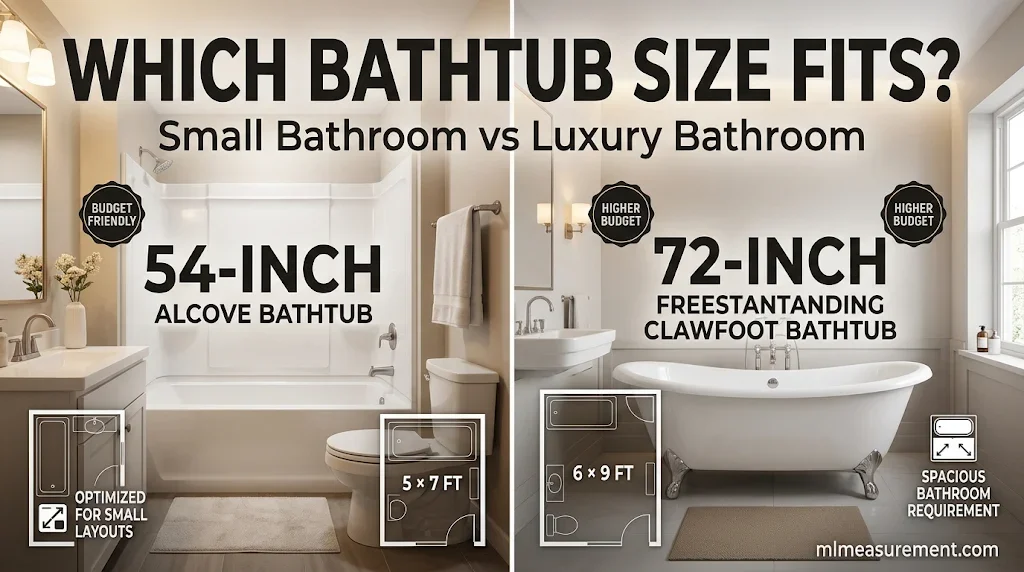
What size bathtub fits a small bathroom? Try a compact 54-inch alcove tub. HomeGuide suggests it for baths under 40 square feet. A full bath of about 5 x 8 feet (40 square feet) is built around a 60-inch tub.
How much room does each tub type need? Homedit gives these room sizes:
| Tub type | Suggested bathroom size |
|---|---|
| Alcove | 5 x 7 ft |
| Drop-in | 6 x 8 ft |
| Freestanding | 6 x 9 ft |
| Corner | 6.5 x 6.5 ft |
| Oversized | 7 x 10 ft or more |
How does size affect cost? Size changes the work, and work changes the bill. Swapping a 60-inch alcove tub for another 60-inch tub is simple. A 72-inch tub in the same spot needs the wall reframed. Material matters too. A fiberglass tub can weigh about 65 pounds, yet it holds around 350 pounds of water when full.
Standard Bathtub Dimensions Buying Checklist (2026)
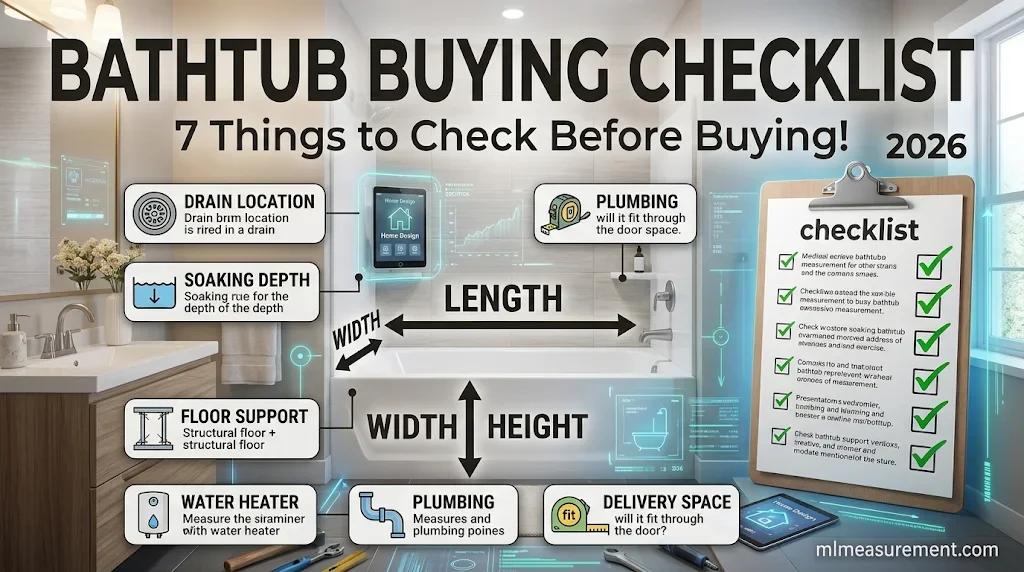
Run through this list before you order:
- Model number, size, and drain side confirmed.
- Overall size, interior basin, and soaking depth reviewed.
- Finished opening measured after tile.
- Plumbing, faucet position, and overflow matched.
- Floor load and water heater capacity checked.
- Clear space of 30 inches planned in front of the tub.
- Delivery path measured, including stairs and turns.
- Manufacturer spec sheet saved. There is no single legal size standard.
Bottom line: The standard tub is 60 x 30 inches, but your room decides the best fit. Measure twice, read the spec sheet, and plan the plumbing first.
FAQs
Is 72 inches a normal bathtub size?
Yes. A 72-inch tub is the top of the standard range. Lowe’s lists alcove tubs up to 72 inches, and soaking and freestanding tubs reach that length too. It suits tall bathers.
Is a 30 inch tub too small?
No. Thirty inches is the standard width, per Home Depot. If you want more elbow room, look at 32 to 36 inch models. Compare the interior width, since that is where you sit.
What is the most popular bathtub size?
The 60 x 30 inch alcove tub. Both Home Depot and Skyland call it the most familiar size.
What is the most comfortable bathtub shape?
Comfort depends less on shape and more on back support. Skyland lists backrest angle, bottom
Conclusion
length, and lumbar shape as key factors. Oval freestanding tubs can be up to 6 inches wider than a 60-inch alcove tub, which gives more shoulder room. Test a tub in a showroom if you can.

Rehmaan Khan is a Measurement Content Researcher Specializing in MLmeasurement, Size Guides, Charts, and Simple Educational Measurement Content.