
A 150kg Squat Mastery equals 330.69 lbs. It is a big milestone, and many lifters stall right below it.
The bar is rarely the problem. Five fixable form errors usually are. Below, you get each fix, plus quick 150 kg to lbs math and plate loading for US gyms.
Table of Contents
What Is 150 kg in Weight? (150 kg to lbs)
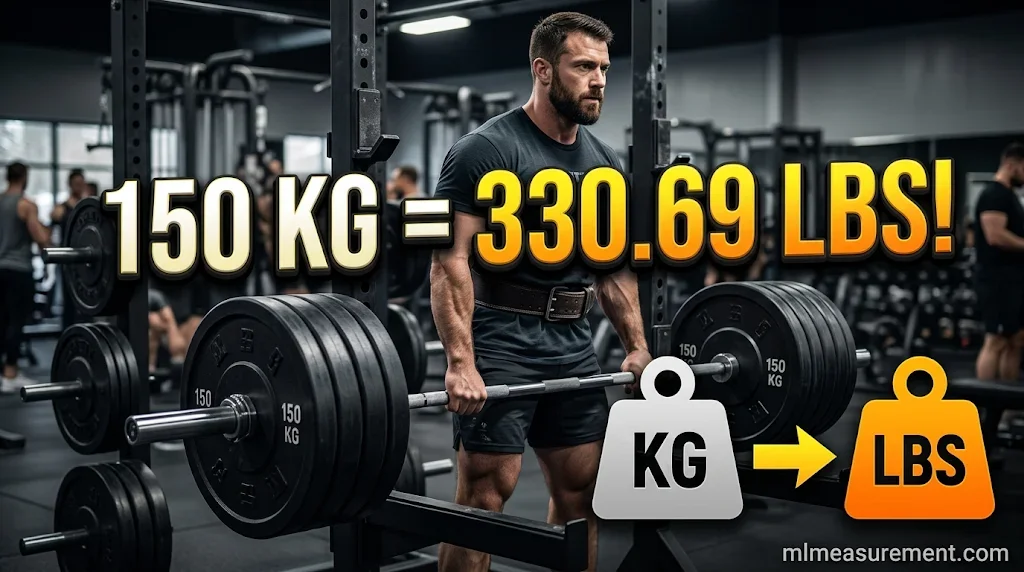
150 kg weighs 330.69 pounds. That is 150,000 grams, about 23.6 stone, and 0.15 metric tons. To convert, multiply kilograms by 2.20462. NIST defines one pound as exactly 0.45359237 kg. 150kg Squat Mastery
Quick trick: double 150 to get 300, then add 10%. You land on 330.
Handy kg to lbs conversions for 150 kg:
- Pounds: 330.69 lbs
- Grams: 150,000 g
- Ounces: about 5,291 oz
- Stone: about 23.6 st
- US short tons: about 0.165 tons
What weighs 150 kg in real life? An adult male giant panda can reach about 150 kg, according to WWF. An upright piano, a cast iron bathtub and two full half-barrel beer kegs land in the same zone. So do many sumo wrestlers.
How many people equal 150 kg? The CDC reports the average US man weighs 199.0 lbs. So 150 kg equals about 1.7 average American men.
What does 150 kg look like on a barbell? The IWF sets the men’s Olympic bar at 20 kg. Add 130 kg of plates and you reach 150 kg.
- Kilo plates, per side: two 25 kg plates plus one 15 kg plate.
- US plates, per side: three 45 lb plates, one 5 lb plate and one 2.5 lb plate. That makes 330 lbs, or 149.7 kg.
Need the exact number? 150 kg is 330.7 lbs, so add a small fractional plate.
Is 150 kg the same as 150 lbs? No. 150 kg is more than double 150 lbs. And 150 lbs equals 68.04 kg.
Is a 150kg Squat Good? (Strength Standards)
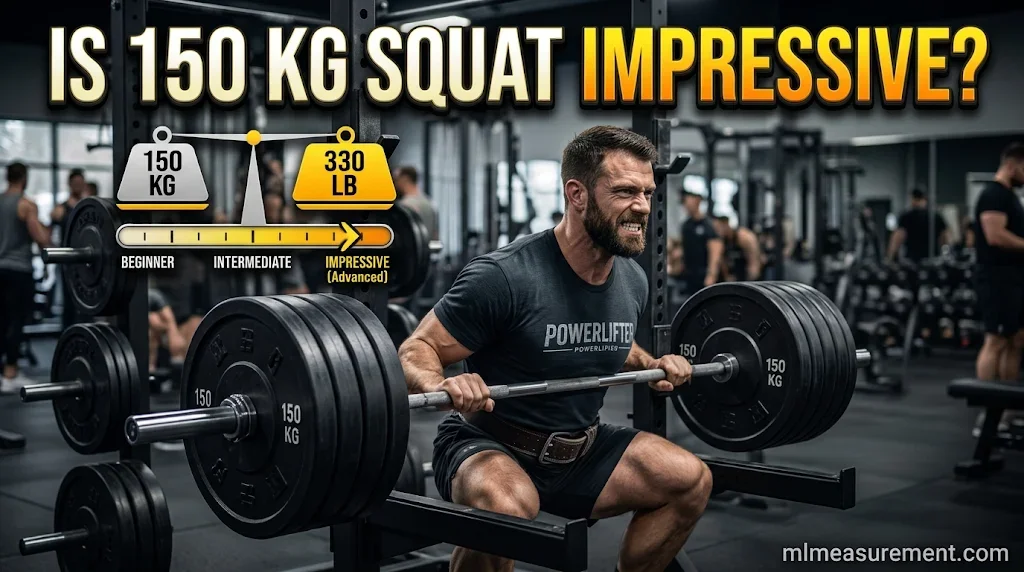
For most lifters, yes. Strength Level uses community lifting data. For men, it lists 131 kg (289 lbs) as intermediate and 173 kg (382 lbs) as advanced. A 150 kg squat sits between the two.
Once you’ve improved your squat technique and built a stronger lower body, adding explosive movements can take your strength training to the next level. Incorporating 32kg kettlebell workouts for explosive strength helps develop power, improve hip drive, and build the athletic strength that complements heavy barbell squats.
For women, the elite mark is 137 kg (303 lbs). So a 150 kg squat beats the elite level for women. Strength Level says elite means stronger than 95% of lifters.
Bodyweight changes the story. Here is 150 kg as a bodyweight multiple:
- 180 lb lifter: about 1.84x bodyweight
- 200 lb lifter: about 1.65x bodyweight
- 220 lb lifter: about 1.50x bodyweight
FitnessVolt puts the intermediate squat for a 180 lb man at 292 lbs (1.62x). Advanced starts near 373 lbs. At 180 lbs, a 330 lb squat falls in between.
Standards vary by source, gear and lifting style. Treat them as targets, not rules. A belted, raw or wrapped squat can all change your number.
5 Brutal 150kg Squat Mistakes (And How to Fix Each One)
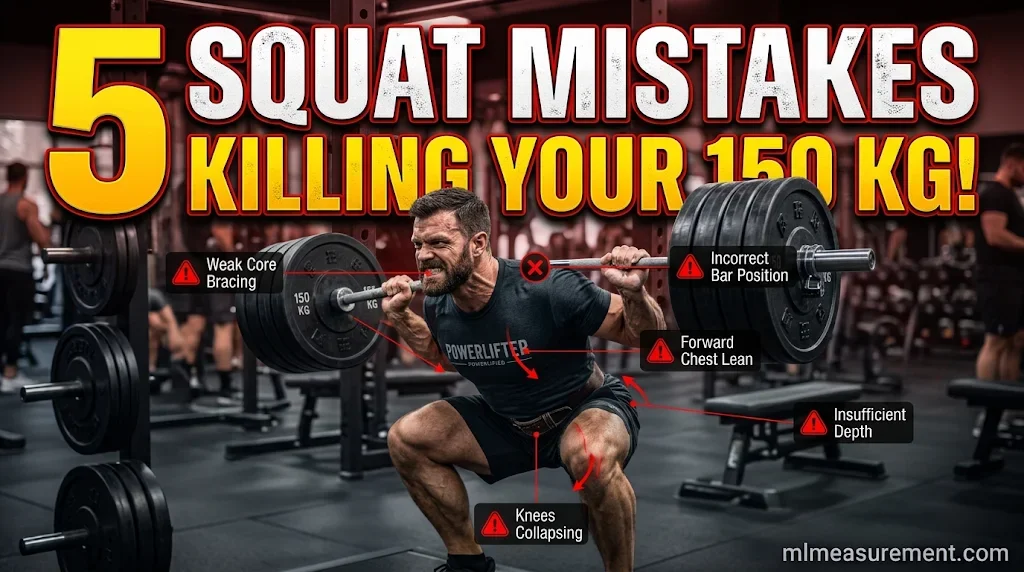
Weak bracing. A soft core leaks power under heavy load. Bracing builds intra-abdominal pressure, which stiffens your trunk. In one study cited by Barbell Medicine, a belt raised that pressure 25 to 40% during 8-rep max squats.
- Fix: Take a big breath into your belly. Tighten your abs 360 degrees, like you’re about to take a punch. Hold it until you pass the sticking point. Exhale at the top.
- Belt note: A belt gives your abs a wall to push against. StrengthLog notes that no study directly proves a belt raises your max, so skill still comes first.
Cutting depth. Half reps feel heavy but build less strength. In powerlifting meets, your hip crease must drop below the top of your knee.
- Fix: Use pause squats and box squats to learn the target depth. Film from the side.
Knees caving in. This is called knee valgus. It leaks force and strains the joint.
- Fix: Push your knees out in line with your toes. Add band-resisted squats and glute work like hip thrusts.
Chest dropping and leaning forward. The bar drifts off your midfoot. Then the lift turns into a good morning.
- Fix: Squeeze the bar and pull your upper back tight. Keep your elbows under it. Build the pattern with front squats and slow tempo squats.
Sloppy setup and bar path. A rushed unrack or an uneven stance wastes energy before rep one.
- Fix: Use the same routine every time. Set the bar evenly, take two or three steps back, and plant your feet. Drive straight up through your midfoot.
How to Build a 150 kg Squat (Simple Plan)
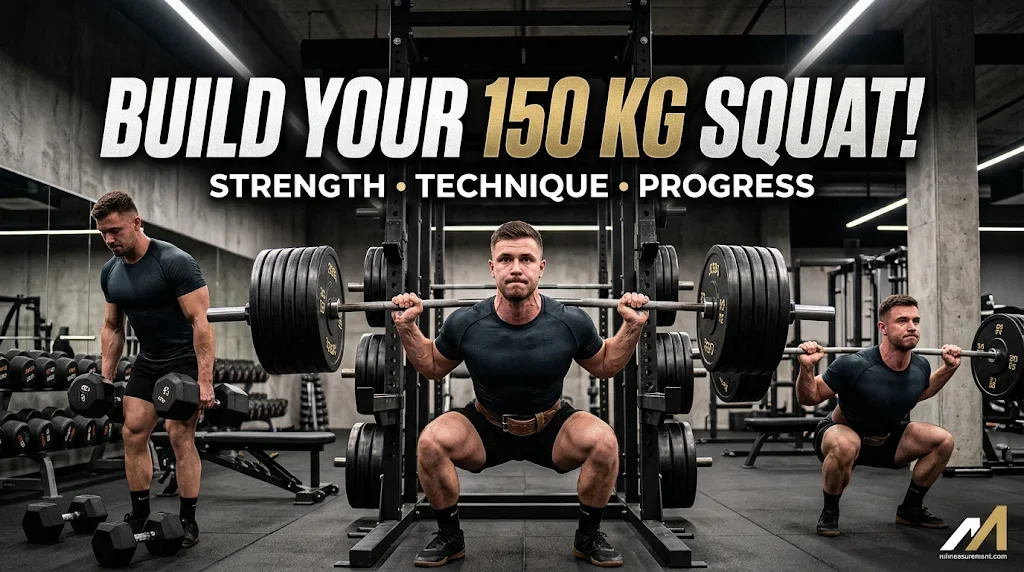
Keep the week simple. Squat two to three times, with one goal per day.
- Heavy day: Work up to a few low-rep sets near your limit.
- Volume day: Use lighter weights for more reps, and focus on clean form.
- Technique day: Use pause squats to groove depth and bracing.
Add 2.5 to 5 lbs when a session feels smooth. Small jumps beat ego jumps.
Build support with Romanian deadlifts, leg press, lunges and core work. Sleep well, eat enough protein, and plan a lighter week every few weeks.
Safety first. Always squat in a rack with safety bars set just below your bottom position. Learn how to bail before you need to.
FAQs
What is 150 kg in weight?
150 kg is 330.69 pounds. It equals 150,000 grams and 0.15 metric tons.
What does 150kg mean?
It means a mass of 150 kilograms. The kilogram is the base unit of mass in the metric system. In US terms, that is about 330.7 lbs.
What is 150 in weight?
It depends on the unit. 150 kg equals 330.69 lbs, while 150 lbs equals 68.04 kg. Always check the unit first.
How much is 150 in kg?
If you mean 150 pounds, it is 68.04 kg. If you mean 150 kg, it stays 150 kg. And 150 grams is just 0.15 kg.
Conclusion
A 150kg squat is 330.69 lbs, and it is within reach for most dedicated lifters. Fix your bracing, depth, knees, chest position and setup, and the bar starts moving.

Rehmaan Khan is a Measurement Content Researcher Specializing in MLmeasurement, Size Guides, Charts, and Simple Educational Measurement Content.