
You spot “300g” on a food label or a shipping form and pause. Is that light? Heavy? About the size of your palm?
Here’s the quick answer: 300 grams is heavy enough to feel solid in one hand, but light enough to toss in a bag without noticing. It equals 0.3 kilograms, roughly 0.66 pounds, or about 10.58 ounces. Below are 13 real objects that land right at this mark, along with the math and science behind each one.
Table of Contents
How Heavy Is 300 Grams? (Quick Answer + Conversion Chart)
300 grams heavy sits just under two-thirds of a pound — lighter than a can of beans, heavier than a smartphone alone.
| Unit | Value |
|---|---|
| Grams | 300 g |
| Kilograms | 0.3 kg |
| Pounds | 0.661 lbs |
| Ounces | 10.58 oz |
| Milligrams | 300,000 mg |
Quick clarification before we go further: weight and mass get used interchangeably in everyday speech, but they’re not identical. Mass measures how much matter an object contains, and it stays fixed no matter where you are. Weight is the pull of gravity acting on that mass, so it technically shifts on the Moon or in orbit. On Earth, the two numbers line up, so this guide uses “weight” the way people actually talk about it — in the kitchen, at the post office, on a bathroom scale.
A number on a page doesn’t teach your hand what 10.58 ounces feels like. Real objects do. That’s the whole point of this list.
13 Real-Life Things That Weigh About 300 Grams
Some of these show up on nearly every “what weighs 300 grams” list — a soup can, a paperback, two baseballs. Others, like a hockey puck pair or a jar candle, rarely get mentioned anywhere, even though they’re just as common in American homes.
| Object | Category | Approx. Weight |
|---|---|---|
| Two Regulation Baseballs | Sports | 284–298 g |
| Can of Condensed Soup | Food | 305–310 g |
| Three Sticks of Butter | Baking | 339 g |
| Two Medium Apples | Produce | 300–360 g |
| Standard Paperback Book | Books | 280–350 g |
| Large Smartphone With Case | Electronics | ~300 g |
| Six Large Eggs | Food | 300–330 g |
| Specialty Coffee Bag | Beverage | 300 g |
| Large Navel Orange | Produce | 280–320 g |
| Two Hockey Pucks | Sports | 312–340 g |
| 4-Ounce Jar Candle | Household | 280–330 g |
| Three Chocolate Bars | Food | 300–315 g |
| One Running Shoe | Footwear | 280–340 g |
Two Regulation Baseballs
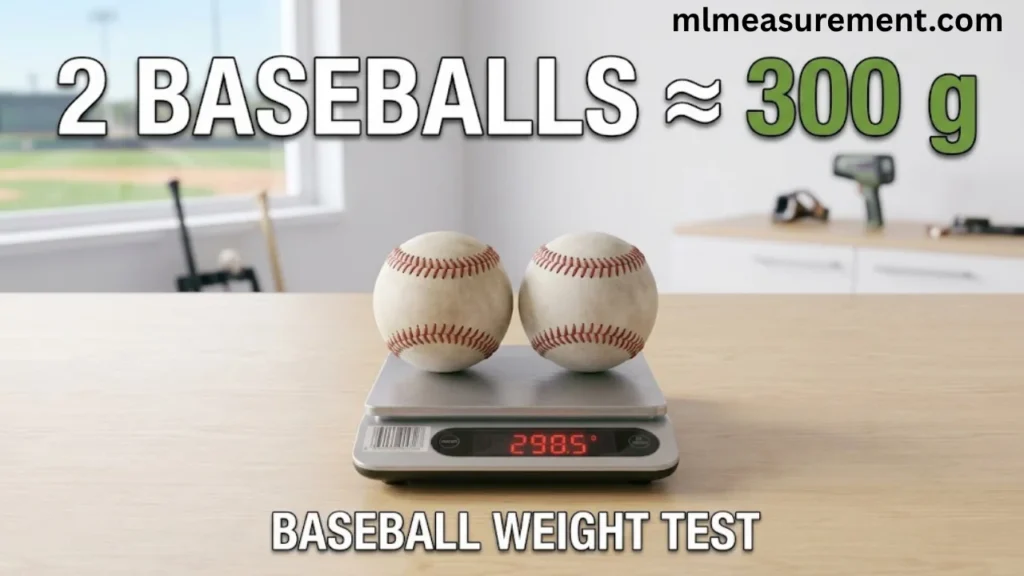
An official Major League Baseball must weigh between 142 and 149 grams, according to MLB’s official rulebook specifications. Two of them combined land between 284 and 298 grams — just shy of the exact 300-gram mark, but close enough to serve as a reliable, culturally familiar reference. Baseball’s place in American life makes this comparison stick fast: if you’ve ever played catch, you already know this weight by feel.
A Can of Condensed Soup
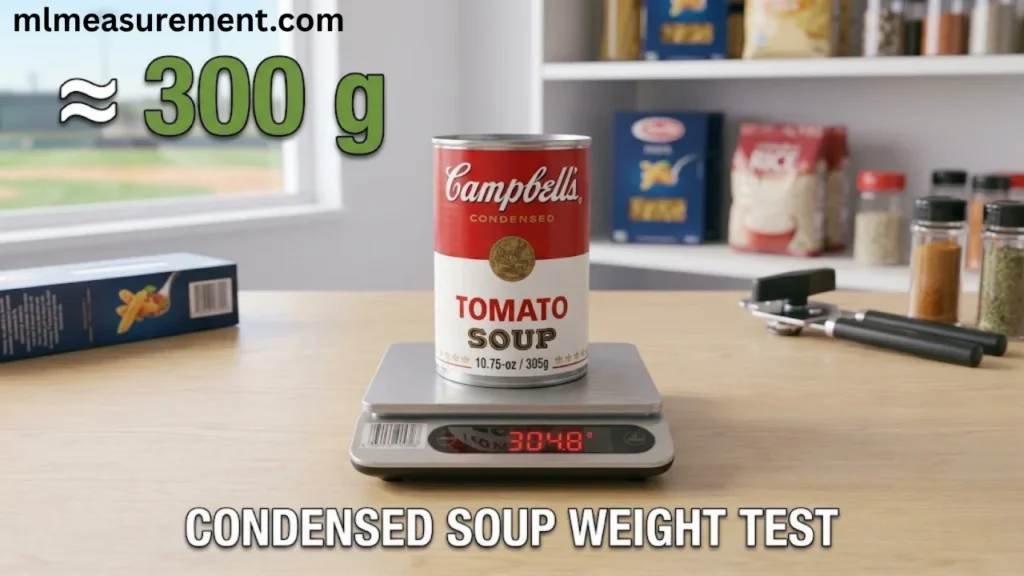
A standard 10.75-ounce Campbell’s condensed soup can, metal container included, weighs approximately 305 to 310 grams. This pantry staple sits in nearly every US kitchen, which makes it one of the most tactile 300-gram references available. Next time you grab one for dinner, notice the pull in your hand — that’s your built-in benchmark.
Three Sticks of Butter
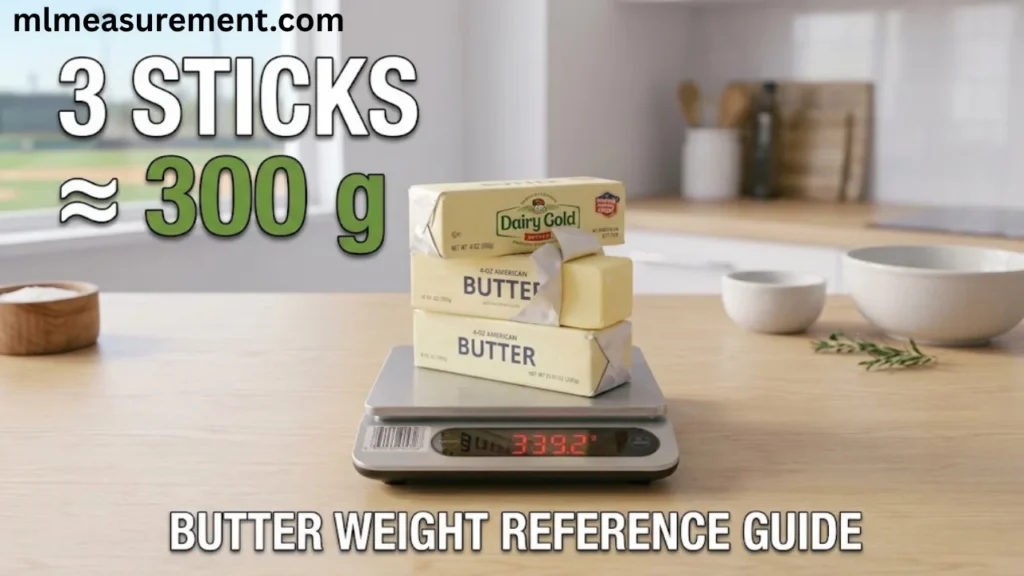
One standard American stick of butter weighs exactly 113 grams — that’s ¼ pound or 4 ounces, per USDA labeling conventions. Three sticks together total 339 grams, a bit over 300 but close enough for kitchen estimation. Bakers who need precision often use two-and-two-thirds sticks instead, which lands almost exactly on target.
Two Medium Apples
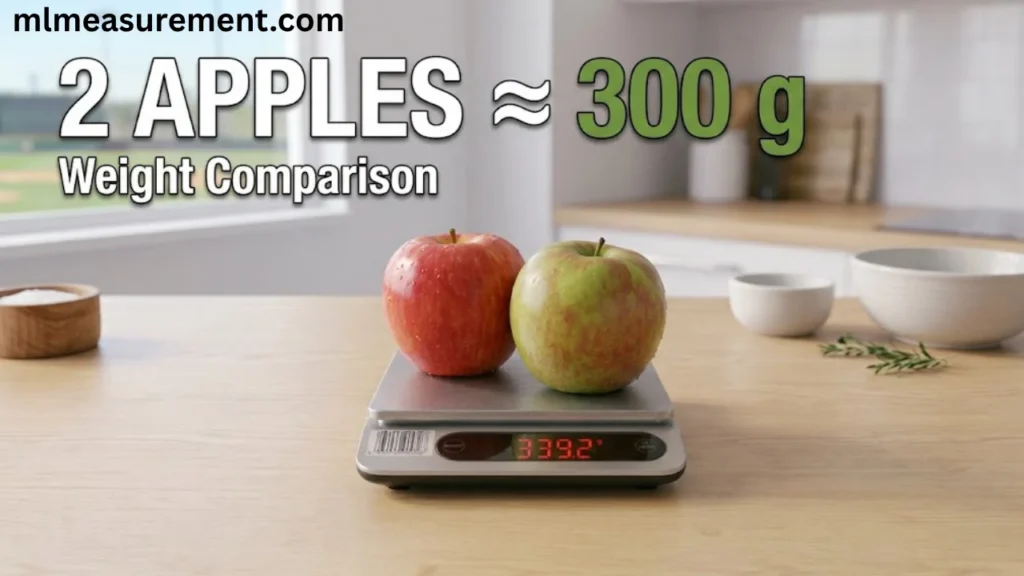
The average medium apple weighs 150 to 180 grams, based on USDA FoodData Central figures. Two apples together fall between 300 and 360 grams, depending on variety — Honeycrisp runs denser than Gala. Produce isn’t as exact as a manufactured object, but it’s the easiest 300-gram stand-in you’ll find in any kitchen.
A Standard Paperback Book
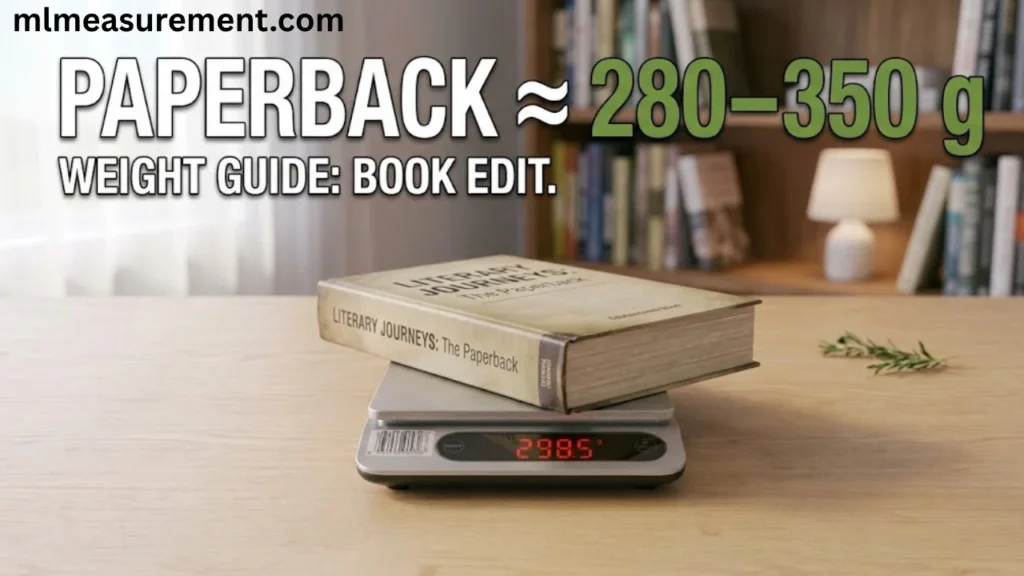
Most mass-market paperbacks with 300 to 400 pages weigh between 280 and 350 grams. The combined weight of paper stock, binding glue, and a printed cover puts the average novel directly in this range. Commuters carry this exact weight in their bags every day without giving it a second thought.
A Large Smartphone With Case

The iPhone 15 Pro Max weighs 221 grams on its own, according to Apple’s published specifications. Add a protective case weighing 50 to 80 grams, and the total lands right around 300 grams. Android flagships like the Samsung Galaxy S24 Ultra follow a nearly identical pattern once cased — meaning most people are carrying this exact weight in their pocket right now.
Must visit: 500 Grams Heavy: 16 Real-Life Things That Weigh About 500 Grams
Six Large Eggs
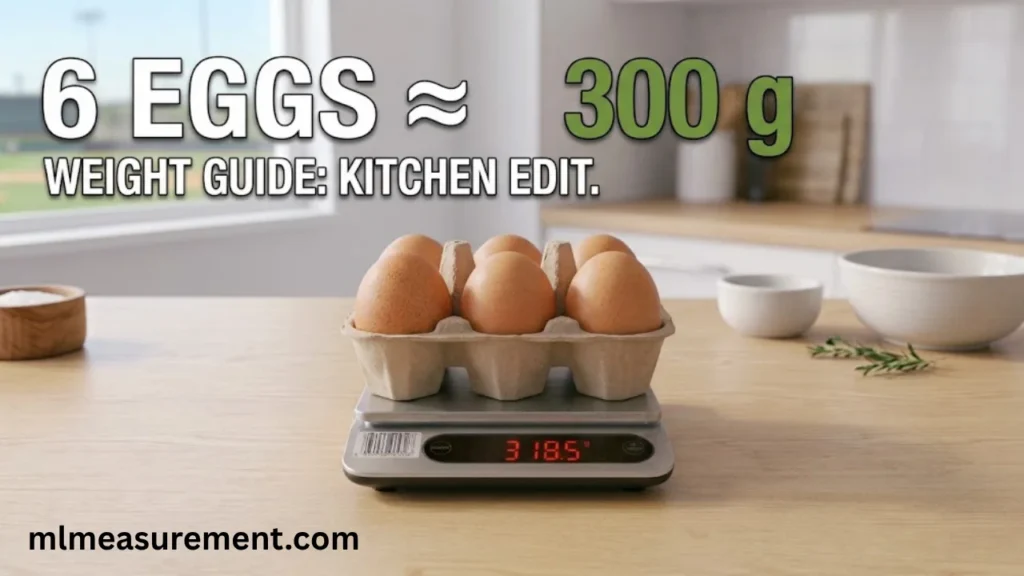
A large egg weighs a minimum of 50 grams, per USDA grading standards. Six of them — a standard half-dozen carton — total between 300 and 330 grams. This makes eggs one of the most precise and repeatable 300-gram references in any refrigerator, since USDA sizing keeps the math consistent carton after carton.
A Specialty Coffee Bag
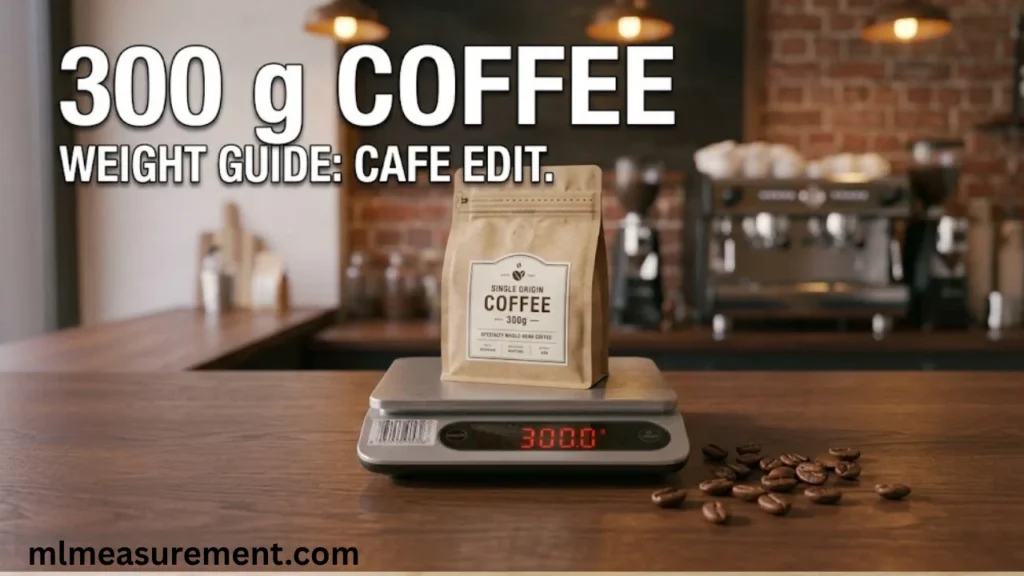
Specialty and third-wave coffee roasters across the US almost universally package their beans in 300-gram (10.5-ounce) bags. This isn’t arbitrary — it’s an industry-standard retail size that balances shelf appeal against brewing yield, delivering roughly 20 to 25 cups per bag depending on your ratio. If you buy craft coffee regularly, you’ve been hauling this exact weight home for years.
A Large Navel Orange
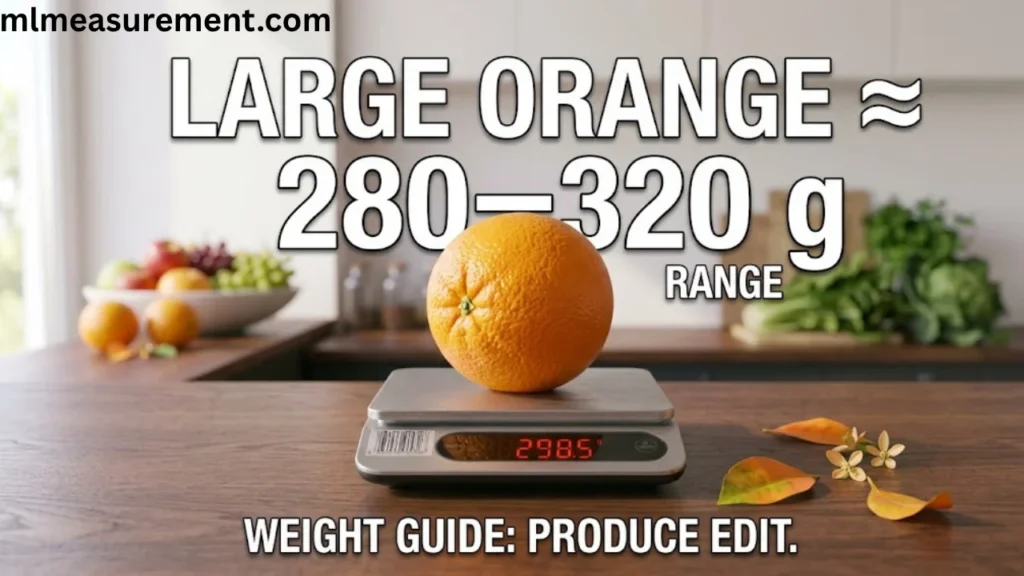
A large navel orange typically weighs between 280 and 320 grams, noticeably heavier than the medium apples listed above. Citrus fruit carries extra water weight in its pulp and pith, which is why an orange often outweighs an apple of similar size. This gap-fill entry rarely appears on other weight-reference lists, despite sitting in nearly every American produce bowl.
Two Standard Hockey Pucks

An official NHL hockey puck weighs between 156 and 170 grams, per official NHL equipment rules. Two pucks together land between 312 and 340 grams — a sport-specific, tactile comparison that almost no competing weight guide includes, despite hockey’s strong following across the northern US.
A 4-Ounce Jar Candle

A standard 4-ounce glass jar candle, wax and container combined, typically weighs 280 to 330 grams. Candle weight varies by wax density — soy wax runs lighter than paraffin — but the glass jar itself usually accounts for over half the total. This is a genuinely common household item that no major competitor site has covered for this weight class.
Three Standard Chocolate Bars
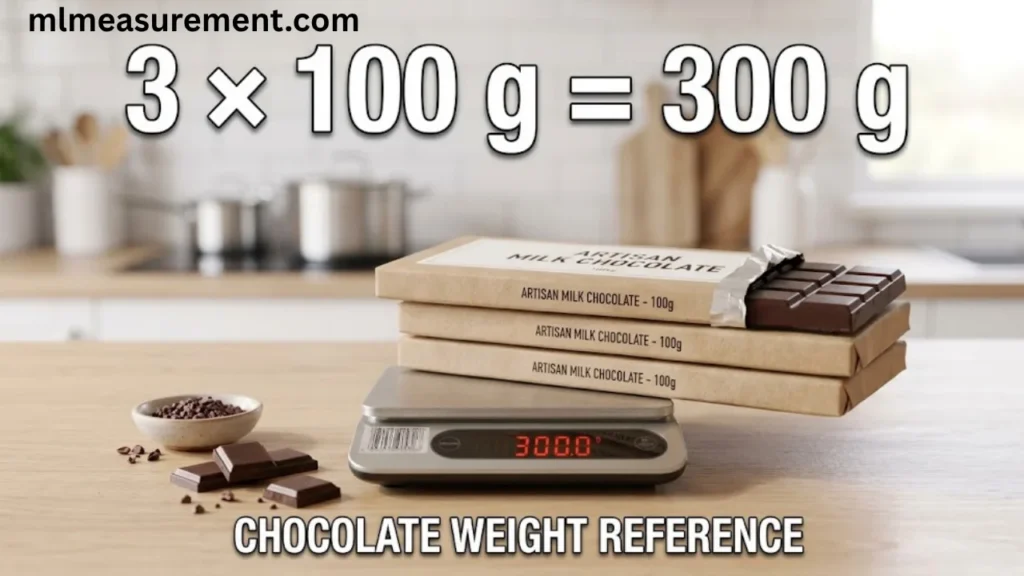
A standard 100-gram chocolate bar, the size sold by most major US brands, weighs almost exactly 100 grams per unit. Three bars together land squarely at 300 to 315 grams, making this one of the most precise and pleasant references on this list. It’s also a fresh angle — competitor articles mention candy in passing but rarely build a direct comparison around it.
One Running Shoe
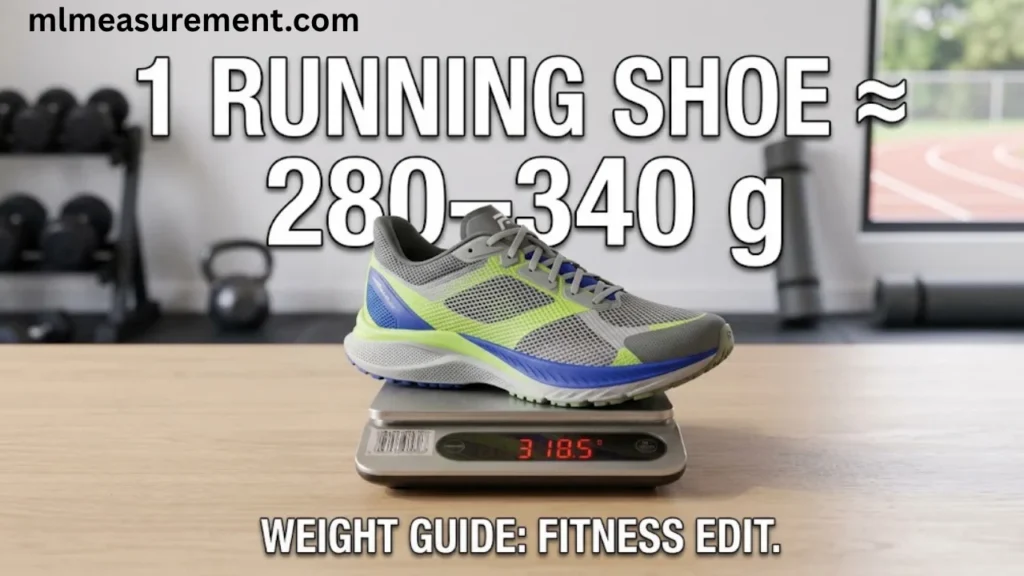
A single men’s size 10 running shoe typically weighs 280 to 340 grams, depending on cushioning and materials. Lightweight racing flats sit at the low end, while max-cushion trainers run heavier. This everyday item offers a practical, wearable reference that’s completely absent from existing “300 grams” content.
How to Measure 300 Grams Without a Kitchen Scale
No scale on hand? These methods use things most households already have.
The egg-count method: Six large eggs, per USDA minimum grading of 50 grams each, land you at 300 grams with impressive consistency — one of the most repeatable tricks on this list.
The coin-stack method: US nickels are minted to an exact 5.000-gram standard, according to the US Mint’s coin specifications. Sixty nickels stacked together equal exactly 300 grams.
The soup-can method: A standard condensed soup can, at roughly 305 to 310 grams, gets you close enough for casual kitchen estimation without any counting required.
One caution worth repeating: never weigh a container along with its contents unless you’ve accounted for the container’s own weight separately. A jar, can, or wrapper can easily add another 20 to 40 grams on its own.
300 Grams vs. Other Common Weights
Side-by-side comparisons make an abstract number click faster than any single figure alone.
| Weight | Compared to 300g |
|---|---|
| 250 grams | Lighter than 300g by 50g |
| 500 grams | Heavier than 300g by 200g |
| 1 pound (454 g) | Heavier than 300g |
| 1 kilogram (1,000 g) | More than triple 300g |
Is 300 grams heavier than a pound? No. One pound equals 453.6 grams, which makes it roughly 154 grams heavier than 300 grams — a real and noticeable gap on a kitchen scale.
Is 300 grams the same as a third of a kilogram? Close, but not exact. A true third of a kilogram is 333 grams, so 300 grams sits slightly under that mark.
FAQs
How heavy is 300 grams?
300 grams equals 0.3 kilograms, about 0.66 pounds, or roughly 10.58 ounces. It feels similar to holding a can of soup or two medium apples in one hand — noticeable, but easy to carry without strain.
How much does 300 grams look like?
Visually, 300 grams looks like a standard paperback book, a can of condensed soup, or two medium apples side by side. It’s compact enough to fit in one palm but substantial enough that you register the weight immediately.
What object weighs 350 grams?
A large avocado, a full coffee mug with coffee, or a small hardcover notebook all weigh close to 350 grams. These sit just above the 300-gram mark, making them useful for comparing slightly heavier reference points.
Can a person weigh 300 kg?
Yes, though it’s extremely rare. 300 kilograms equals about 661 pounds, a weight documented in only a small number of extreme medical cases worldwide. This is 1,000 times heavier than the 300-gram objects covered in this guide — a useful reminder of just how different grams and kilograms really are.
Conclusion
300 grams heavy stops being an abstract label the moment you pick up a soup can, two baseballs, or a paperback novel. Whether it’s food, sports gear, or something as simple as a jar candle, 300 grams has a real, learnable feel once you’ve held it. Grab two or three items from this list, and you’ll never need a scale to guess what 300 grams feels like again.

Rehmaan Khan is a Measurement Content Researcher Specializing in MLmeasurement, Size Guides, Charts, and Simple Educational Measurement Content.