
You spot “15 oz” on a can, a bag, or a package label, and the number doesn’t mean much on its own. 15 ounces sits just under one pound — light enough to hold in one hand, heavy enough to notice.
This guide breaks down what 15 ounces actually feels like, using 13 everyday objects you’ve probably already touched — plus every conversion you need for cooking, shipping, or homework.
Table of Contents
How Much Is 15 Ounces? (Quick Conversion)
Here’s the short answer: 15 ounces equals 425.24 grams, 0.425 kilograms, or about 0.9375 pounds.
That math comes from one fixed rate: 1 ounce = 28.3495 grams. Multiply that by 15, and you land on 425.24 grams — the number you’ll see repeated across nutrition labels and kitchen scales.
There’s a catch, though, and it trips up more people than you’d expect. Weight ounces and fluid ounces are not the same unit. A weight ounce measures mass — how heavy something is. A fluid ounce measures volume — how much space a liquid takes up. A can labeled “15 oz” of beans and a bottle labeled “15 fl oz” of juice are measured on two completely different scales, even though the number looks identical.
For fluid ounces, the conversion runs through a different constant: 1 fl oz = 29.5735 mL. So 15 fluid ounces of water works out to roughly 443.6 mL, or about 1.875 cups.
| Measurement | 15 oz (weight) | 15 fl oz (volume) |
|---|---|---|
| Grams | 425.24 g | — |
| Kilograms | 0.425 kg | — |
| Milliliters | — | 443.6 mL |
| Cups | — | 1.875 cups |
| Pounds | 0.9375 lb | — |
Keep this distinction in your back pocket — it answers half the questions people search for around this topic.
13 Real-Life Things That Weigh About 15 Ounces
Numbers on a page rarely stick. Objects do. Below are 13 things that land at or near 15 ounces, mixing familiar kitchen staples with a few that rarely show up in other roundups on this topic.
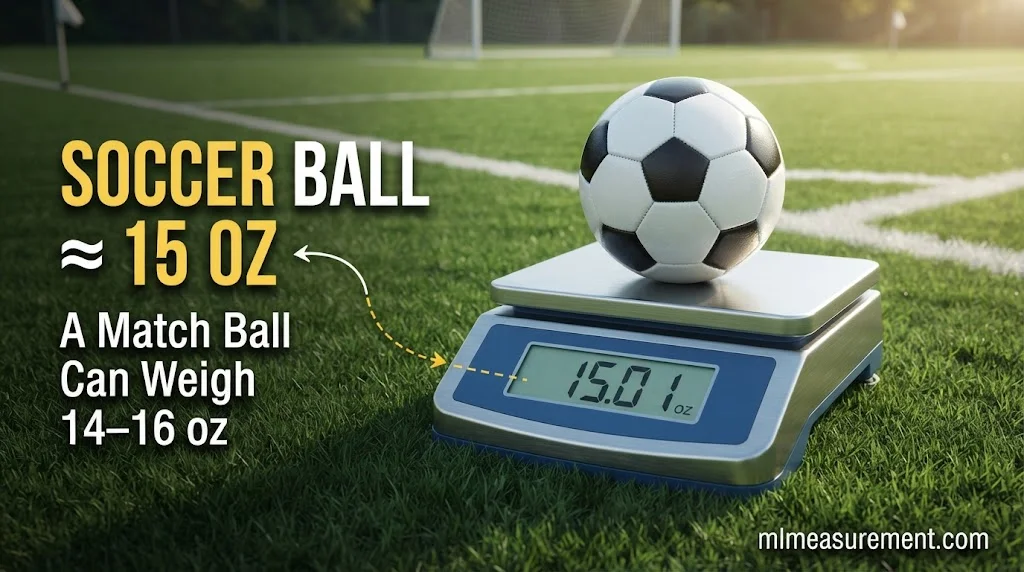
A regulation soccer ball. Under FIFA’s Law 2, a size-5 match ball must weigh between 14 and 16 ounces (410–450 grams), with 15 oz sitting almost dead center in that range.<sup>[1]</sup> That range isn’t arbitrary — a lighter ball travels farther on a strike, while a heavier one gives better control on a first touch, so the rule balances both.
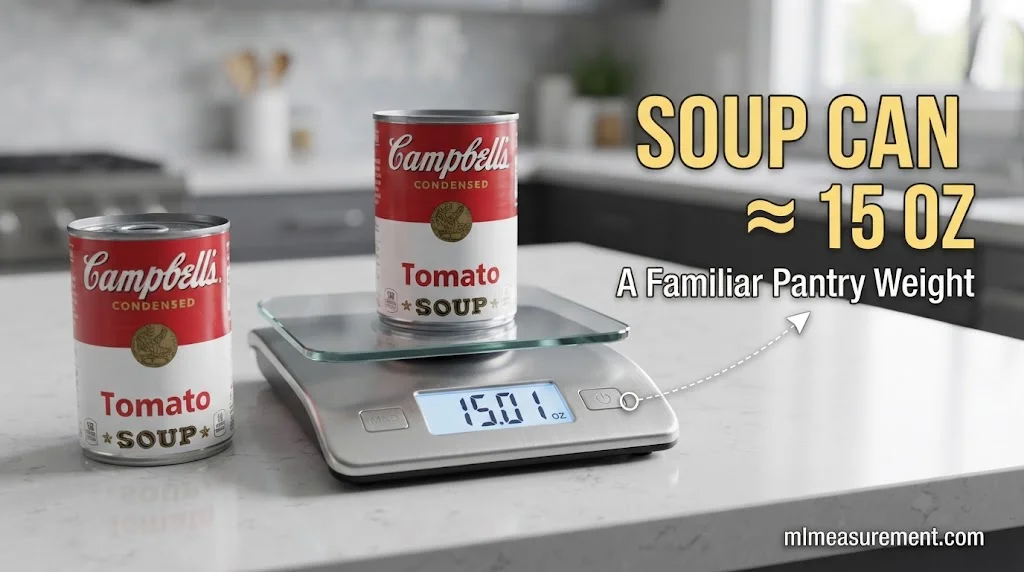
A can of condensed soup. Ready-to-serve soup cans, including many Campbell’s varieties, commonly weigh close to 15 ounces net — a size that turns up in almost every American pantry without anyone giving it a second thought.
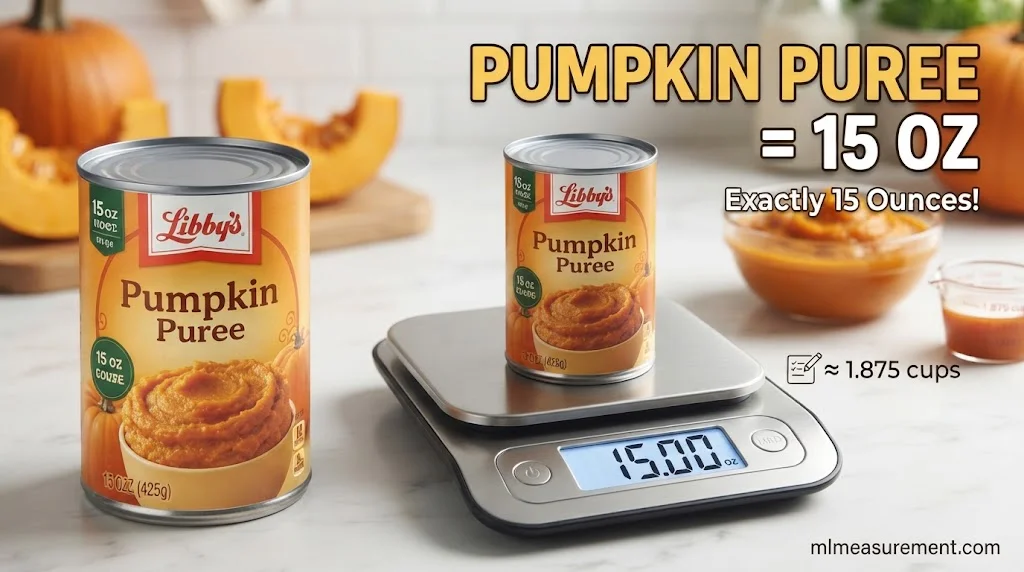
A can of pumpkin puree. This one rarely makes it onto similar lists, yet it’s one of the most precise real-world matches available. Libby’s, the best-known canned pumpkin brand in the US, packages its standard can at exactly 15 ounces. One quirk worth knowing: that 15-oz can yields about 1.875 cups of puree — not a full 2 cups — which matters if you’re following a pie recipe by volume instead of weight.
An athlete’s heart. The average adult heart weighs somewhere between 8 and 12 ounces, with a peer-reviewed reference range of 233 to 383 grams for adult males.<sup>[2]</sup> In endurance athletes, a training response called cardiac hypertrophy can push heart weight up toward 15 ounces or beyond — a healthy adaptation in trained hearts, though the same size increase in an untrained person can signal a condition called cardiomyopathy.

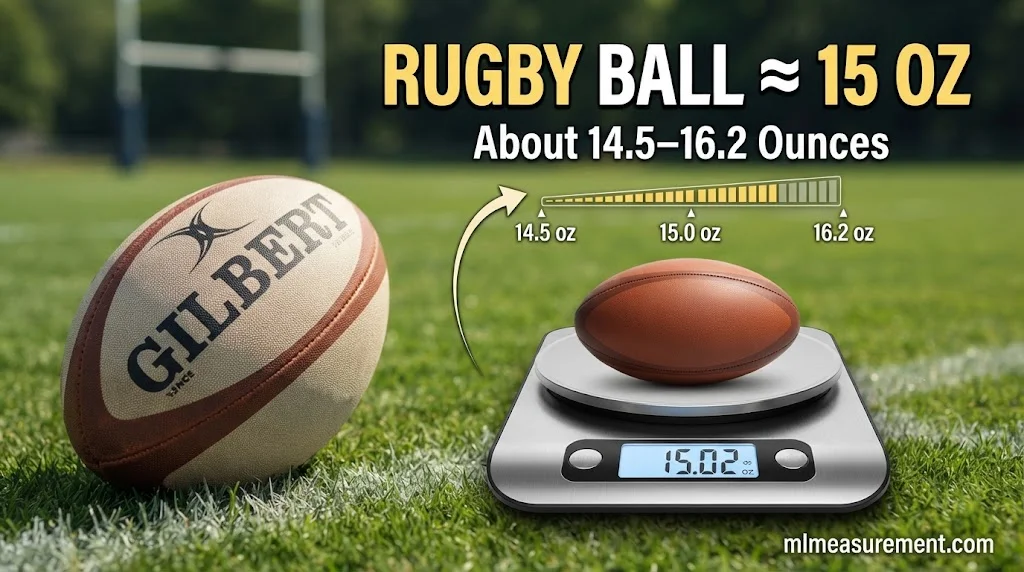
A rugby union ball. World Rugby’s official specification sets ball weight between roughly 14.5 and 16.2 ounces (410 to 460 grams), putting a mid-range ball right around 15 oz. The tighter weight window compared to a soccer ball reflects how much contact — scrums, tackles, wet turf — the ball has to survive intact.
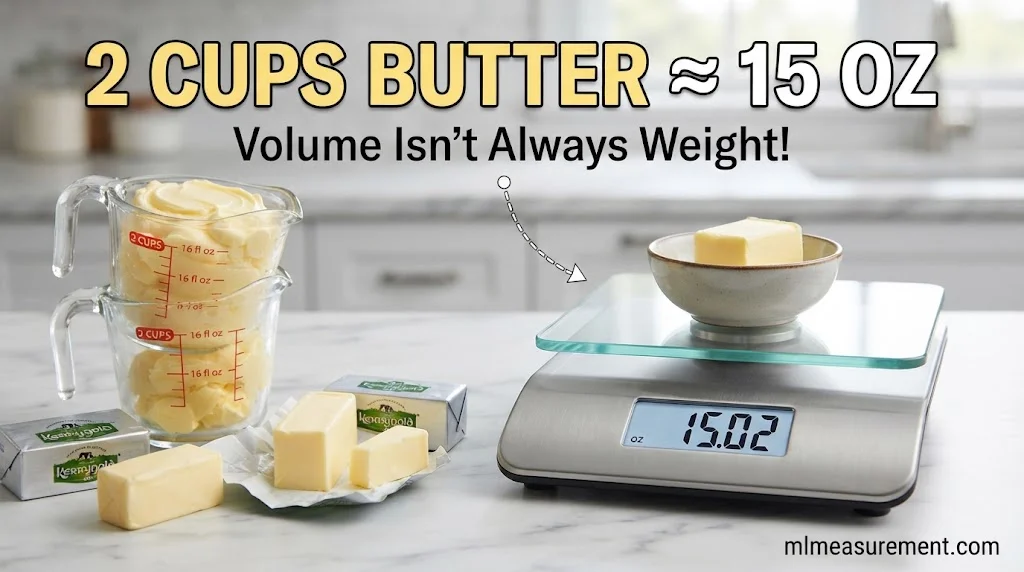
Two cups of butter. In baking, two standard US cups of butter weigh close to 15 ounces. Butter throws off the usual “volume equals weight” assumption people carry over from measuring water or milk, because it’s a solid fat with trapped air pockets. That’s exactly why professional bakers weigh butter on a scale instead of packing it into a measuring cup.
Must visit: 2 Ounces: 12 Real-Life Things That Weigh About 2 Ounces
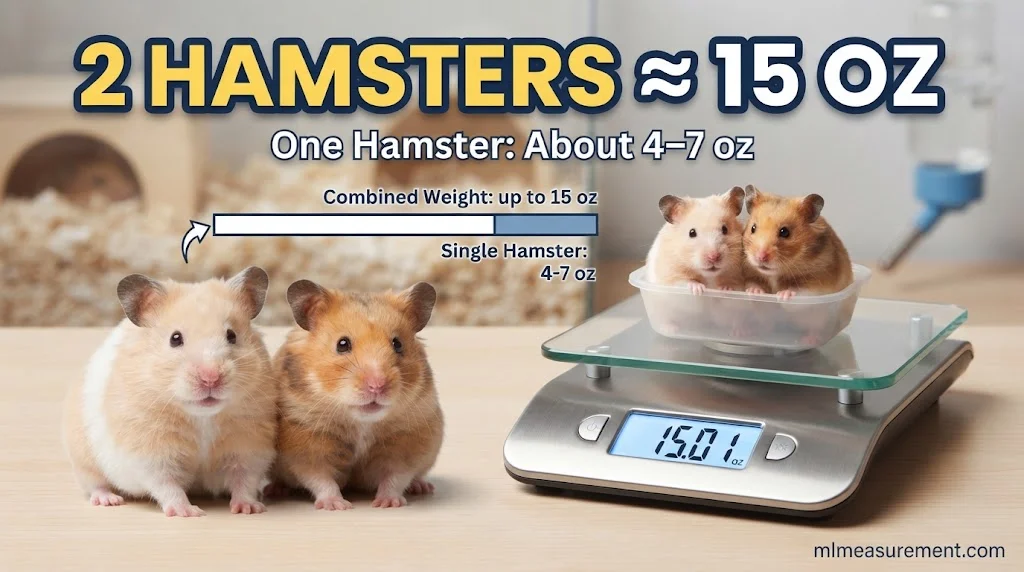
Two adult Syrian hamsters. A single adult Syrian hamster — the golden hamster, and the most common pet hamster breed in the US — weighs roughly 4 to 7 ounces. Pair two together and you land close to 15 oz, a surprisingly precise reference for a pet that fits in your palm.
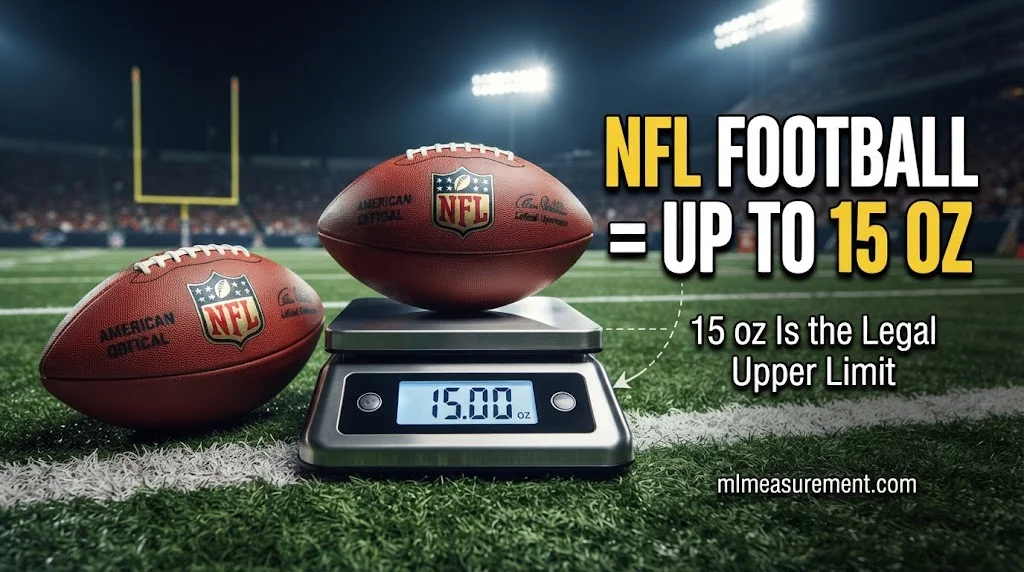
A regulation NFL football. Official NFL rules set football weight between 14 and 15 ounces (roughly 397–425 grams), meaning 15 oz marks the legal upper limit for every game ball the league inspects before kickoff.<sup>[3]</sup> Given how often American audiences see a football on screen, it’s one of the most tangible everyday references for this exact weight.
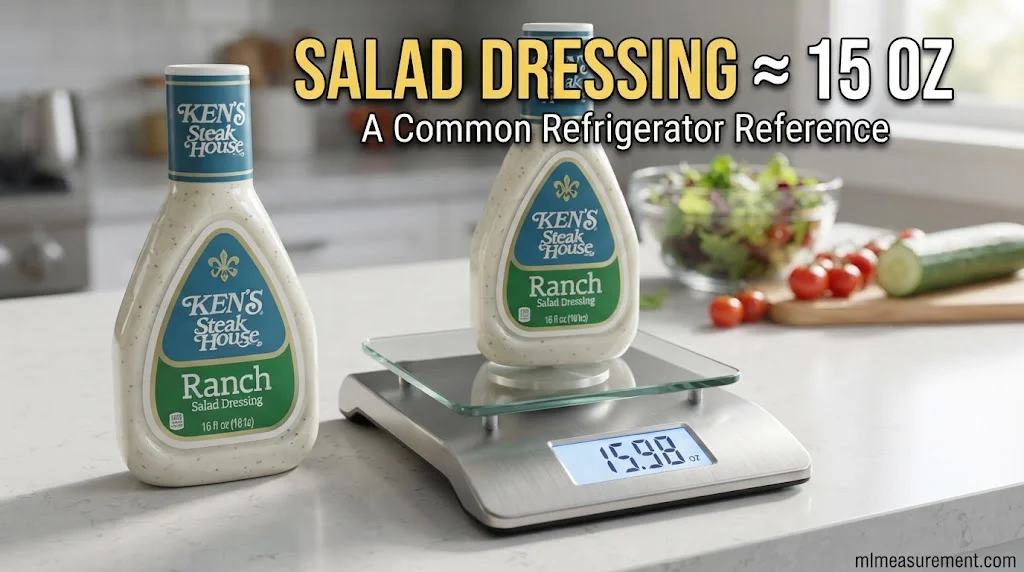
A bottle of salad dressing. Standard retail bottles sold in US grocery stores commonly hold 15 to 16 ounces. It’s a size built for repeat use — dressing, marinade, dip — which makes it one of the more practical, low-effort weight references sitting in your own refrigerator door.
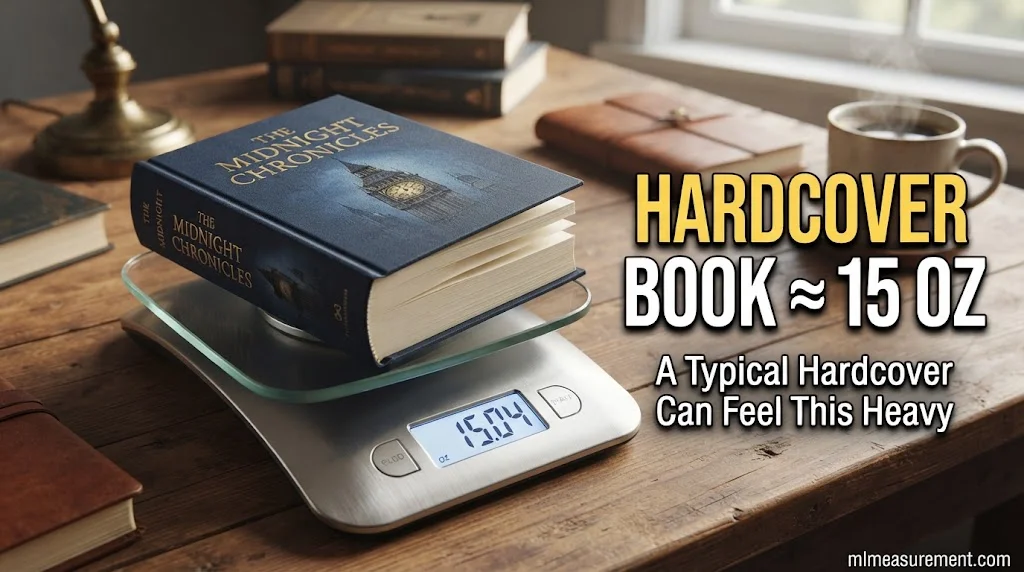
A hardcover novel. A typical hardcover book in the 300–400 page range weighs close to a pound, with many landing right around 15 ounces once you account for the dust jacket and binding. Paperbacks of the same length run noticeably lighter, since they skip the rigid board covers that add most of a hardcover’s weight.
A bag of ground coffee. Many US coffee brands package standard bags at 12 ounces, but a fair number of “large” or specialty bags land at 15 to 16 ounces — close enough that a full bag gives you a genuine, everyday sense of the weight without needing a scale.

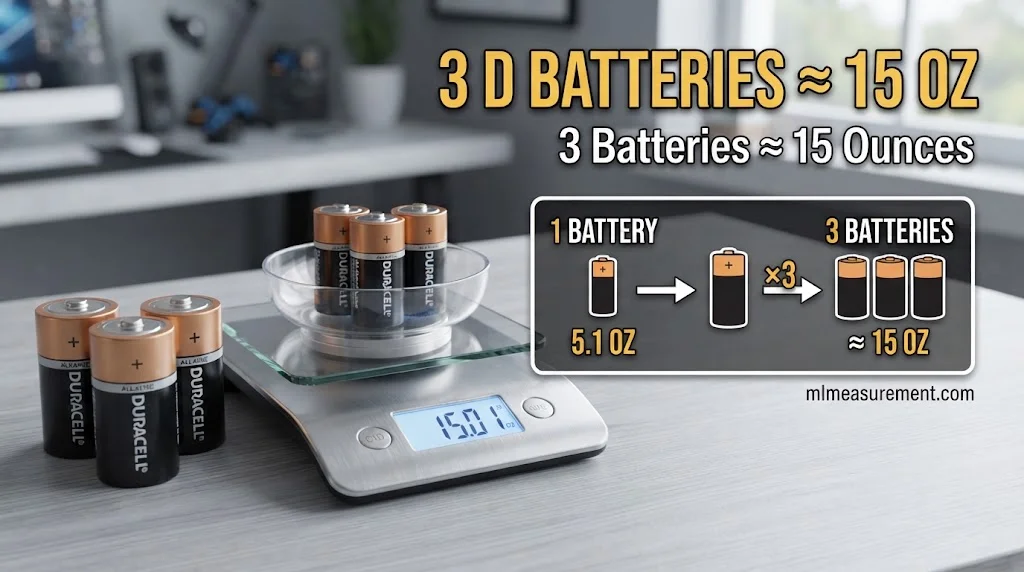
Three D-cell batteries. A single alkaline D battery weighs about 144 grams, or roughly 5.1 ounces, according to manufacturer specifications.<sup>[4]</sup> Stack three together and you’re sitting at almost exactly 15 ounces — a handy trick if you keep a drawer of spares for flashlights or radios.
An eastern gray squirrel. This common backyard visitor typically weighs between 14 and 21 ounces as an adult, according to wildlife references from state agencies.<sup>[5]</sup> A squirrel on the lighter end of that range sits almost precisely at 15 oz — proof that this weight shows up in nature just as often as it does in your pantry.

15 Ounces Compared to Other Common Weights
Numbers land better with a reference point on either side. Here’s where 15 oz sits against a few familiar weights:
| Item | Approximate Weight |
|---|---|
| MLB baseball | ~5.1 oz |
| NHL hockey puck | ~5.75 oz |
| Billiard ball | ~5.5–6 oz |
| 15 oz object (soccer ball, soup can) | 15 oz |
| NBA basketball | ~22 oz |
| 1 liter of water | ~35.3 oz |
15 ounces lands roughly three times heavier than a baseball, close to a regulation soccer ball, and well under half the weight of an NBA basketball. It’s a “middle” weight — heavy enough to feel substantial in your hand, light enough to carry without strain.
FAQs
How much is 15 oz in mL?
For a liquid, 15 fluid ounces converts to about 443.6 mL. That figure uses the US fluid-ounce standard of 29.5735 mL per ounce. Note that this only applies to fluid ounces — a 15-ounce weight measurement doesn’t convert to milliliters at all, since mL measures volume, not mass.
Is 15 oz the same as 1 cup?
No. One US cup holds exactly 8 fluid ounces, so 15 fl oz works out to 1.875 cups — nearly two cups, not one. This gap matters most in baking, where an extra quarter-cup can noticeably change texture in things like batter or dough.
How much is 15 mL in ounces?
Fifteen milliliters is a small amount — about 0.5 fluid ounces (0.507 fl oz, to be precise). That’s roughly one tablespoon, which is why 15 mL shows up constantly on medicine dosing cups and small kitchen measurements.
How many grams is 15 ounces?
Fifteen ounces equals 425.24 grams. The conversion is straightforward: multiply ounces by 28.3495 to get grams. This is the figure most cooks and nutrition labels rely on when a US recipe needs converting to metric.
Conclusion
15 ounces turns out to be a far more common weight than most people realize — it shows up on the sports field, inside your chest cavity, in your pantry, and even in your backyard. Whether you’re converting a recipe, weighing a shipment, or just satisfying curiosity, you now have real, everyday objects to picture instead of a bare number on a label.

Rehmaan Khan is a Measurement Content Researcher Specializing in MLmeasurement, Size Guides, Charts, and Simple Educational Measurement Content.