
100 kilometers long is a distance that’s easy to say but hard to picture. This guide fixes that with real, everyday examples pulled from actual places and events.
Quick answer: 100 kilometers equals 62.14 miles, or about 328,084 feet. Below, you’ll find ten things that are about 100 kilometers long, plus direct answers to the most-searched questions on this topic.
Table of Contents
How Far Away Is 100 km?
100 kilometers equals 62.14 miles, using the standard conversion factor of 0.6214 miles per kilometer. This factor comes straight from the definition of the kilometre as a unit in the International System of Units (SI) — 1,000 meters, with the meter itself defined by the distance light travels in a fraction of a second (CK-12 Foundation).
Here’s a quick reference table:
| Kilometers | Miles | Feet | Meters |
|---|---|---|---|
| 100 km | 62.14 mi | 328,084 ft | 100,000 m |
To convert, multiply kilometers by 3,280.84 to get feet, or by 0.6214 to get miles (RapidTables). This math applies whether you’re measuring a road trip, a race, or a flight path.
What Is 100 km in 1 Hour? (Speed vs. Distance)
Here’s where a lot of confusion creeps in: 100 km and 100 km/h are not the same thing. One is a distance; the other is a speed.
100 km/h converts to 62.14 mph — a common highway speed limit in countries that use the metric system (Cuemath). If you drive at a steady 100 km/h, you’ll cover exactly 100 kilometers in one hour. That’s the cleanest real-world link between the two.
In the US, where highway limits are usually posted in miles per hour, 65 mph is roughly equivalent to 105 km/h — meaning a typical American highway cruise covers close to 100 km in under an hour.
10 Real-Life Things That Are About 100 Kilometers Long
Each of these places, routes, and activities measures close to 100 kilometers, giving you a concrete way to picture the distance.
Cape Cod, Massachusetts
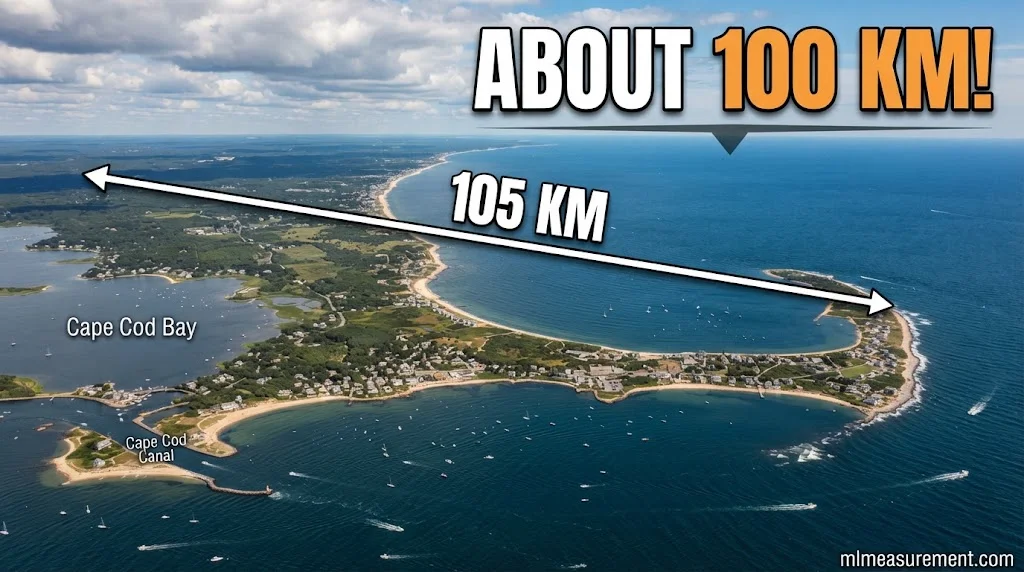
Cape Cod stretches 65 miles (105 kilometers) into the Atlantic Ocean from the coast of Massachusetts, according to Britannica (Britannica: Cape Cod). This hook-shaped peninsula is one of the cleanest real-world matches for the 100 km mark in the entire country.
The Drive from Seattle to Olympia, Washington
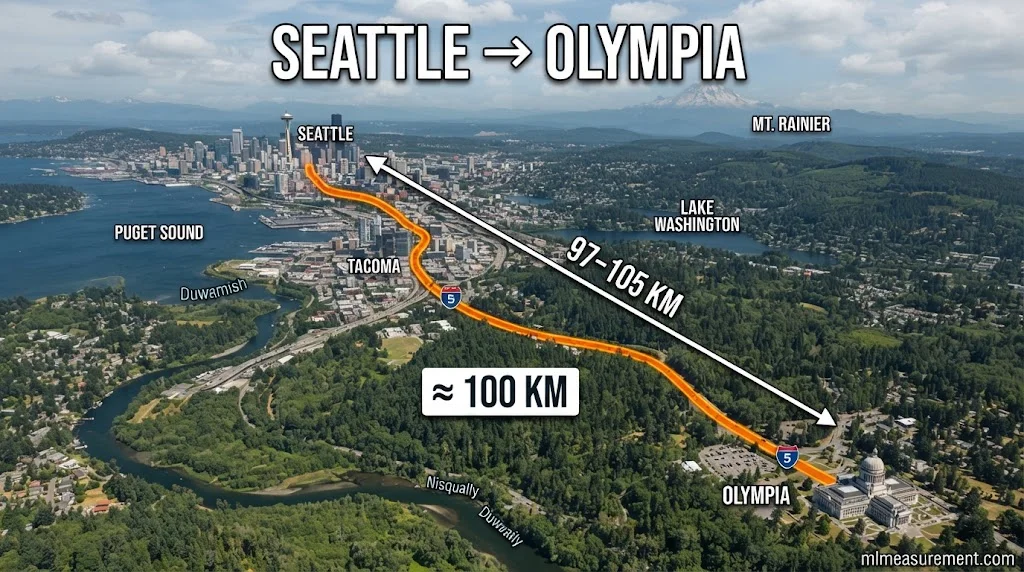
Driving from Seattle to Olympia, Washington’s state capital, covers roughly 60 to 65 miles (about 97 to 105 kilometers) along Interstate 5. It’s a familiar commuter stretch that lands almost exactly on the 100-kilometer benchmark.
Must visit: 1 Kilometer Long: 8 Real-Life Things That Are About 1 Kilometer Long
A 100 km Ultramarathon Race

The 100 km distance is an official ultramarathon event, regulated internationally by the International Association of Ultrarunners (IAU). Runners who specialize in it are nicknamed “centbornards” in French running culture. The current world record, set by Aleksandr Sorokin, stands at an astonishing 6 hours, 5 minutes, and 35 seconds — averaging over 16 km/h for the entire distance.
One Hour of Highway Driving at 100 km/h
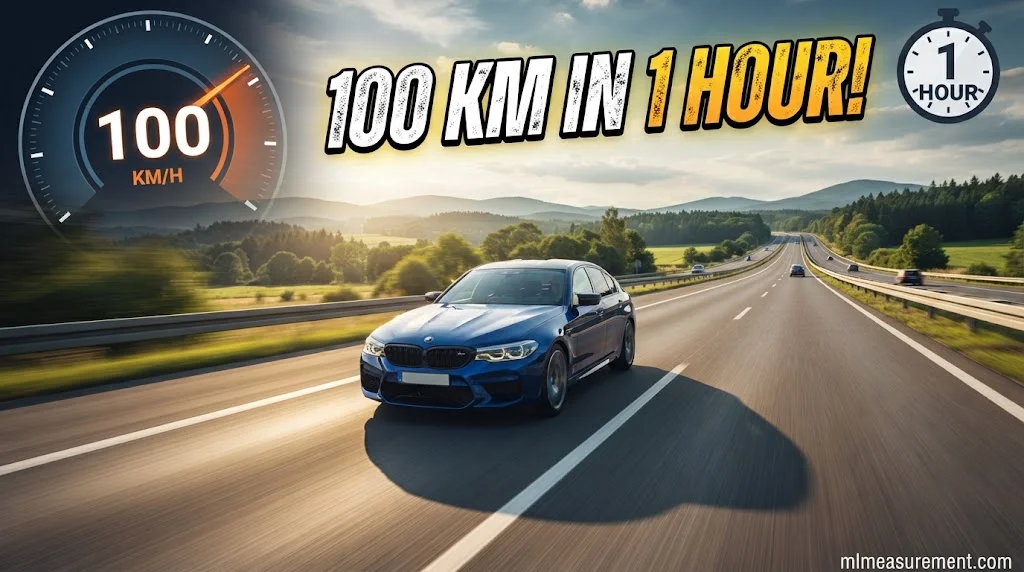
Cruise at a steady 100 km/h (62 mph) for exactly one hour, and you’ll cover the full 100 kilometers. This is the most direct, real-time way to feel the distance pass beneath your wheels.
About 1,000 Football Fields Lined Up
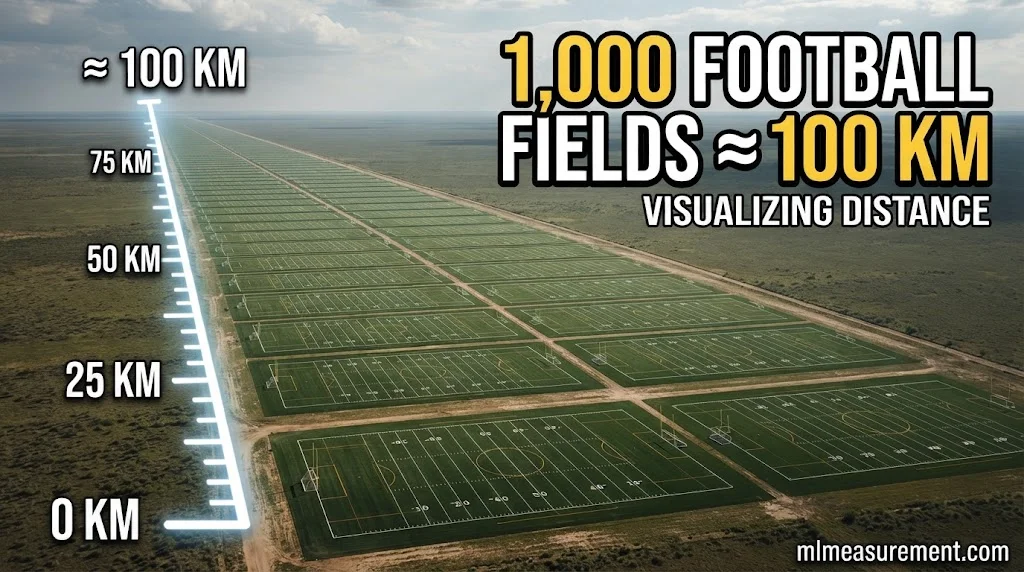
A regulation football field measures 100 yards (91.4 meters) goal line to goal line. Line up roughly 1,000 of them end to end, and you’ll stretch just past the 100-kilometer mark — a visual that turns an abstract number into something tangible.
Two Marathons, Back-to-Back, Plus a Bit More
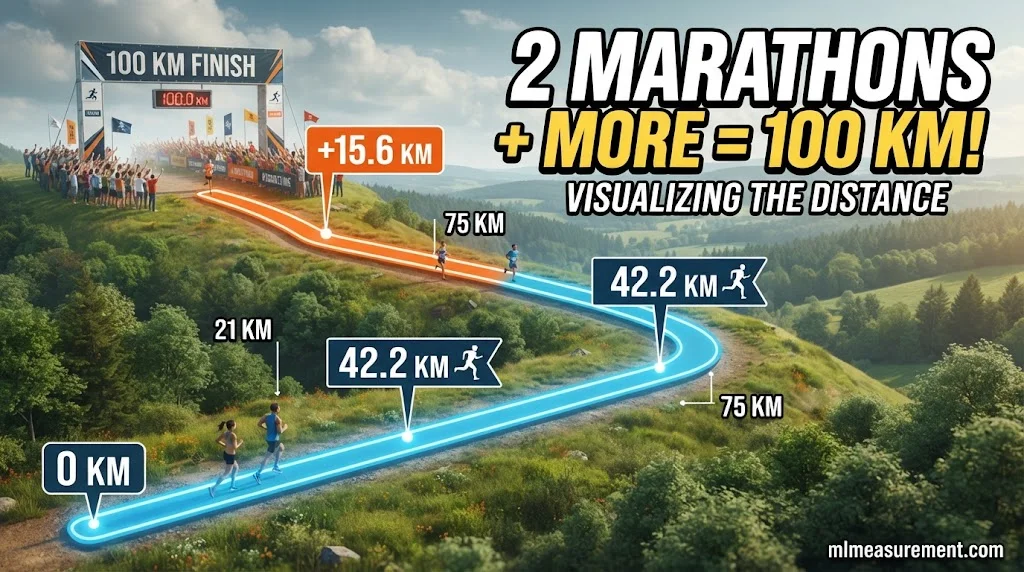
A standard marathon measures 42.2 kilometers. Run two of them consecutively, and you’ve covered 84.4 km — still short of 100 km. Add another 15.6 kilometers, and you’ve matched the full ultramarathon distance covered above.
Nearly a Quarter of the Grand Canyon’s Total Length
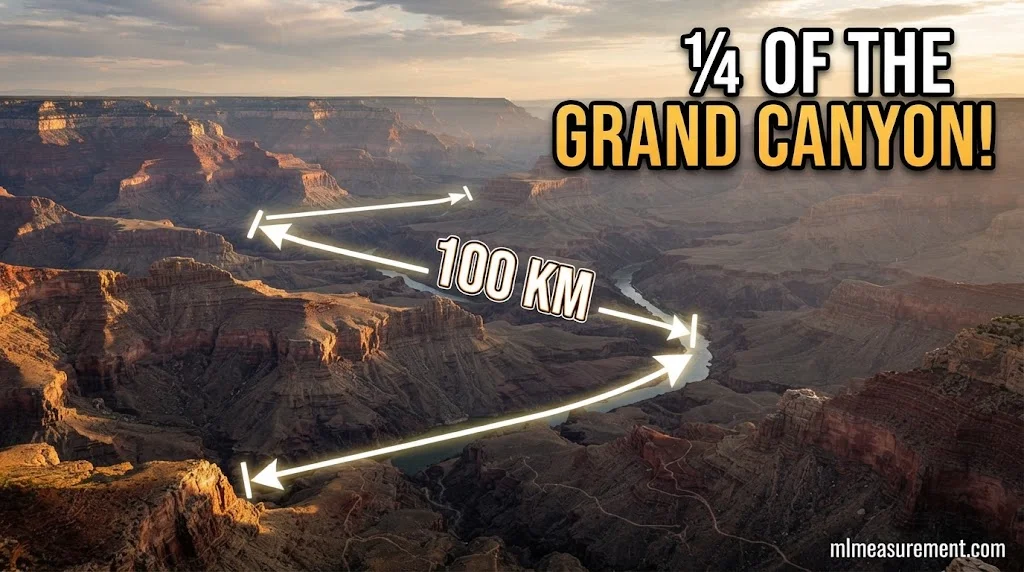
The Grand Canyon stretches 277 river miles (446 kilometers) from Lees Ferry to the Grand Wash Cliffs, according to the National Park Service (NPS: Grand Canyon FAQs). 100 kilometers covers roughly a quarter of this entire natural wonder — a useful anchor point for grasping just how massive the canyon really is.
The Coast-to-Coast Width of Connecticut
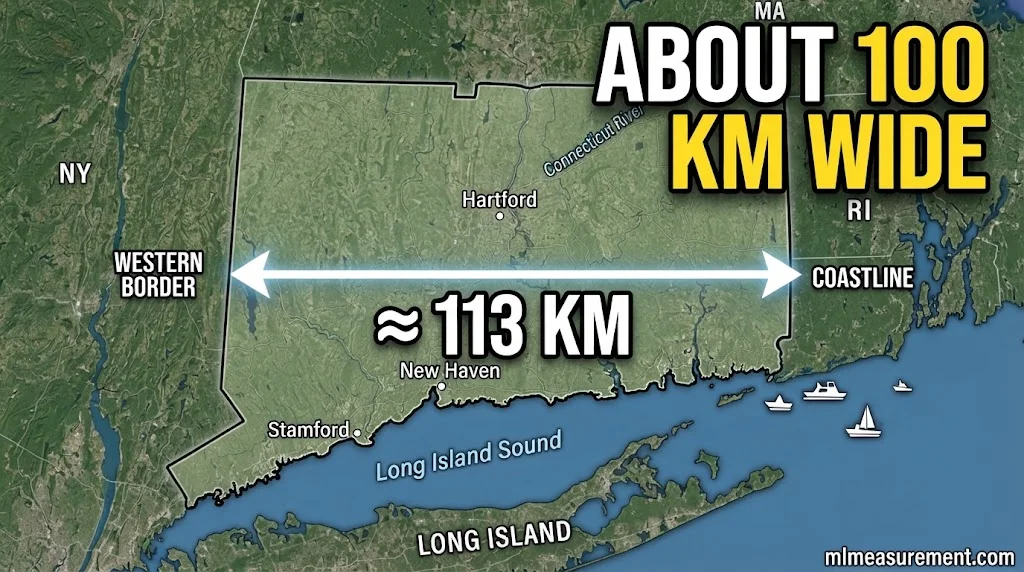
At its widest point, Connecticut spans close to 70 miles (about 113 kilometers) from its western border to the Atlantic coastline — putting the entire state’s width in the same ballpark as 100 kilometers.
A Four-Hour Bike Ride at a Moderate Pace

Cyclists riding at a comfortable, moderate pace typically average 25 km/h. At that speed, covering 100 kilometers — a distance cyclists call a “century” in miles, though this is the metric equivalent — takes about four hours of steady pedaling.
A Long, Two-Day Hiking Stretch
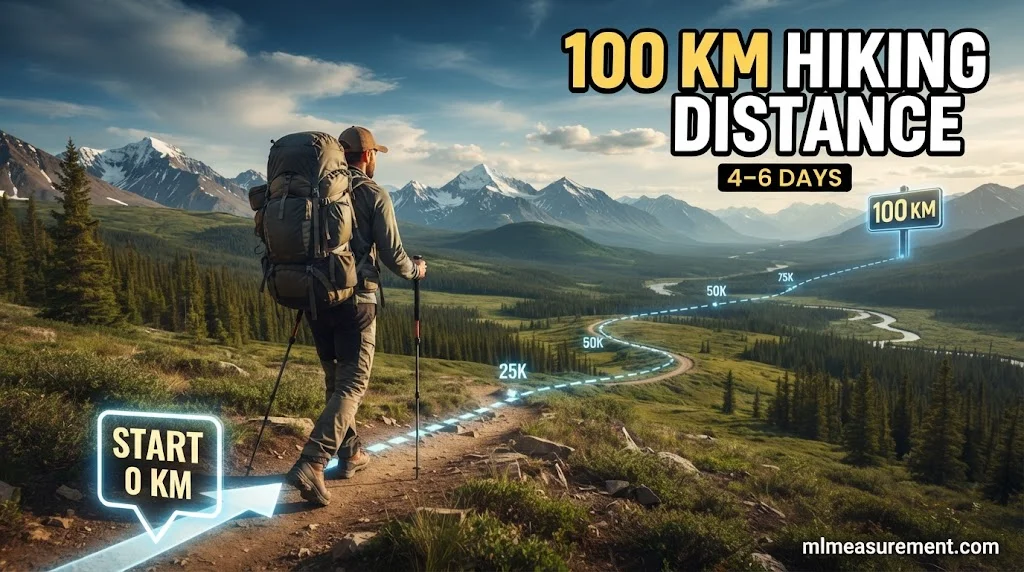
Most hikers cover 15 to 25 kilometers per day on multi-day treks, depending on terrain and pack weight. Covering 100 kilometers typically takes four to six full days of hiking — a common distance for a short section of a long-distance trail.
How Long Does It Take to Walk, Drive, or Run 100 km?
How long does it take to 100 km depends entirely on your mode of travel. Here’s a clear breakdown:
- Walking: At an average pace of 5 km/h, walking 100 km takes about 20 hours of continuous movement — realistically spread across several days.
- Running (ultramarathon pace): Elite runners finish in 6 to 8 hours; most amateur ultrarunners take 10 to 15 hours to complete the distance.
- Cycling: A moderate rider covers it in about 4 hours; a fast cyclist can finish closer to 2.5 to 3 hours.
- Driving: At 100 km/h, the drive takes exactly 1 hour. At a US-typical 65 mph (~105 km/h), it’s slightly faster — just under an hour.
100 km vs. Other Common Distances
Context makes the number stick. Here’s how 100 km stacks up:
- A marathon (42.2 km) — 100 km is more than twice a full marathon distance.
- 50 km — exactly half of 100 km, a popular ultramarathon distance in its own right.
- 10 km — a standard road race distance; ten of these back-to-back equal 100 km.
In everyday US commute terms, the average one-way commute is about 41 minutes covering roughly 25 to 30 km. Driving 100 km is equivalent to about three to four typical commute trips stacked together.
FAQs
How far away is 100 km?
100 kilometers equals 62.14 miles, or about 328,084 feet. It’s roughly the width of Connecticut or the length of Cape Cod.
What is 100 km in 1 hour?
Driving at a steady 100 km/h (62.14 mph) for one hour covers exactly 100 kilometers — the distance and the speed align perfectly at that pace.
What is 100 km in miles?
100 km converts to 62.14 miles, using the standard conversion factor of 0.6214.
How long does it take to 100 km?
It depends on the method: about 1 hour driving at highway speed, 4 hours cycling, 6 to 15 hours running, or roughly 20 hours walking.
Conclusion
100 kilometers long breaks down to 62.14 miles — and once you connect it to Cape Cod’s coastline, a 100 km ultramarathon, or a single hour on the highway at 100 km/h, the distance stops feeling abstract and starts feeling real.

Rehmaan Khan is a Measurement Content Researcher Specializing in MLmeasurement, Size Guides, Charts, and Simple Educational Measurement Content.