
Checking a property line. Estimating a construction site. Picturing a sports field. The number 300 feet long shows up often — but your eyes don’t automatically confirm it.
This guide connects that number to real objects, exact conversions, and a walking-time gut-check you can use anywhere.
Table of Contents
How Long Is 300 Feet? (Quick Answer & Conversions)
300 feet equals 91.44 meters, or exactly 100 yards. That’s the precise figure, based on the international foot standard confirmed by NIST.
A foot belongs to the US customary system — the unit Americans use for height, property size, and road distances. A meter is the SI base unit, defined by how far light travels in a tiny slice of a second.
Here’s the full breakdown:
| Unit | 300 Feet Equals |
|---|---|
| Inches | 3,600 inches |
| Yards | 100 yards |
| Meters | 91.44 meters |
| Centimeters | 9,144 cm |
| Millimeters | 91,440 mm |
Comparing 300 feet to nearby round numbers helps sharpen the picture:
| Comparison | Real Difference |
|---|---|
| 300 ft vs. 250 ft | Extra 50 feet ≈ half a basketball court |
| 300 ft vs. 360 ft | Missing 60 feet ≈ an NFL end zone stretch |
| 300 ft vs. 600 ft | Double the distance ≈ two football fields |
11 Real-Life Things That Are 300 Feet Long
Abstract numbers fade fast. Real objects stick. Below are 11 fields, buildings, vehicles, and creatures that measure close to 300 feet long.
Sports Fields That Are 300 Feet Long
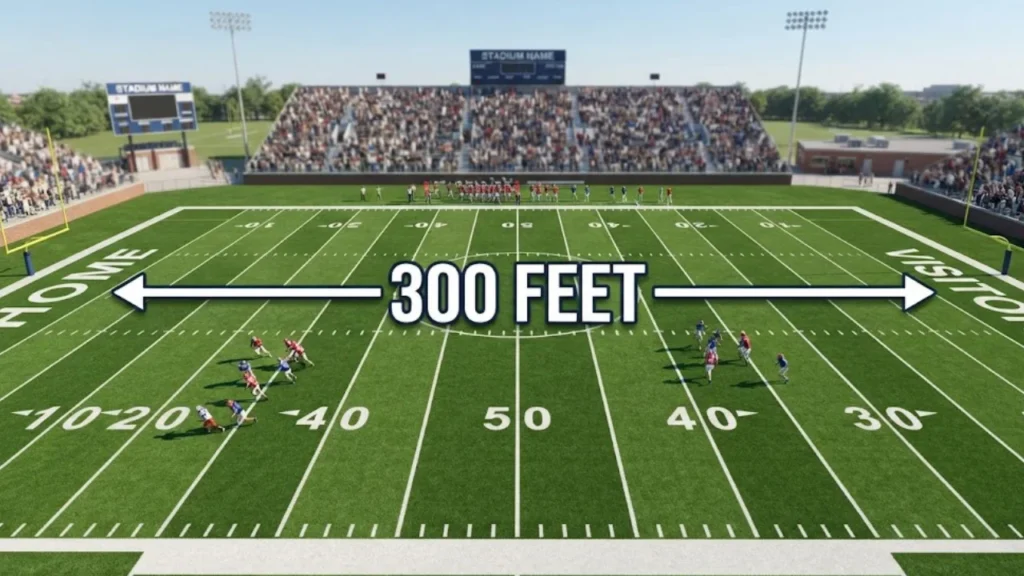
An American football field, goal line to goal line. The playing field measures exactly 100 yards under official NFL rules — a precise, regulation-locked match for 300 feet. This excludes the end zones, which add extra length beyond the goal lines.
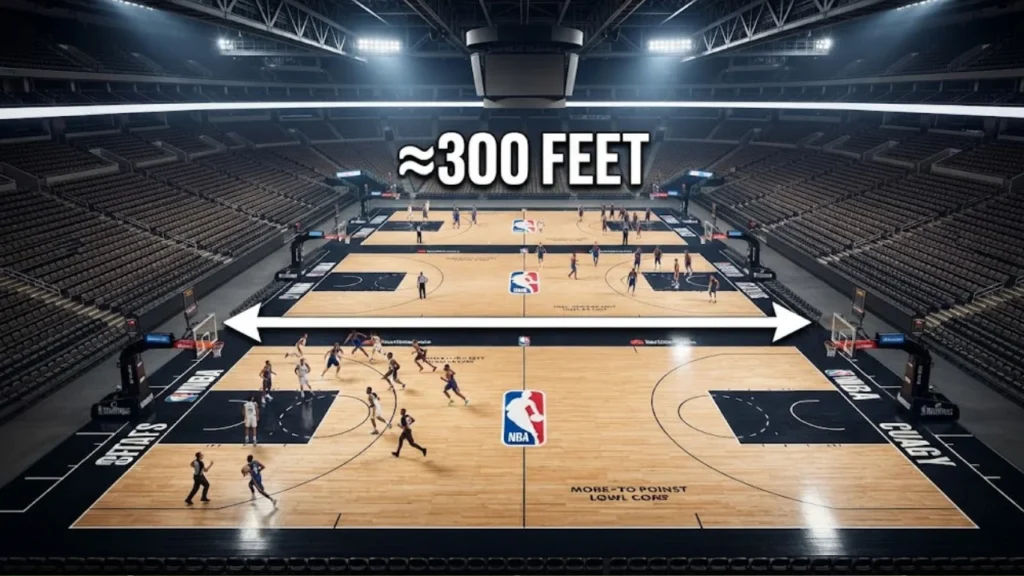
Three NBA basketball courts, end to end. A single NBA court runs 94 feet. Add the mandated out-of-bounds buffers between courts, and three lined up reach almost exactly 300 feet — a detail that shows how quickly short distances stack into something massive.
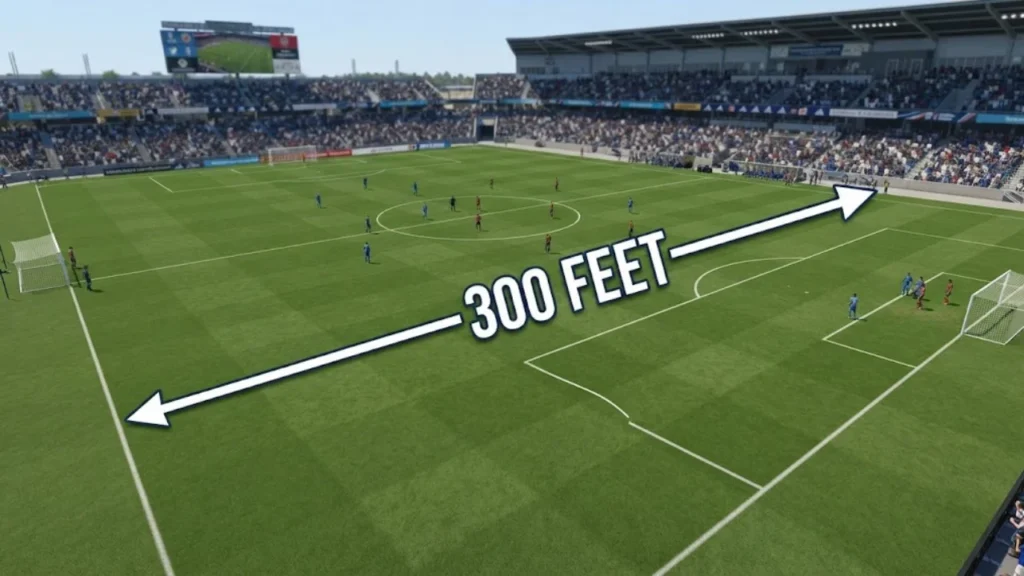
Nearly a full FIFA soccer pitch. Regulation pitches run up to 344 feet under FIFA’s Laws of the Game. That means 300 feet falls just short of a complete pitch — close, but not quite touchline to touchline.
Buildings & Landmarks Near 300 Feet
A 30-story building. Standard US construction uses roughly 10 feet per floor. Thirty stories stacked together lands almost precisely at 300 feet — a height that dominates most city skylines and shapes fire-safety codes nationwide.

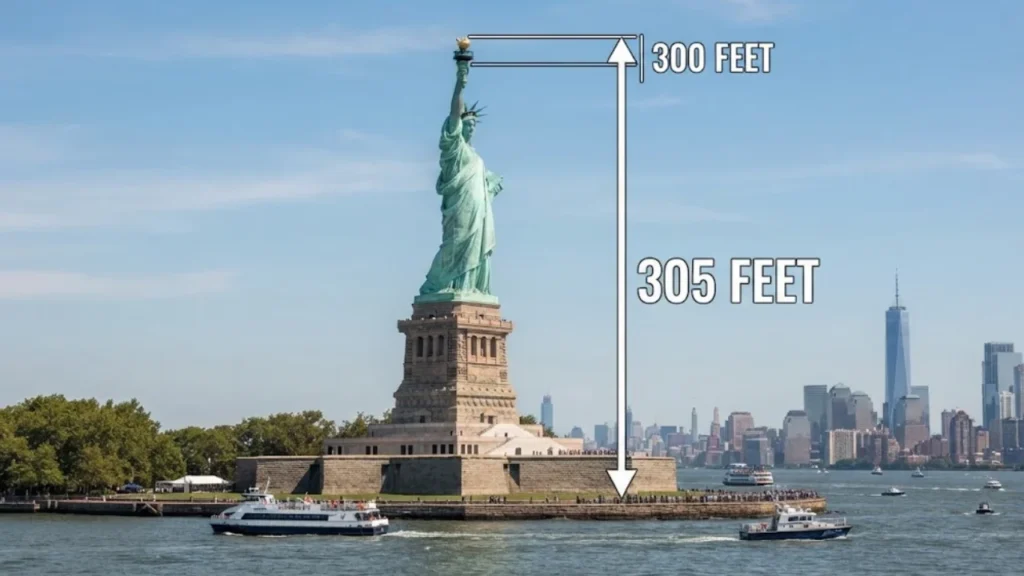
The Statue of Liberty, nearly to the inch. Lady Liberty reaches 305 feet from ground to torch, according to the National Park Service. She stands just 5 feet above the 300-foot mark, making her one of the closest real-world matches for this exact measurement.
Must visit: 15 Feet Long: 11 Real-Life Things That Measure About 15 Feet
Big Ben’s clock tower. The tower housing London’s famous bell rises 310 feet, just slightly taller than 300 feet. It’s an easy mental anchor for anyone picturing this height against a globally recognized landmark.

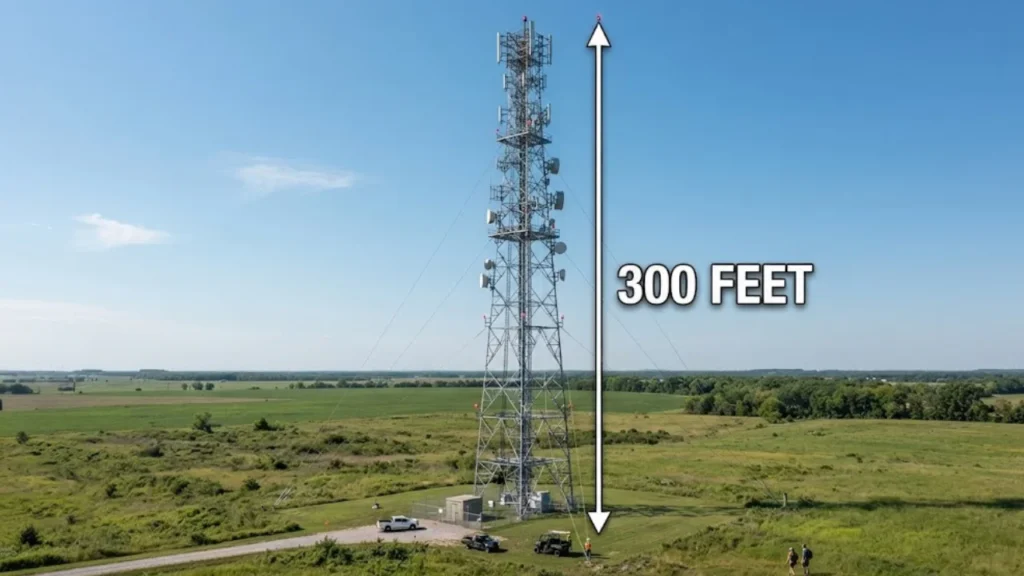
A 300-foot FCC-registered communication tower. The Federal Communications Commission classifies structures at 300 feet above ground level as a distinct category requiring aviation marking and warning lights. These towers dot rural highways and broadcasting zones across the country.
Vehicles & Transport
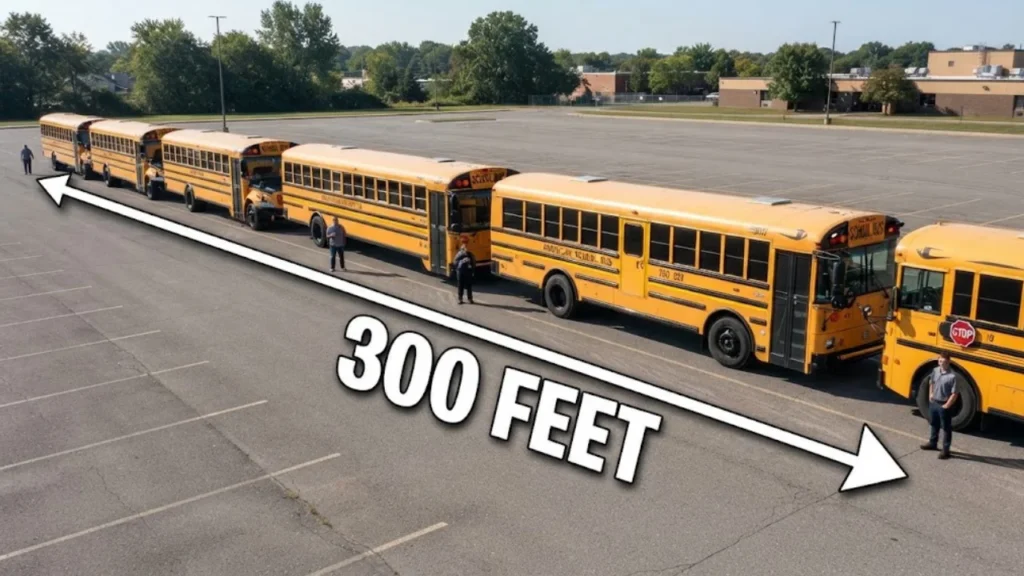
Seven and a half school buses. A standard school bus measures 40 feet long. Line up seven and a half of them nose to tail, and the total stretches to exactly 300 feet.
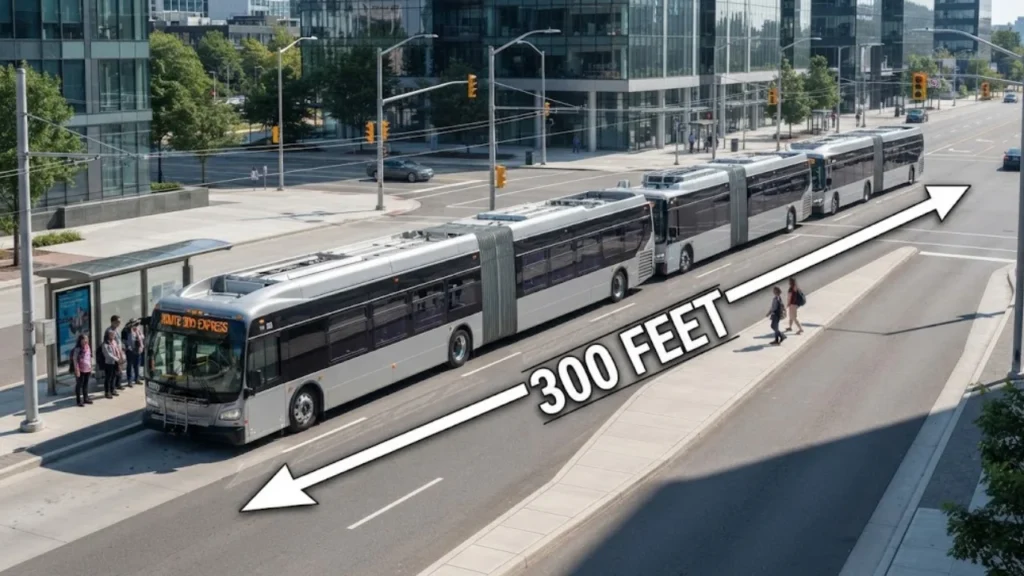
Five articulated city transit buses. Long-haul city buses, like the New Flyer XD60, measure 60 feet each. Five of these lined up create a continuous 300-foot chain — a sight familiar to anyone riding high-capacity transit routes.
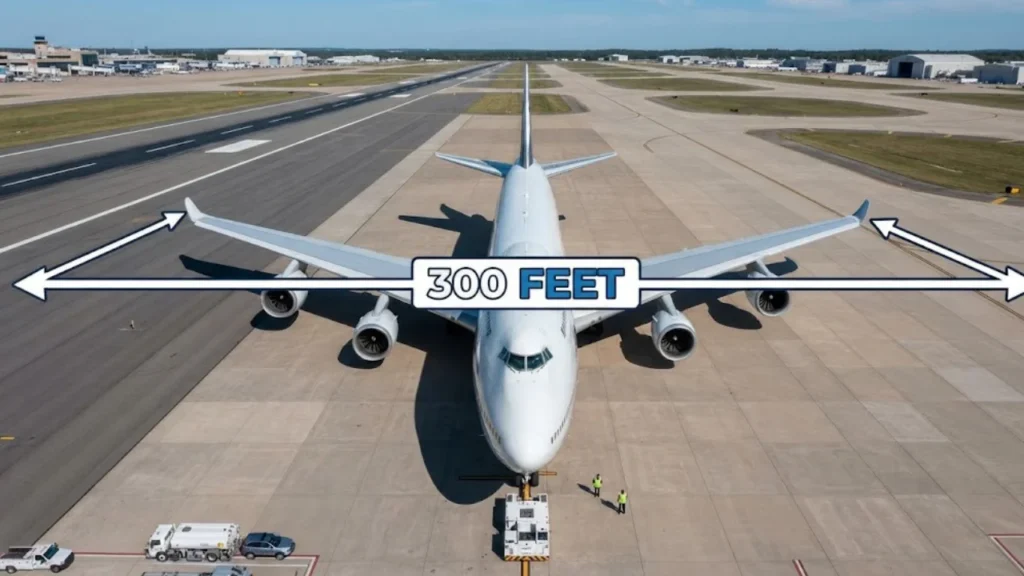
A Boeing 747’s wingspan, and a third more. The Boeing 747-8’s wingspan measures 225 feet, according to Boeing’s official specifications. Adding another third of that width brings you to the 300-foot mark — a striking way to grasp aircraft scale.
Nature & Natural Wonders
Three blue whales, nose to tail. The blue whale reaches about 100 feet in length, based on NOAA marine biology data. Three of these massive creatures lined up equal exactly 300 feet — one of the most dramatic natural comparisons for this scale.

How Long Does 300 Feet Look Like? (Visualizing the Distance)
Indoors, 300 feet feels enormous. It can stretch across several connected warehouse bays or span an entire big-box retail floor, making it hard to take in as one continuous space.
Outdoors, the perception shifts. Across an open field, parking lot, or sports complex, 300 feet reads as long but manageable — something you can visually trace from one end to the other.
A reliable anchor: picture a full American football field from goal line to goal line, or three NBA courts placed end to end. Both give an accurate, felt sense of this distance.
How Long Is 300 Feet to Walk?
Walking 300 feet takes about 45 to 60 seconds at a normal pace.
The average adult stride measures roughly 2.5 feet. At that rate, covering 300 feet takes close to 120 steps — a distance long enough to create real separation between two points, but far short of a serious walk.
This figure comes in handy for property walk-throughs, estimating parking-lot distances, or judging trail markers without a tape measure in hand.
FAQs
How long does 300 feet look like?
300 feet looks like the length of a full American football field or three NBA basketball courts placed end to end — long enough to require a clear, uninterrupted line of sight.
How long is 300 feet to walk?
Walking 300 feet takes about 45 to 60 seconds, or roughly 120 steps, at a normal walking pace.
Is 300 feet the length of a football field?
Yes — an American football field measures exactly 100 yards (300 feet) from goal line to goal line, not counting the end zones.
How long is 300 in feet?
If the question means converting other units: 300 feet equals 100 yards, 3,600 inches, or 91.44 meters.
Conclusion
The football field, the three blue whales, and the Statue of Liberty stand out as the clearest ways to picture 300 feet long — one familiar from Sunday games, one built for shock value, and one you can visit in person.
Next time this measurement comes up, in property plans, sports talk, or travel trivia, you’ll have a real picture instead of just a number.

Rehmaan Khan is a Measurement Content Researcher Specializing in MLmeasurement, Size Guides, Charts, and Simple Educational Measurement Content.