
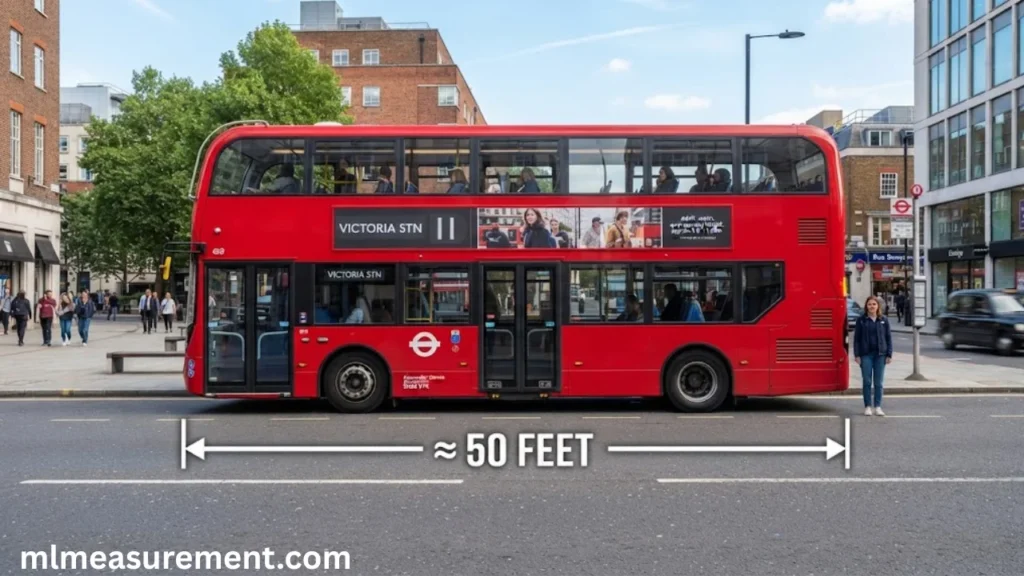
A double-decker bus rolling down the street. A giant squid pulled from the deep ocean. Both hit almost the same mark: 50 feet long.
This guide breaks down the exact conversions, 11 real objects near this length, and a quick grammar rule most sites get wrong.
Table of Contents
How Long Is 50 Feet? (Exact Conversions)
50 feet equals 15.24 meters. That’s the precise figure, based on the international foot standard confirmed by NIST.
A foot belongs to the US customary system — the measurement Americans use daily for height, room size, and road distances. A meter is the base SI unit, defined by how far light travels in a tiny fraction of a second.
Here’s the full breakdown:
| Unit | 50 Feet Equals |
|---|---|
| Inches | 600 inches |
| Yards | 16.67 yards |
| Meters | 15.24 meters |
| Centimeters | 1,524 cm |
| Millimeters | 15,240 mm |
| Miles | 0.00947 miles |
Is it “50 foot” or “50 feet”? This trips up more writers than you’d expect. Use “foot” (singular) when it acts as an adjective before a noun — like “a 50-foot pole.” Use “feet” (plural) when stating a measurement on its own — like “the pole is 50 feet tall.” The hyphen is your visual cue: hyphenated means singular “foot.”
11 Real-Life Things That Are 50 Feet Long
Numbers alone don’t stick in memory. Real objects do. Below are 11 vehicles, structures, and creatures that measure close to 50 feet long.
Vehicles That Are 50 Feet Long
A double-decker bus. London’s iconic double-decker buses run close to 50 feet, carrying passengers on two full levels while taking up minimal road space. These buses have served cities for over a century, balancing capacity with a compact footprint.
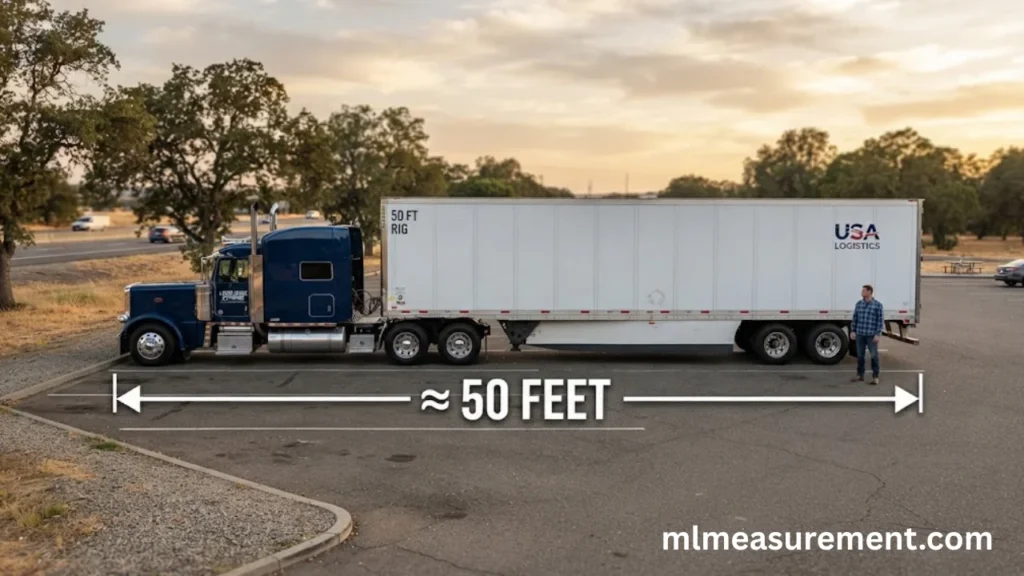
A semi-trailer. A standard semitrailer measures up to 48 feet under US Department of Transportation regulations — just shy of the 50-foot mark. These rigs haul tens of thousands of pounds across US highways daily.
A small airplane’s wingspan. Many light jets and private planes stretch about 50 feet from wingtip to wingtip. Airport staff use this figure to plan gate spacing, taxiway clearance, and runway requirements.

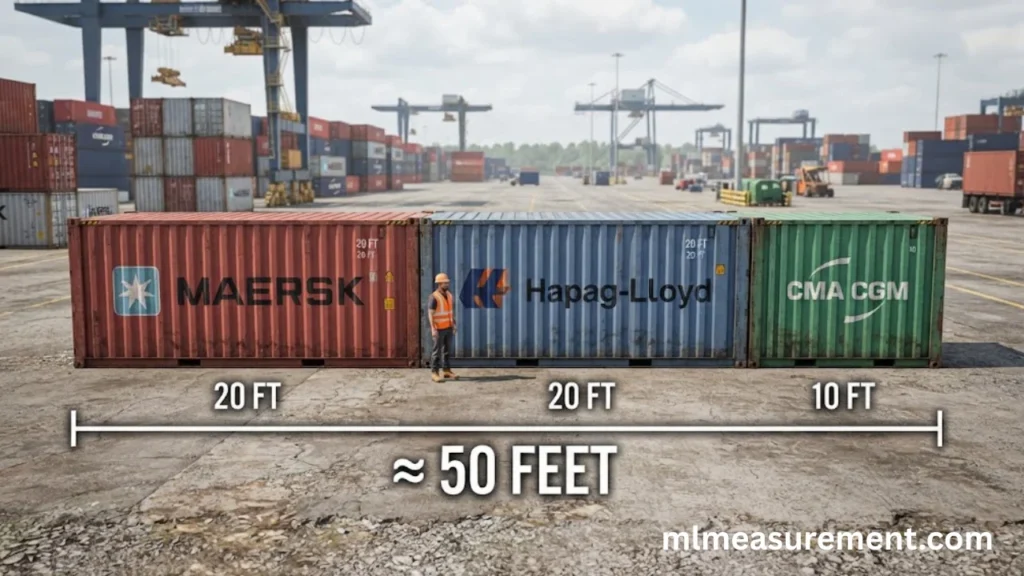
Two and a half shipping containers. A standard shipping container runs 20 feet long. Line up two and add a half, and you land almost exactly at 50 feet — a comparison familiar to anyone who’s worked around a shipping yard or loading dock.
Buildings & Structures Near 50 Feet
A 5-story building. Most residential construction uses roughly 10 feet per floor. Five stories stacked together brings you right to 50 feet — a detail that shapes zoning codes and fire-safety requirements in cities nationwide.

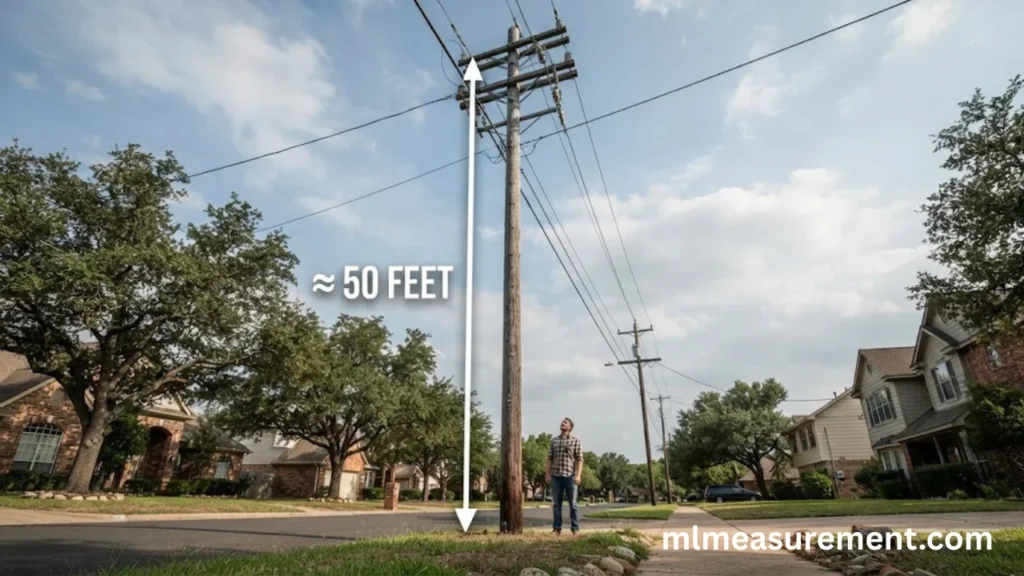
A telephone pole. Utility poles can reach 50 feet in exposed height, according to the Florida Public Service Commission. Compare that to the shorter 30- to 36-foot poles common in residential neighborhoods, and you’ll notice taller poles typically carry higher-voltage transmission lines.
Must visit: 300 Feet Long: 11 Real-Life Things That Measure About 300 Feet
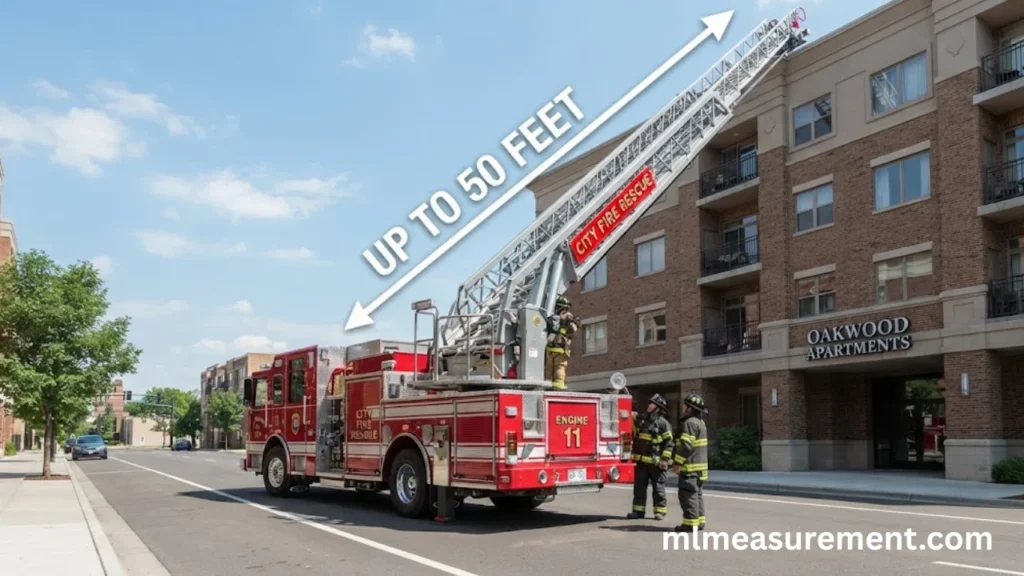
A fire engine ladder. Aerial ladders on fire trucks extend up to 50 feet, giving firefighters reach into mid-rise buildings during emergencies. Modern trucks rotate and extend these ladders automatically for faster response.
Sports & Recreation
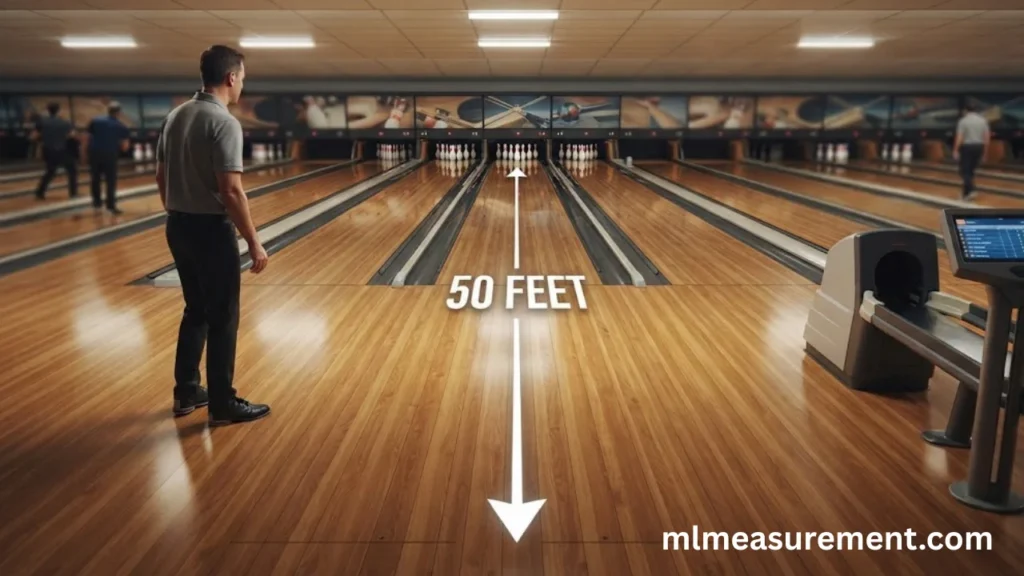
Close to a full bowling lane. A regulation tenpin lane measures 62.85 feet by USBC specification — so 50 feet lands short of the pins but covers most of the approach and lane surface.
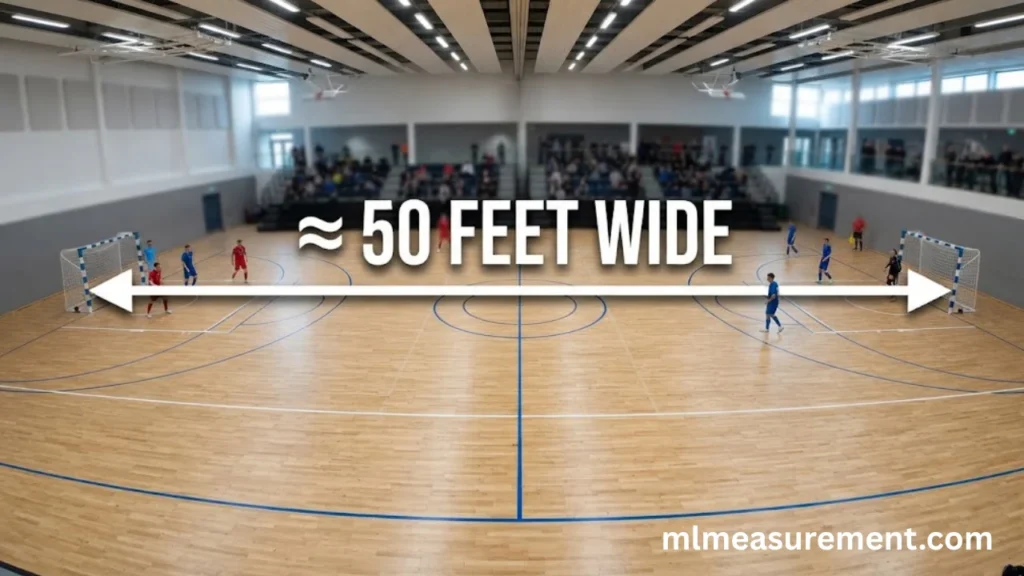
Futsal court width. A regulation futsal court runs close to 50 feet wide. This fast-paced indoor soccer variant, born in South America, demands tight ball control in exactly this kind of compact space.
Basketball court width. Standard basketball courts measure about 50 feet across. That width has stayed consistent since James Naismith standardized the game in 1891, shaping how players pass, cut, and spread the floor.

Nature & Wildlife
A giant squid, tentacles included. The giant squid can reach 50 feet long when its long feeding tentacles are stretched out, according to marine biology records documented alongside NOAA Ocean Exploration research on deep-sea cephalopods. It remains one of the most dramatic natural examples of this length — a genuine sea monster hiding in plain scientific sight.

How Far Is 50 Feet Visually?
Stand 50 feet from someone, and their face blurs into indistinct features — but you can still clearly track their posture, movement, and clothing color.
That’s roughly the width of a basketball court or the length of a double-decker bus. Picture a two-lane residential street plus the sidewalks on both sides — that combined width lands close to 50 feet.
A simple trick: count off ten normal walking steps. For most adults, that distance approximates 50 feet without needing a tape measure.
How Long Is 50 Feet Compared to a Human?
50 feet equals roughly 8 to 9 average adults stacked head-to-toe.
The average US adult stands between 5’4″ and 5’9″ tall. Divide 50 feet by that range, and you get close to nine people lined up vertically — a visual that makes this measurement feel far more massive than the number “50” suggests on its own.
For comparison, a giraffe stands around 19 to 20 feet tall. Even two and a half giraffes stacked wouldn’t quite reach 50 feet — showing just how substantial this length really is against familiar living references.
FAQs
How long is a 50 ft example?
A clear 50 ft example is a double-decker bus or a 5-story building — both land almost exactly at this length.
How far is 50 feet visually?
Visually, 50 feet looks like the width of a basketball court or roughly ten normal walking steps in a row.
How long is 50 feet compared to a human?
50 feet equals about 8 to 9 average adults stacked head-to-toe, based on typical US adult height.
How tall is a 50 feet building?
A 50-foot building stands about 5 stories tall, using the standard 10-foot floor-to-floor height common in US construction.
Conclusion
50 feet long shows up in more places than most people expect — a bus rolling past, a pole overhead, or a squid pulled from the ocean depths.

Rehmaan Khan is a Measurement Content Researcher Specializing in MLmeasurement, Size Guides, Charts, and Simple Educational Measurement Content.