
The standard magazine dimensions in the US are 8.5 x 11 inches. This is called letter size. Most newsstand and mailed magazines are close to this magazine page size.
This guide covers standard magazine sizes, height and width, and magazine size in inches. It also answers the A3 vs. A4 question and shows how to set up print-ready files.
Table of Contents
What Are the Standard Magazine Dimensions in Inches?
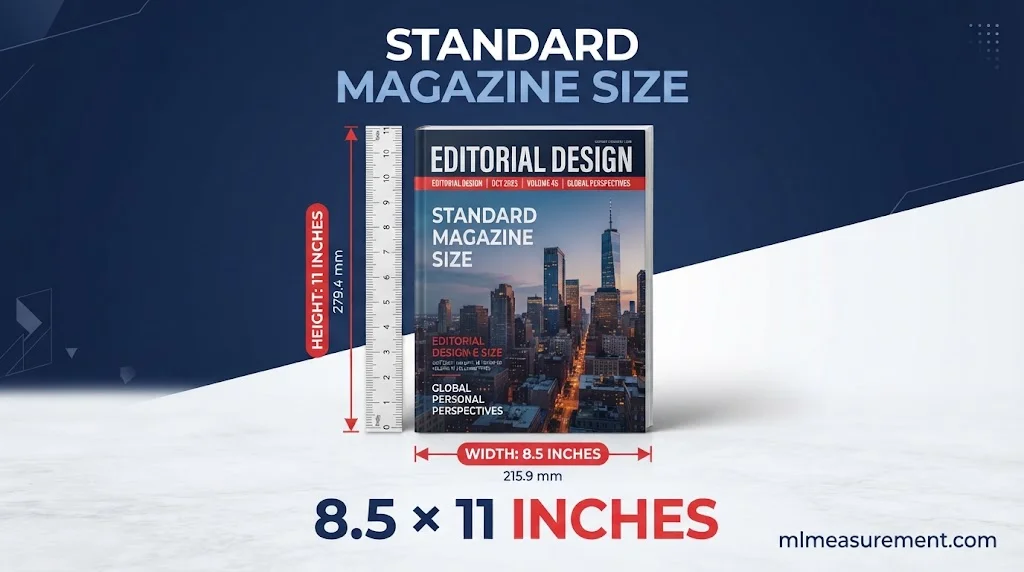
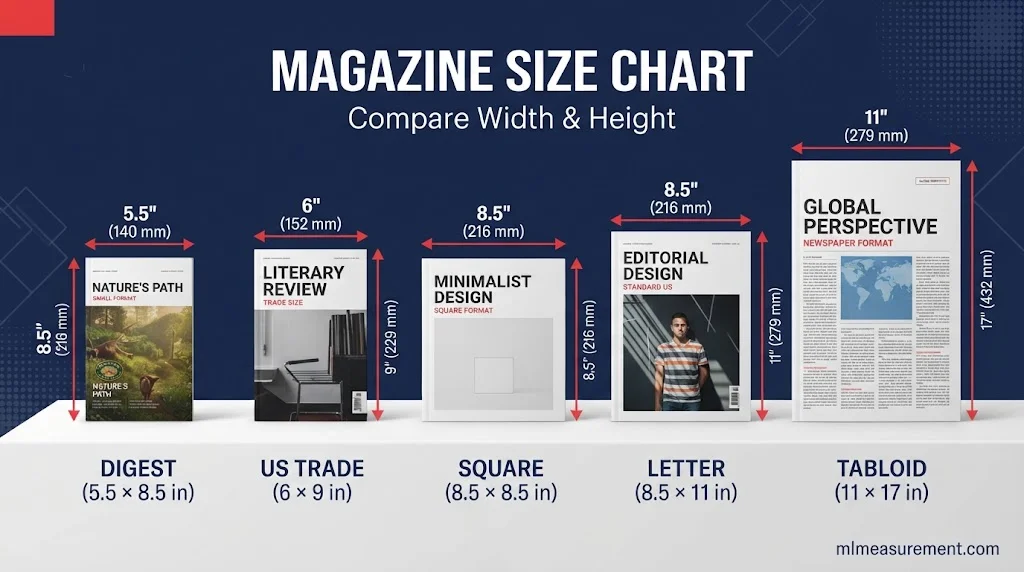
Most US magazines use a few set sizes. Here is a quick magazine size chart, with width listed first, then height.
| Format | Width x Height (in) | Millimeters | Common use |
|---|---|---|---|
| Letter | 8.5 x 11 | 216 x 279 | Standard US magazines, catalogs |
| Digest / half letter | 5.5 x 8.5 | 140 x 216 | Compact, portable titles |
| US Trade | 6 x 9 | 152 x 229 | Literary, niche issues |
| Square | 8.5 x 8.5 | 216 x 216 | Photo, art, lifestyle |
| Tabloid | 11 x 17 | 279 x 432 | Large-format, newspaper-style issues |
Sizes may be rounded in print specs, so always check your printer’s template. For example, the digest size is also listed as 5.5 x 8.25 inches.
Many glossy consumer titles use a trim size of about 8.375 x 10.875 inches. That is slightly smaller than letter. Fashion titles such as Vogue sit in this range, while Reader’s Digest is the classic digest-size magazine.
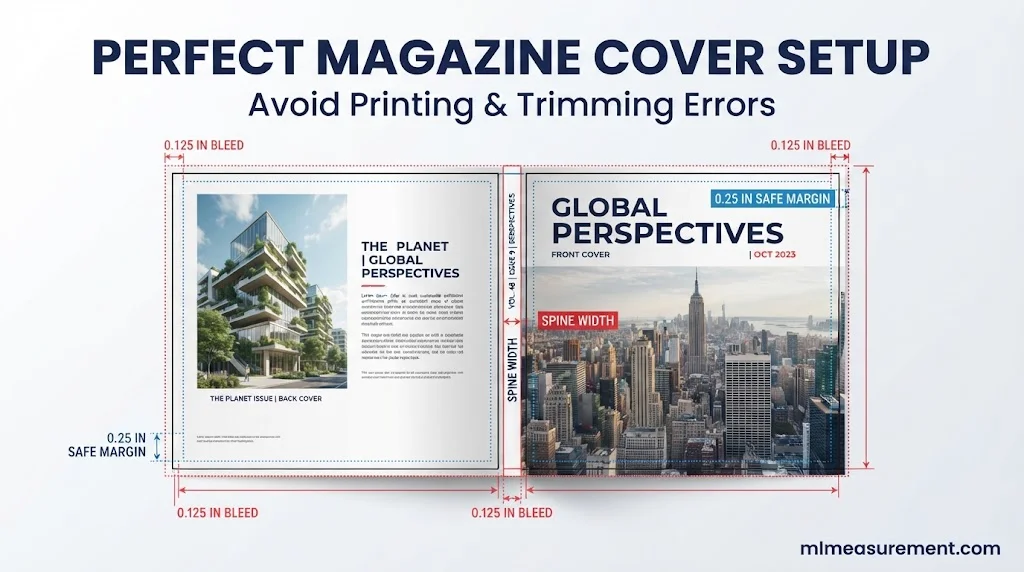
Cover size vs. page size: On a perfect-bound issue, the flat cover is wider than a single page. It must cover the front, the spine and the back. The formula is: cover width = (page width x 2) + spine width + bleed.
Bleed and margins: Add 0.125 inch of bleed on every side. Keep text at least 0.25 inch inside the trim edge. This stops trimming errors from cutting off words or art.
Are Magazines A3 or A4? A4, A5 and A6 Magazine Sizes Explained
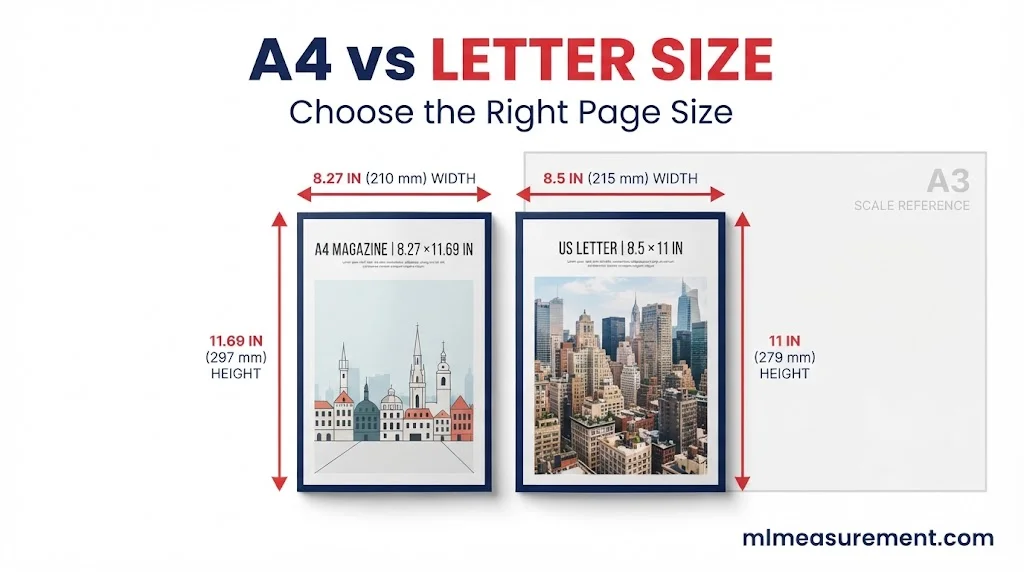
Magazines are A4, not A3. A4 is the standard international magazine size. In the US, letter size is the usual choice.
Just as magazine dimensions vary by format and purpose, beverage cans also come in different sizes designed for specific products. If you’re comparing everyday packaging measurements, explore our guide to Celsius can dimensions to learn about the can’s standard height, diameter, and overall size.
The A series follows the ISO 216 standard. Each size is half the one before it, and the shape stays the same. Markus Kuhn’s ISO paper size guide explains how this system works.
| ISO size | Inches | Millimeters |
|---|---|---|
| A3 | 11.69 x 16.54 | 297 x 420 |
| A4 | 8.27 x 11.69 | 210 x 297 |
| A5 | 5.83 x 8.27 | 148 x 210 |
| A6 | 4.13 x 5.83 | 105 x 148 |
What is A3 used for? A3 is twice the size of A4. Two A4 pages side by side make one A3 spread. That is why A3 suits posters, menus and spread layouts. It is not a standard single magazine page. Adobe’s A3 guide also notes that the closest US match is tabloid (ledger).
A4 vs. letter: A4 is about 0.23 inch narrower and 0.69 inch taller than letter. A file built for one size will not fit the other without changes. Use A4 for a global audience. Use letter for a US audience.
What Is the Format for a Magazine? Portrait, Landscape and Square
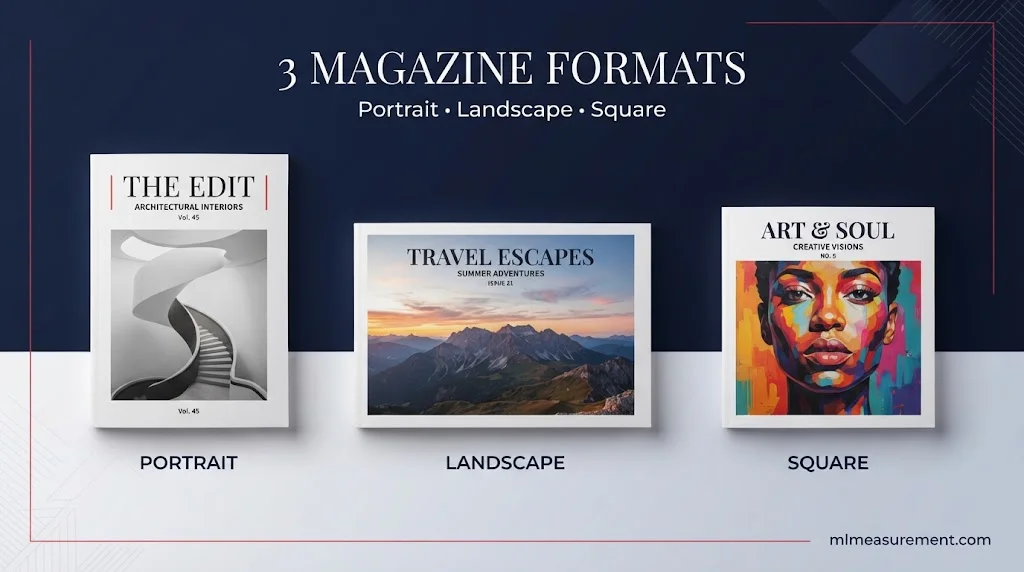
The magazine format is the page orientation plus its size and binding. Most magazines use portrait, which means the page is taller than it is wide.
- Portrait: The default for news, lifestyle, fashion and trade titles.
- Landscape: Used for photo-heavy or design-led issues. It is less common.
- Square: Popular for art and lifestyle. It stands out on a shelf but often costs more to print.
Binding shapes the format too. The right choice depends on page count:
- Saddle stitch: Staples along the spine. Best for thin issues. Page counts must be multiples of four.
- Perfect binding: Glued spine with a flat edge for text. Best for thick issues, usually from about 40 pages up.
- Wire-O: Pages lie flat. Good for guides and planners.
How thick is a magazine? It depends on page count and paper weight. To estimate the spine width, use: (page count ÷ 2) x paper thickness. Ask your printer for the exact paper caliper.
How to Choose the Right Magazine Size for Your Project
The best magazine size balances content, audience and budget. Four questions help you decide.
- What is the content? Photo-heavy issues need larger magazine page sizes. Text-heavy issues work well in digest or trade.
- Who reads it? Commuters like portable sizes. Collectors like standard sizes that fit shelves.
- What is the budget? Larger pages use more paper and weigh more. That raises printing and postage costs.
- Where will it sit? Letter fits most US newsstand racks.
Common mistakes include mixing A4 and letter files, skipping bleed, and forgetting the spine on the cover file. Fix these before you send files to print.
Digital Magazine Dimensions and Print-Ready Size Settings
Print and screen files use different units. Inches matter for print, while pixels matter for digital.
Use this formula: inches x DPI = pixels. At 300 DPI, a letter page is 2550 x 3300 pixels. Add bleed and it grows to 2625 x 3375 pixels.
Print-ready checklist:
- Export to PDF with fonts embedded.
- Use CMYK color for print and RGB for screens.
- Set the document size in Adobe InDesign, Photoshop or Illustrator before you design.
- Keep email newsletter versions around 600 pixels wide.
How do you measure a physical magazine? Lay it flat. Measure the width across the front, then the height from top to bottom. Record both in inches.
FAQs
Are magazines A3 or A4?
Magazines are A4 under the international standard (8.27 x 11.69 inches). In the US, most use letter size (8.5 x 11 inches). A3 is twice the size of A4 and is not a standard single magazine page.
What are the standard dimensions of a magazine page?
The standard US magazine page size is 8.5 x 11 inches. Many glossy titles trim to about 8.375 x 10.875 inches. Digest titles use 5.5 x 8.5 inches.
What are the standard measurements for magazine sizes?
Common magazine measurements are letter (8.5 x 11), digest (5.5 x 8.5), US Trade (6 x 9), square (8.5 x 8.5), A4 (8.27 x 11.69), A5 (5.83 x 8.27) and A6 (4.13 x 5.83) inches.
What is the format for a magazine?
A magazine format is the page size, orientation and binding. Most are portrait, bound by saddle stitch or perfect binding.
Conclusion
The standard US magazine size is 8.5 x 11 inches, and A4 is the international match. Pick your size by content, audience and budget. Then add bleed and set your files at 300 DPI before printing.

Rehmaan Khan is a Measurement Content Researcher Specializing in MLmeasurement, Size Guides, Charts, and Simple Educational Measurement Content.